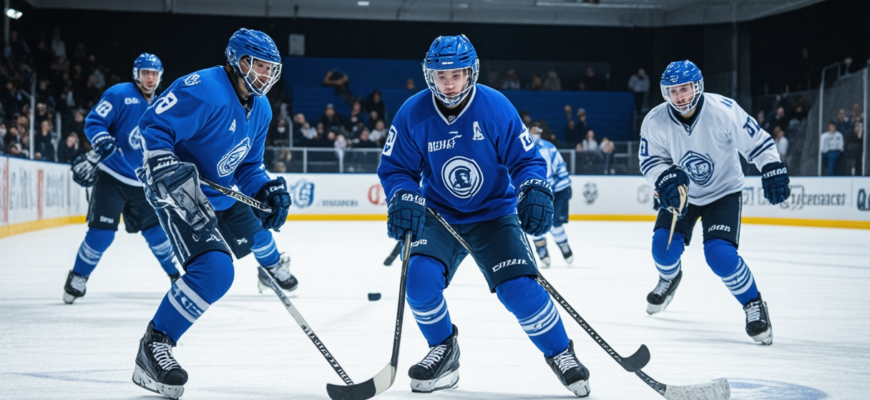
Ice hockey is a fast-paced, exhilarating sport that combines skill, agility, teamwork, and strategic thinking. Whether you are an aspiring player, a vigilant spectator, or simply someone interested in understanding the game better, knowing the fundamental rules is essential. This comprehensive guide will walk you through the essential aspects of ice hockey, providing a clear understanding of the game’s structure, regulations, and gameplay essentials.
- Introduction to Ice Hockey
- The Ice Hockey Rink: Layout and Zones
- Players, Equipment, and Positions
- Player Positions
- Essential Equipment
- The Core Rules of Ice Hockey
- Objective of the Game
- Game Structure
- Offsides
- Icing
- Penalties and Penalized Players
- Power Play and Penalty Kill
- Game Play and Strategies
- Offensive Strategies
- Defensive Strategies
- Special Teams
- The Scoring System and Statistics
- Common Infractions and Their Penalties
- The Role of the Referee and Linesmen
- Embracing the Rules for Better Enjoyment
- Additional Resources
- Final Tips for Hockey Beginners
Introduction to Ice Hockey
Ice hockey is a team sport played on an ice rink, where two teams compete to score goals by shooting a vulcanized rubber puck into the opponent’s net. The sport is characterized by rapid movements, physical contact, and a blend of offensive and defensive tactics. Understanding the basic rules helps in appreciating the complexity and excitement that make ice hockey a popular winter sport worldwide.
The Ice Hockey Rink: Layout and Zones
Grasping the rink layout is fundamental since most rules revolve around specific zones and markings. An ice hockey rink is a rectangular area divided into multiple zones and marked with lines:
| Feature | Details |
|---|---|
| Center Line | Divides the rink into two halves; used for face-offs after goals and at start of periods. |
| Blue Lines | Two lines dividing the ice into three zones: attacking, neutral, and defending zone. |
| Goal Lines | Located behind each goal; used mainly to determine goals and offsides. |
| Face-off Circles and Dots | Designated spots where face-offs occur; each zone has specific face-off spots. |
| Goals | Net structures where teams aim to score; placed at the center of goal lines. |
Understanding the zones:
- Defensive Zone — The area in front of your goal.
- Neutral Zone — The central area between blue lines.
- Attacking/Offensive Zone — The area in front of the opponent’s goal.
Players, Equipment, and Positions
Ice hockey teams typically consist of six players on the ice: one goaltender, two defensemen, and three forwards. Proper equipment ensures safety and enhances performance.
Player Positions
- Goaltender (Goalie): Responsible for blocking shots and guarding the goal.
- Defensemen: Play in the defensive zone, protect the goal, and assist in offensive plays.
- Forwards: Primary scorers, focused on attack and creating offensive opportunities.
Essential Equipment
- Helmet with cage
- Skates
- Shoulder pads, elbow pads
- Gloves and shin guards
- Stick (wooden or composite)
- Protective padding
- Jersey and hockey pants
The Core Rules of Ice Hockey
Understanding the core rules is crucial for following the game. This section details the fundamental regulations governing gameplay, refereeing, and common infractions.
Objective of the Game
The main goal is to score more goals than the opponent within three periods, each lasting 20 minutes with intermissions. The team with the most goals at the end wins. If tied, the game may proceed into overtime or a shootout, depending on the league rules.
Game Structure
- Periods: Three periods of 20 minutes each, with a 15-minute intermission between periods.
- Face-offs: Used to restart play at the beginning of each period, after goals, and at stoppages.
- Overtime and Shootouts: Used to determine a winner in case of a tie, based on specific league rules.
Offsides
Offsides occur when an attacking player crosses the blue line into the offensive zone before the puck. The play is stopped, and a face-off is awarded to the defending team outside the attacking zone. This rule prevents players from “cherry-picking” or lingering near the opponent’s goal.
Icing
Icing happens when a player shoots the puck across both the center red line and the opponent’s goal line without it being touched. The play is whistled dead, and a face-off occurs in the defensive zone of the team that committed icing. Some leagues have variations, such as allowing “touch icing” or “no icing” rules.
Penalties and Penalized Players
Infractions lead to penalties, during which the offending player must leave the ice for a designated time. The team plays shorthanded. Common penalties include:
- Tripping
- Hooking
- <strong-Boarding
- Interference
- High-sticking
- Slashing
Power Play and Penalty Kill
When a team has a player in the penalty box, they are on a “penalty kill”, playing with fewer players. The opposing team has a “power play”, with the advantage of more players on ice. Effective power play strategies are crucial to scoring opportunities.
Game Play and Strategies
In-depth understanding of gameplay tactics enhances appreciation of game flow and strategy. Here are key aspects:
Offensive Strategies
- Cycle: Passing and maintaining puck possession in the offensive zone to create scoring chances.
- Dump and Chase: Clearing the puck deep into the opponent’s zone to gain possession.
- Screening the Goalie: Positioning players to block the goalie’s view.
Defensive Strategies
- Forechecking: Applying pressure in the offensive zone to regain puck control.
- Covering Passing Lanes: Anticipating and intercepting passes.
- Backchecking: Rapid retreat to defend against counterattacks.
Special Teams
Special teams units are formations designed for power plays and penalty kills. Mastery of these units can be decisive in close games.
The Scoring System and Statistics
Goals are the primary measure of success, but detailed statistics provide insights into team and player performance. Key stats include:
- Goals (G)
- Assists (A)
- Points (P) — Goals plus assists
- Plus/Minus (+/-)
- Penalty Minutes (PIM)
- Shots on goal (SOG)
- Save percentage (SV%) — For goalies
Common Infractions and Their Penalties
Infractions are violations of the rules, resulting in stoppages and penalties. Here are some of the most common:
| Infraction | Penalty Range | Description |
|---|---|---|
| Tripping | 2 minutes | Using any part of the body or stick to trip an opponent. |
| Hooking | 2 minutes | Use of the stick to impede an opponent’s progress. |
| High-Sticking | 2 minutes or 4 minutes (if causing injury) | Hitting an opponent above the shoulders with the stick. |
| Interference | 2 minutes | Impeding an opponent who does not have the puck. |
| Boarding | Major (5 minutes) or Fight Penalty | Using physical force to hit an opponent into the boards violently. |
The Role of the Referee and Linesmen
The officials maintain order and ensure adherence to rules. Their roles include:
- Referees: Call penalties, goals, and make game decisions.
- Linesmen: Face-offs, offside, icing calls, and player safety enforcement.
Embracing the Rules for Better Enjoyment
Mastering the basic rules of ice hockey is the first step toward truly appreciating the sport’s dynamism and strategy. Whether playing or spectating, understanding offsides, penalties, and game tactics enriches the experience. As the game combines speed, skill, and strategy, knowing the rules helps in following the flow, recognizing skillful plays, and enjoying the excitement to the fullest. Beginners are encouraged to observe games, learn from experienced players, and gradually internalize the rules for a more engaging hockey journey.
Additional Resources
- Official International Ice Hockey Federation (IIHF) Rules
- National Hockey League (NHL) Regulations
- Local hockey clubs and beginner training programs
- Educational videos and tutorials on hockey rules and gameplay
Final Tips for Hockey Beginners
- Start by familiarizing yourself with the rink layout and zones.
- Learn the basic penalties and what they mean for gameplay.
- Watch live or recorded games to see the rules in action.
- Practice puck control, skating, and basic techniques to understand how rules impact play.
- Join a local beginner’s hockey team or training session to gain practical experience.
Understanding the fundamental rules transforms the experience of watching or playing ice hockey from merely observing a fast sport to truly appreciating its strategic depth and athletic prowess. Gear up, learn the rules, and enjoy every moment on the ice!