
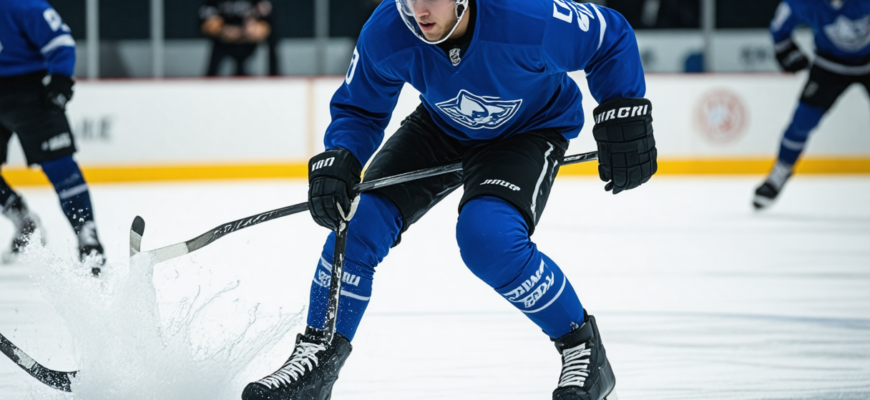
In the fast-paced world of ice hockey, the ability to stop quickly and efficiently can dramatically influence gameplay, safety, and overall performance. Whether you’re a novice just starting out or an amateur athlete aiming to sharpen your skills, understanding how to stop effectively on ice is crucial. Ice stopping isn’t merely about halting; it’s about executing controlled, safe, and strategic maneuvers that allow for quick changes in direction, maintaining balance, and preventing injuries. This comprehensive guide covers all facets of effective ice stopping techniques, from fundamental principles to advanced tips, ensuring you develop the skills needed to stop confidently on ice surfaces.
- Understanding the Importance of Proper Ice Stops
- Fundamental Concepts of Ice Hockey Stops
- The Physics Behind Ice Stops
- Key Factors Influencing Stopping Ability
- Basic Ice Hockey Stops for Beginners
- 1. The Snowplow Stop (Walk-in Stop)
- 2. The T-Stop
- Advanced Techniques for Effective Stops
- 3. The Mohawk Stop
- 4. The Hockey Stop
- Step-by-Step Guide to Executing the Hockey Stop
- Training Drills to Improve Stopping Skills
- 1. Slalom and Braking Drill
- 2. Speed Reduction Exercise
- 3. Edge Control Practice
- Common Mistakes and How to Avoid Them
- Additional Tips for Effective Ice Stops
- Safety Considerations When Stopping on Ice
- Summary and Final Thoughts
Understanding the Importance of Proper Ice Stops
Effective stopping in ice hockey isn’t just about avoiding penalties—it’s a vital skill for maintaining control, executing strategic plays, and ensuring safety. Proper stops enable players to:
- Quickly react to opponents’ movements
- Maintain balance during high-speed maneuvers
- Protect oneself from collisions or loss of control
- Transition smoothly into offensive or defensive positions
Improper stopping techniques can lead to falls, injuries, or missed opportunities during gameplay. Hence, mastering these skills is fundamental for any amateur player aspiring to improve their performance and confidence on ice.
Fundamental Concepts of Ice Hockey Stops
The Physics Behind Ice Stops
At the core of effective stopping is an understanding of physics principles—primarily, friction, momentum, and balance. When a player skates, kinetic energy propels them forward. To stop, a reverse force must be applied against the direction of movement to counteract this energy. Ice, being a low-friction surface, requires technique and precise force application to bring movement to a halt.
Key Factors Influencing Stopping Ability
| Factor | Description |
|---|---|
| Skater’s Speed | The faster you go, the longer and more forceful your stop may need to be. |
| Blade Sharpness | Sharp blades provide better grip and control during stops. |
| Body Position | Proper stance and weight distribution are critical for balance and control. |
| Surface Conditions | Ice quality and temperature affect friction and stopping ability. |
| Experience | Skill level influences timing and technique precision. |
Basic Ice Hockey Stops for Beginners
1. The Snowplow Stop (Walk-in Stop)
The snowplow stop is one of the simplest stopping techniques, ideal for beginners learning fundamental control. It mimics the motion of a snowplow pushing snow, applying pressure to the inside edges of the skates to slow down and stop.
- Maintain an athletic stance with knees slightly bent.
- Point the toes inward, creating a “V” shape with your skates.
- Gradually increase pressure on the inside edges of both skates.
- As momentum decreases, come to a complete stop.
This method offers slow, controlled stopping, perfect when you’re just starting to develop skating comfort.
2. The T-Stop
The T-stop is a versatile and effective beginner technique suitable for moderate speeds. It relies on forming a “T” shape with your skates to halt quickly.
- Glide forward while maintaining a steady pace.
- Lift one skate (say, the right skate) perpendicular to the other, positioning it behind or alongside to form a “T”.
- Apply pressure on the inside edge of the stationary skate to brake.
- Gradually come to a controlled stop before switching to the other skate if needed.
Remember to keep your knees slightly bent and body centered during this maneuver to maintain balance.
Advanced Techniques for Effective Stops
3. The Mohawk Stop
The Mohawk stop, also known as a “power stop,” allows for quick directional changes and is highly effective at higher speeds. It involves turning your skates in a specific manner to come to a stop while transitioning smoothly into new directions.
- Approach the stopping point in a slight curve, preparing for the maneuver.
- Shift your weight onto the skate opposite to the intended direction.
- Twist your hips and shoulders to face perpendicular to your movement direction.
- Push the skate in the direction of motion laterally, applying pressure on the inside edge.
- Apply brakes through lateral pressure, gradually increasing the force until a complete stop is achieved.
This technique requires good balance and body control but offers quick stopping capability essential for dynamic gameplay.
4. The Hockey Stop
The hockey stop is a classic, highly efficient technique used during fast-paced play, allowing players to come to a near-instantaneous halt from skating at high speed.
- Accelerate to your desired speed.
- Shift your weight onto the outside edges of both skates, turning your hips and shoulders 90° in the direction of the turn.
- As you rotate, dig both edges into the ice simultaneously, creating a braking friction that slows you down rapidly.
- Keep your knees slightly bent and core engaged for stability.
- Once stopped, regain balance in an athletic stance ready for the next move.
This technique requires practice but is invaluable for quick reactions during gameplay.
Step-by-Step Guide to Executing the Hockey Stop
- Preparation: Skate at a moderate speed, with knees bent and weight evenly distributed.
- Initiate Rotation: Turn your torso and hips in the direction you want to stop, shifting your weight onto the outside edges.
- Edge Engagement: Dig the outside edges into the ice to create friction; simultaneously, your skates should slide sideways to assist in deceleration.
- Balance and Control: Keep your upper body stable, arms out for balance if needed, and maintain a low center of gravity.
- Complete Stop: Once you have reduced speed sufficiently, shift your weight back into a neutral stance and prepare for the next movement.
Training Drills to Improve Stopping Skills
1. Slalom and Braking Drill
- Set up cones or markers in a line, spaced evenly apart.
- Skate through the cones at a moderate pace, focusing on controlling speed.
- At each cone, practice executing a different stopping technique—snowplow, T-stop, or hockey stop.
- Repeat, gradually increasing speed and consistency.
2. Speed Reduction Exercise
- Start skating at high speed in a straight line.
- Interval by interval, execute stops using various techniques, focusing on smoothness and balance.
- Increase the difficulty by adding turns or quick directional changes before stopping.
3. Edge Control Practice
- Skate in small circles or figure eights, emphasizing on edge control.
- Practice shifting weight and engaging edges consistently, improving overall stopping capability.
Common Mistakes and How to Avoid Them
| Mistake | How to Correct |
|---|---|
| Leaning back too much during stops | Maintain an athletic stance with knees bent and center of gravity over skates. |
| Not engaging edges properly | Focus on applying pressure to the inside edges and learning to control them with drills. |
| Overturning or improper body rotation | Practice slow, deliberate turns before progressing to full-speed stops. |
| Using excessive force leading to imbalance | Incrementally increase pressure during stops, prioritizing control over speed. |
| Failing to look where you’re going | Always keep your head up and scan ahead for obstacles or opponents. |
Additional Tips for Effective Ice Stops
- Maintain Sharp Blades: Regularly sharpen your skates to ensure optimal grip during stops.
- Stay Low: Keep your knees slightly bent and body low for better stability and control.
- Practice Consistently: Frequent practice reinforces muscle memory and improves reaction times.
- Observe Others: Watch experienced players and mimic their techniques during practice sessions.
- Stay Relaxed: Tension hampers movement; stay relaxed for smoother stops and transitions.
Safety Considerations When Stopping on Ice
Safety is paramount when executing stops on ice. Inadequate control can lead to falls, injuries, or collisions. To minimize risks:
- Practice in a safe and well-maintained skating rink.
- Wear appropriate protective gear, including helmet, gloves, and pads.
- Start at lower speeds until you master basic stops; then gradually increase speed.
- Always be aware of your surroundings, especially during quick stops or turns.
- Listen to feedback from coaches or experienced skaters for technical improvements.
Summary and Final Thoughts
Mastering how to stop effectively on ice is a foundational skill that significantly enhances safety and performance in ice hockey. Beginners should start with simple techniques like the snowplow and T-stop, gradually progressing to advanced maneuvers such as the hockey stop and Mohawk stop. Consistent practice, proper body mechanics, and attention to detail are key to developing confidence and control on ice surfaces. Emphasizing safety, understanding physics, and utilizing effective drills will help amateur players build their skill set efficiently. Ultimately, mastery of stopping techniques empowers players to be more agile, responsive, and strategic during gameplay, elevating their overall hockey experience.
Remember: successful ice stops are not just about halting — they are about maintaining composure, control, and readiness for the next move, turning each stop into a strategic advantage on the ice.
Похожие записи:
 Mastering the Ice: Basic Skating Techniques Every New Hockey Player Must Know
  Mastering Hockey Stick Handling: Essential Techniques for Beginners
  Basic Strategies for Beginner Hockey Players: A Complete Guide for Amateur Enthusiasts
  How to Wear Your Helmet and Pads Safely: A Complete Guide for Amateur Hockey Players
  Mastering the Ice: A Comprehensive Guide to the Basic Rules of Ice Hockey for Beginners