
Ice hockey is a dynamic, fast-paced sport that demands quick reflexes, precise movements, and exceptional agility. For amateur players looking to elevate their game, improving agility on ice is a fundamental step toward better performance and increased confidence on the rink. This comprehensive guide explores proven techniques, training routines, and practical tips to help hockey enthusiasts develop superior agility, allowing them to maneuver with ease and outplay opponents.
- Understanding the Importance of Agility in Ice Hockey
- Fundamental Components of Agility on Ice
- 1. Balance and Stability
- 2. Strength and Power
- 3. Flexibility and Mobility
- 4. Reaction Time and Coordination
- Training Techniques to Boost Agility on Ice
- H3>1. Off-Ice Agility Drills
- 2. On-Ice Drills for Agility
- Incorporating Agility into Your Training Routine
- Scheduling and Periodization
- Sample Weekly Training Schedule:
- Tips and Best Practices for Effective Agility Training
- 1. Focus on Proper Technique
- 2. Gradually Increase Intensity
- 3. Prioritize Consistency
- 4. Use Appropriate Equipment
- 5. Pay Attention to Nutrition and Rest
- Additional Factors Enhancing Agility in Hockey
- 1. Mental Preparation
- 2. Proper Skating Technique
- 3. Flexibility and Stretching
- Measuring Progress in Agility
- Unlocking Your Ice Potential
Understanding the Importance of Agility in Ice Hockey
Agility, in the context of ice hockey, refers to the ability to rapidly change directions, accelerate, decelerate, and maintain balance while skating at high speeds. It encompasses coordination, balance, strength, and neuromuscular control—all crucial for executing complex moves such as quick turns, stops, starts, and evasive maneuvers.
Improved agility provides players with several advantages:
- Enhanced maneuverability—faster turns and stops allow better control of the puck and positioning.
- Increased reaction time—better anticipation of opponents’ actions helps in intercepting passes and defending.
- Higher resilience—improved balance reduces the risk of falls and injuries.
- Greater confidence—knowing you can handle rapid movements boosts overall gameplay.
Fundamental Components of Agility on Ice
1. Balance and Stability
Maintaining proper balance on thin blades is critical. Strong core muscles and good posture help in stabilizing body movements during rapid direction changes.
2. Strength and Power
Leg strength, particularly in the quadriceps, hamstrings, calves, and glutes, provides the power needed for explosive starts and quick stops.
3. Flexibility and Mobility
Good flexibility reduces the risk of strains and allows smoother, more fluid movements.
4. Reaction Time and Coordination
Neuromuscular coordination enables quick responses to game situations, while sharp reaction times facilitate rapid decision-making and action.
Training Techniques to Boost Agility on Ice
H3>1. Off-Ice Agility Drills
Enhancing agility begins with off-ice training that targets coordination, strength, and balance. These exercises prepare the body for on-ice movements and reduce fatigue during games.
| Exercise | Description | Benefits |
|---|---|---|
| ladder drills | Using an agility ladder, perform various footwork exercises such as high knees, lateral steps, and in-and-out movements. | Improves foot speed, coordination, and neuromuscular control. |
| cone drills | Set cones in a zigzag pattern and practice swift turns around them, focusing on quick, controlled movements. | Develops directional change speed and balance. |
| plyometric exercises | Jumping exercises like box jumps, bounding, and squat jumps to increase explosive power. | Boosts leg strength and explosive acceleration. |
| balance training | Use balance boards or stability balls to perform single-leg stands and dynamic balancing exercises. | Enhances core stability and proprioception. |
2. On-Ice Drills for Agility
Specific on-ice drills simulate real-game scenarios, helping players translate off-ice improvements into actual performance.
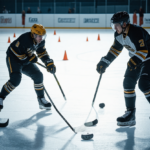
- Zigzag skating: Sprint along a straight line, then perform rapid turns around cones or markers placed on the ice.
- Stop-and-start drills: Practice explosive starts from a standstill, followed by quick stops, then repeat at different locations.
- Shadow skating: Mimic opponent movements or follow a coach’s lead, emphasizing quick direction changes and balance.
- Puck control while pivoting: Skate with a puck while executing rapid pivots and turns, maintaining control and speed.
Incorporating Agility into Your Training Routine
Scheduling and Periodization
Consistent training is key to improvement. Aim to include agility-focused exercises at least 2–3 times per week, combining off-ice and on-ice sessions. Break training into phases—starter, progress, and peak—to gradually enhance performance without overtraining.
Sample Weekly Training Schedule:
- Monday: Off-ice agility drills (ladder, cone, plyometrics)
- Tuesday: Rest or light skating with emphasis on puck control
- Wednesday: On-ice agility drills (zigzag, stop-and-start)
- Thursday: Core and balance training, strength exercises
- Friday: Shadow skating, reaction drills
- Saturday: Match simulation or play with focus on agility
- Sunday: Rest or active recovery (stretching, yoga)
Tips and Best Practices for Effective Agility Training
1. Focus on Proper Technique
Maintaining correct form during exercises maximizes effectiveness and minimizes injury risk. Keep knees slightly bent, back straight, and arms engaged to aid in balance and movement control.
2. Gradually Increase Intensity
Start with basic drills, then progressively add complexity and speed. Overloading too quickly can hamper progress and cause injury.
3. Prioritize Consistency
Regular training yields the best results. Incorporate agility exercises into your routine steadily and stick to the schedule.
4. Use Appropriate Equipment
Ensure blades are sharp and correctly fitted for optimal grip and maneuverability. Wear comfortable, supportive gear for off-ice exercises.
5. Pay Attention to Nutrition and Rest
Fuel your body effectively and allow sufficient recovery time. Proper nutrition supports muscle growth and repair, essential for explosive movements.
Additional Factors Enhancing Agility in Hockey
1. Mental Preparation
Quick decision-making and anticipation are mental skills that complement physical agility. Visualization and game scenario rehearsals can boost reaction times.
2. Proper Skating Technique
Efficient stride mechanics reduce energy expenditure and improve speed. Focus on knee bend, weight transfer, and arm movement.
3. Flexibility and Stretching
Incorporate dynamic stretching sessions before workouts and static stretching afterward to maintain flexibility and prevent injury.
Measuring Progress in Agility
Track improvements through specific tests and drills:
- T-test agility drill: Measures lateral, forward, and backward movement speed.
- Shadow skating time trials: Record times for specific obstacle courses.
- Reaction time tests: Use apps or timers to evaluate response speed to stimuli.
Regular assessment helps identify areas for improvement and adjusts training accordingly.
Unlocking Your Ice Potential
Enhancing agility on ice requires a combination of targeted training, consistent effort, and attention to technique. By focusing on off-ice strength and flexibility exercises, practicing on-ice drills that mimic game situations, and maintaining a disciplined routine, amateur hockey players can significantly improve their maneuverability and overall performance. Successful agility training not only elevates gameplay but also boosts confidence and enjoyment of the sport, making each game an opportunity for growth and achievement.
Start integrating these tips into your training regimen today, and watch your agility and confidence on the ice soar.
Похожие записи:
 Mastering Ice Agility: Essential Techniques for Amateur Hockey Players
  Mastering the Art of Following a Hockey Game’s Flow: Essential Tips for Amateur Players to Improve Awareness Mastering Quick Starts and Stops on the Ice: Essential Training Tips for Amateur Hockey Players Mastering Rapid Transitions: How Amateur Hockey Players Can Improve Offense to Defense Switching
  Simple and Effective Ways to Improve Your Balance on Skates for Amateur Hockey Players
  Effective Simple Drills to Boost Puck Control and Agility for Amateur Hockey Players Mastering the Art of Skating Posture: Essential Tips for Hockey Enthusiasts
  Mastering Speed and Control in Skating: The Ultimate Guide for Amateur Hockey Players
  Essential Stickhandling Drills for New Hockey Players: Improve Your Skills on Ice
  Mastering Puck Handling: How to Improve Your Hockey Skills at Home
  Mastering Balance and Stability: Essential Techniques for Amateur Hockey Players
  Mastering Precision: Essential Drills to Improve Passing Accuracy in Hockey
  How to Increase Your Skating Speed Safely: Essential Tips for Amateur Hockey Players
  Mastering the Art of Effective Ice Stops: Essential Techniques for Amateur Hockey Players
  Mastering Recovery and Rebound Control: Essential Skills for Amateur Hockey Players Quick Start and Acceleration Exercises for Amateur Hockey Players: Boost Your Speed on the Ice