
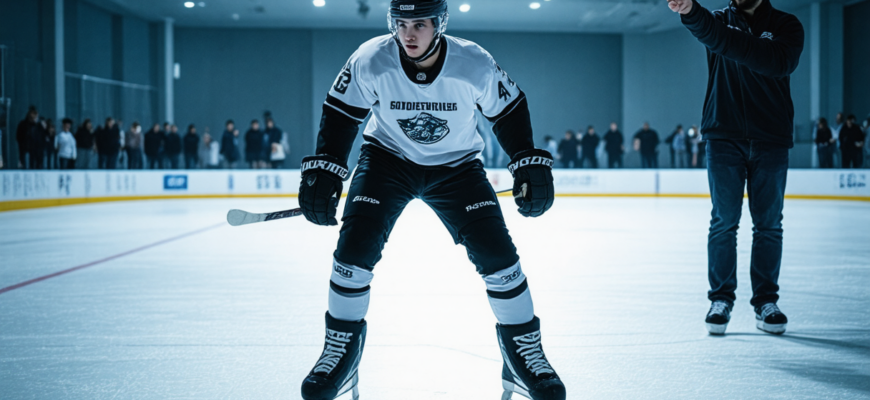
For amateur hockey enthusiasts, mastering balance on skates is a fundamental skill that directly influences overall performance on the ice. Whether you are just starting out or looking to refine your abilities, improving balance can enhance your agility, stability, and confidence during play. In this comprehensive guide, you’ll discover proven techniques, exercises, and practical tips that will help you develop better balance and become a more competent skater.
- Understanding the Importance of Balance in Hockey
- The Anatomy of Balance on Skates
- Key Factors Influencing Balance
- How Balance Affects Performance
- Effective Exercises to Improve Balance on Skates
- 1. Static Balance Exercises
- a) Single-leg Stands
- b) T-Position Hold
- 2. Dynamic Balance Exercises
- a) Skating in Place with Alternating Legs
- b) Agility Ladder Drills
- 3. Off-Ice Balance Exercises for Better Results
- a) Balance Board Drills
- b) Core Strengthening Exercises
- Proper Technique for Better Balance on Skates
- 1. Correct Stance and Posture
- 2. Weight Distribution
- 3. Use of Arms and Balance Points
- Tips for Improving Balance During the Game
- 1. Focus on Eye Level
- 2. Practice Controlled Breathing
- 3. Incorporate Small Adjustments
- Equipment and Environment Optimization
- 1. Choosing the Right Skates
- 2. Using Balance Aids and Tools
- 3. Practicing on Different Surfaces
- Sample Training Plan to Enhance Balance
- Formulas and Quantitative Measures to Track Progress
- Balance Performance Score
- Example Calculation:
- Common Mistakes to Avoid When Trying to Improve Balance
Understanding the Importance of Balance in Hockey
Balance serves as the foundation of almost every movement in hockey. It allows players to execute precise turns, sudden stops, quick accelerations, and maintain stability during physical contact. Without good balance, even the most talented players can find themselves off-kilter, increasing the risk of falls and injuries. Developing solid balancing skills enables players to perform complex maneuvers smoothly and maintain control in high-pressure situations.
The Anatomy of Balance on Skates
Key Factors Influencing Balance
- Center of Gravity: The player’s ability to keep their body’s center over the skate blades.
- Proprioception: The body’s sense of spatial positioning, crucial for adjustments.
- Muscle Strength and Flexibility: Especially core muscles, legs, and ankles that support stability.
- Proper Equipment Fit: Well-fitting skates ensure optimal control and balance.
How Balance Affects Performance
Good balance translates to improved movement economy, quicker reaction times, better shot accuracy, and safer gameplay. The ability to stay upright during aggressive plays and awkward terrains gives players an undeniable advantage on the ice. Consequently, dedicating time to balance training pays dividends in key game moments.
Effective Exercises to Improve Balance on Skates
1. Static Balance Exercises
Starting with stationary exercises helps to build foundational stability before progressing to dynamic drills.
a) Single-leg Stands
- Stand on one foot on a flat surface.
- Maintain balance for 30 seconds, then switch legs.
- To increase difficulty, close your eyes or stand on an unstable surface like a pillow.
b) T-Position Hold
- Stand with feet shoulder-width apart.
- Lift one foot and cross it behind the standing leg, forming a “T” shape.
- Hold for 20-30 seconds, then switch sides.
2. Dynamic Balance Exercises
These exercises simulate real-game movements and challenge stability during motion.
a) Skating in Place with Alternating Legs
- Jog in place, pushing off with one foot, then the other.
- Focus on controlled, smooth movements.
- Repeat for 1-2 minutes.
b) Agility Ladder Drills
- Use an agility ladder on the ground.
- Perform various footwork patterns such as one-foot, two-foot in each box, lateral shuffles, etc.
- Focus on quick and precise movements to improve coordination and stability.
3. Off-Ice Balance Exercises for Better Results
Many effective balance exercises can be done off the ice to complement on-skate drills.
a) Balance Board Drills
- Stand on a balance board or BOSU ball.
- Hold positions such as single-leg or semi-squats to strengthen stabilizer muscles.
b) Core Strengthening Exercises
- Planks and side planks hold for 30 seconds to 1 minute each.
- Russian twists, leg raises, and bird-dogs enhance core stability essential for maintaining balance on skates.
Proper Technique for Better Balance on Skates
1. Correct Stance and Posture
A proper skating stance is critical for balance. Keep your knees slightly bent, hips centered over your skates, and shoulders aligned with your hips. Avoid leaning forward or backward excessively. Maintaining a low center of gravity enhances stability.
2. Weight Distribution
Distribute your weight evenly over both skates. Focus on feeling the pressure on the balls of your feet and the heels, ensuring you are always ready to shift weight as needed for turns or stops.
3. Use of Arms and Balance Points
Extend your arms outward for better balance, especially during sharp turns or sudden movements. Use your core to stabilize your body, and avoid stiff shoulders or rigid posture.
Tips for Improving Balance During the Game
1. Focus on Eye Level
Looking ahead rather than down at your skates helps maintain proper body alignment and awareness of surroundings, which stabilizes your movements.
2. Practice Controlled Breathing
Breathing steadily reduces tension and helps muscles stay relaxed, allowing for more fluid motion and better balance.
3. Incorporate Small Adjustments
- Continuously shift your weight and adjust your stance during play.
- Anticipate movements and prepare accordingly.
Equipment and Environment Optimization
1. Choosing the Right Skates
Ensure your skates fit snugly without being too tight or too loose. Ill-fitting skates impair control and balance.
2. Using Balance Aids and Tools
- Balance cushions and trainers can simulate unstable environments for training.
- Progressively use these tools to challenge and improve your balancing skills.
3. Practicing on Different Surfaces
Work on various ice conditions, such as rough or uneven surfaces, to improve adaptability and confidence on different terrains.
Sample Training Plan to Enhance Balance
| Day | Exercise Focus | Details |
|---|---|---|
| Monday | Static Balance | Single-leg stands, T-position holds |
| Tuesday | Off-Ice Core Work | Planks, Russian twists, leg raises |
| Wednesday | Dynamic Balance & Agility | Skating in place, ladder drills |
| Thursday | On-Ice Drills | Edge control exercises, turns, stops |
| Friday | Balance Challenges | Balance board exercises, unstable surface training |
| Saturday | Active Rest | Stretching, light skating |
| Sunday | Review & Practice | Combination of all exercises, focusing on weak points |
Formulas and Quantitative Measures to Track Progress
Balance Performance Score
Develop a simple scoring system to monitor improvement:
- Single-leg Stand Duration (seconds)
- Number of successful repetitions in agility drills
- Balance test on balance board (score out of 10)
Combine these metrics into an overall score to visualize progress over time.
Example Calculation:
Balance Index = (Sum of time in seconds + Number of successful drills + Balance board score) / 3
Common Mistakes to Avoid When Trying to Improve Balance
- Overlooking Proper Equipment Fit: Ill-fitting skates negate the benefits of training.
- Neglecting Core Strength: Without a strong core, balance exercises lose their effectiveness.
- Skipping Warm-up and Stretching: Cold muscles are prone to injury and less responsive.
- Focusing Only on Static Exercises: Dynamic and off-ice movements are essential for functional balance.
Improving balance on skates is a multifaceted process that involves targeted exercises, proper technique, suitable equipment, and consistent practice. By integrating static and dynamic stability exercises, focusing on correct skating posture, and progressively challenging oneself with balance aids, amateur hockey players can make substantial progress. Enhanced balance not only elevates on-ice performance but also boosts confidence, reduces injury risk, and adds to the overall enjoyment of the game. Dedication to balanced training routines will lead to noticeable improvements in a relatively short period, unlocking new levels of skill and control in hockey.
Похожие записи:
 Mastering the Art of Effective Ice Stops: Essential Techniques for Amateur Hockey Players
  Mastering the Art of Following a Hockey Game’s Flow: Essential Tips for Amateur Players to Improve Awareness
  Starting with Beginner-Friendly Hockey Drills: A Complete Guide for Amateur Players
  Mastering Speed and Control in Skating: The Ultimate Guide for Amateur Hockey Players
  Incorporating Fun Drills to Enhance Hockey Skills: A Guide for Amateur Players
  Building Confidence in Your Skating and Puck Skills: A Complete Guide for Amateur Hockey Players
  Mastering Passing and Receiving the Puck: Essential Skills for Amateur Hockey Players
  Mastering the Ice: Basic Skating Techniques Every New Hockey Player Must Know
  The Surprising Benefits of Playing Small-Area Hockey for Amateur Players
  Mastering the Art of Anticipation: How Amateur Hockey Players Can Predict Opponents’ Moves
  Basic Strategies for Beginner Hockey Players: A Complete Guide for Amateur Enthusiasts
  The Crucial Role of Fitness and Strength in Hockey Performance
  Mastering Hockey: How Watching Online Tutorials and Videos Can Elevate Your Game for Amateur Players
  Mastering the Ice: Essential Hockey Etiquette and Sportsmanship for Amateur Players
  Mastering Hockey Stick Handling: Essential Techniques for Beginners
  How to Stay Motivated as a Beginner Hockey Player: Tips for Amateur Enthusiasts