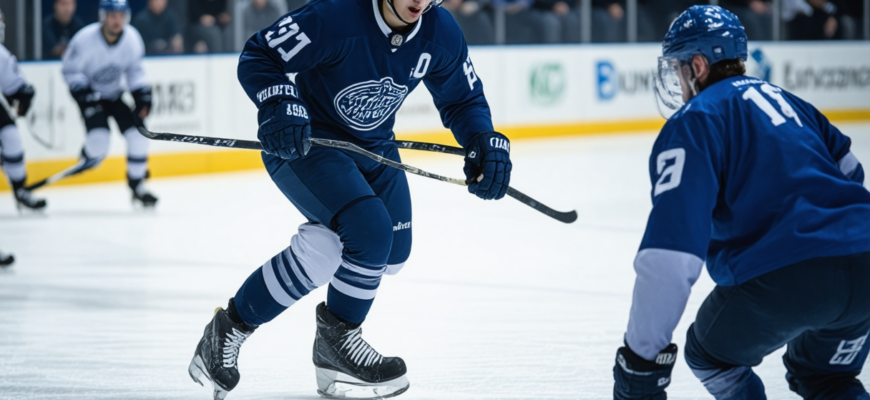
In the fast-paced game of hockey, the ability to anticipate an opponent’s next move can significantly elevate a player’s performance. While physical skills and technical execution are crucial, strategic awareness and predictive instincts often make the difference between a good player and a great one. For amateurs looking to improve their game, learning how to read opponents and forecast their actions is a vital step toward becoming more effective on the ice.
- Understanding the Importance of Anticipation in Hockey
- Core Principles of Reading Opponents in Hockey
- 1. Recognize Body Language and Posture
- 2. Observe Stick and Puck Movements
- 3. Anticipate Based on Positioning
- 4. Notice Patterns and Tendencies
- Strategies to Improve Anticipation Skills
- 1. Study Game Tape and Previous Matches
- 2. Practice Situational Drills
- 3. Enhance Spatial Awareness
- 4. Develop Peripheral Vision
- 5. Cultivate Pattern Recognition
- Common Techniques for Anticipating Opponents’ Moves
- 1. The “Eye of the Player” Technique
- 2. Shadowing and Mirroring
- 3. Positioning for Interception
- 4. Reading the Playmaker’s Body Language
- Mathematical and Tactical Tools for Anticipation
- Using Probability and Formulas
- Practical Examples and Case Studies
- Example 1: Intercepting a Pass
- Example 2: Anticipating a Shot
- Training Drills to Enhance Anticipation
- 1. Shadow Drills
- 2. Simulated Game Situations
- 3. Partner Observation Exercises
- Cultivating Anticipation as a Key Hockey Skill
- References and Further Reading
Understanding the Importance of Anticipation in Hockey
Hockey is a dynamic sport where plays change rapidly, and split-second decisions determine the outcome. Anticipation involves predicting an opponent’s intentions based on their current positioning, body language, and previous behavior. This skill allows players to intercept passes, position themselves effectively, and react faster than their opponents.
Key benefits of mastering anticipation include:
- Enhanced Defensive Skills: Interception of passes and blocking shots becomes more effective.
- Improved Offensive Threat: Creating scoring chances by reading opponents’ commitments.
- Better Positioning: Maintaining optimal zones and reducing gaps.
- Increased Confidence: Making proactive rather than reactive decisions.
Core Principles of Reading Opponents in Hockey
Understanding hockey dynamics enables players to recognize cues and patterns that hint at an opponent’s next move. Here are the fundamental principles:
1. Recognize Body Language and Posture
Players often unconsciously communicate their intentions through their body language. For example, a forward leaning forward with their stick low indicates an imminent shot or pass. Conversely, a defender with an open stance might signal an attempt to block or clear the puck.
2. Observe Stick and Puck Movements
The position and movement of an opponent’s stick provide clues about their next action. A player with their stick pointed toward a teammate may be preparing to pass, while a stick angled for a shot indicates an offensive move.
3. Anticipate Based on Positioning
Players tend to operate within certain zones depending on their role. For instance, a winger near the boards might be looking for a pass or preparing to shoot from an angle. Recognizing these positional tendencies helps predict their plans.
4. Notice Patterns and Tendencies
Regular opponents develop habitual patterns. Some players prefer quick snapshots, while others favor dekes or backward passes. Tracking these tendencies across a game or season enhances predictive accuracy.
Strategies to Improve Anticipation Skills
Developing excellent anticipation does not occur overnight. It requires deliberate practice, game awareness, and mental sharpness. Here are some effective strategies:
1. Study Game Tape and Previous Matches
Analyzing recorded games allows players to identify common behaviors and tendencies of their opponents. Watching carefully, note the moments before a pass, shot, or rush to recognize patterns.
2. Practice Situational Drills
Simulate game scenarios where players must read and react to different opponent movements. Drills such as 2-on-1 or 3-on-2 breakouts improve quick recognition of passing lanes and offensive threats.
3. Enhance Spatial Awareness
Understanding the positioning of all players on the ice refines anticipatory instincts. Drills that focus on maintaining proper spacing and observing multiple opponents simultaneously are beneficial.
4. Develop Peripheral Vision
Being able to see the entire rink and track puck movement alongside opponents’ actions allows for better anticipation. Exercises like focusing on a point while monitoring peripheral cues help expand awareness.
5. Cultivate Pattern Recognition
Players should pay attention to specific moves their opponents favor in different game situations. Maintaining a mental log can help predict future actions based on habits.
Common Techniques for Anticipating Opponents’ Moves
Below are concrete techniques players can employ to sharpen their prediction skills during gameplay:
1. The “Eye of the Player” Technique
This involves observing an opponent’s eyes and head orientation. Skilled players often glance toward their intended target or open ice, revealing their next move.
2. Shadowing and Mirroring
Keeping an eye on the opponent’s current direction and mimicking their movements prepares the defender for anticipated actions like crossing, shooting, or passing.
3. Positioning for Interception
Players position themselves slightly ahead of the opponent’s expected path, creating a natural interception point rather than reacting after the fact.
4. Reading the Playmaker’s Body Language
Identifying when an opponent is setting up for a shot or pass, often indicated by a slight pause or shift in posture, offers a chance to react preemptively.
Mathematical and Tactical Tools for Anticipation
Using Probability and Formulas
Predictive hockey often involves analyzing tendencies and probabilities. While no formula guarantees an outcome, models can guide decision-making. For example, considering the likelihood of a pass based on positional data:
| Factors | Weight | Observation |
|---|---|---|
| Opponent’s stick angle | 0.3 | Angle directed toward teammate |
| Player’s body orientation | 0.3 | Leaning towards offensive zone |
| Previous behavior pattern | 0.4 | Tendency to pass under pressure |
By assigning weights to various cues, players can calculate a probability that an opponent will make a particular move, guiding their defensive or offensive response.
Practical Examples and Case Studies
Example 1: Intercepting a Pass
Suppose an opponent is carrying the puck along the boards with their stick pointed toward an open teammate. Recognizing this pattern, a defender can position themselves strategically to intercept the pass, cutting off the options before the puck reaches the intended recipient.
Example 2: Anticipating a Shot
A forward skates toward the slot, unusually before a shot attempt. Observant defenders notice this hesitation and block the shot or force a turnover, disrupting the offensive play.
Training Drills to Enhance Anticipation
1. Shadow Drills
- One player acts as an attacker, executing fake moves, dekes, or passes.
- The defender must read these cues and react accordingly, practicing anticipating and intercepting.
2. Simulated Game Situations
Set up scenarios where players must decide whether to block a shot, intercept a pass, or maintain zone coverage based on cues from teammates and opponents.
3. Partner Observation Exercises
- Partners take turns performing specific moves or fake actions.
- The other partner practices recognizing and predicting these moves in real-time.
Cultivating Anticipation as a Key Hockey Skill
While speed, agility, and stick skills are undeniably essential, the ability to anticipate opponents’ moves elevates a player’s game to a higher level. It transforms reactive play into proactive strategy, allowing players to intercept passes, create scoring opportunities, and defend more effectively. Developing this skill is an ongoing process that combines studying patterns, observing cues, practicing situational awareness, and refining instincts over time. For amateurs committed to improving their hockey performance, mastering anticipation not only enhances personal effectiveness but also contributes significantly to the overall success of the team.
References and Further Reading
- “The Science of Hockey: Understanding the Game’s Dynamics”
- “Psychology and Decision-Making in Ice Hockey”
- “Defensive Strategies and Reading Opponents”
Incorporating anticipation training into regular practice routines will help players become more instinctive and confident on ice, transforming their approach to the game and unlocking new levels of performance.
Похожие записи:
 Mastering the Art of Following a Hockey Game’s Flow: Essential Tips for Amateur Players to Improve Awareness
  Mastering Passing and Receiving the Puck: Essential Skills for Amateur Hockey Players
  Basic Strategies for Beginner Hockey Players: A Complete Guide for Amateur Enthusiasts
  Mastering the Ice: Essential Hockey Etiquette and Sportsmanship for Amateur Players
  Mastering Speed and Control in Skating: The Ultimate Guide for Amateur Hockey Players
  Mastering the Art of Effective Ice Stops: Essential Techniques for Amateur Hockey Players
  Understanding Ice Rink Markings and Zones: A Guide for Amateur Hockey Enthusiasts
  The Critical Role of Teamwork and Communication in Ice Hockey Success
  Mastering the Ice: A Comprehensive Guide to the Basic Rules of Ice Hockey for Beginners
  Mastering Concentration: Proven Tips to Maintain Mental Focus During Hockey Games
  Mastering Hockey Stick Handling: Essential Techniques for Beginners
  How to Wear Your Helmet and Pads Safely: A Complete Guide for Amateur Hockey Players
  Mastering the Ice: Basic Skating Techniques Every New Hockey Player Must Know
  The Crucial Role of Fitness and Strength in Hockey Performance