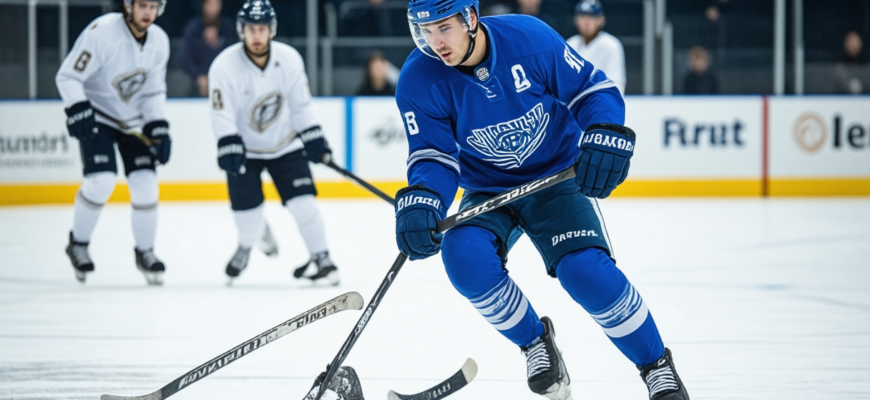
Hockey is a fast-paced and physically demanding sport that requires not only individual skill but also seamless teamwork. Among the fundamental skills that can elevate a player’s game are precise passing and effective puck reception. These skills are vital for maintaining possession, creating scoring opportunities, and contributing to overall team performance. This comprehensive guide will explore the techniques, drills, and strategies necessary for amateur hockey enthusiasts to improve their passing and receiving skills, ensuring they become more reliable and versatile players on the ice.
- Understanding the Importance of Passing and Receiving in Hockey
- Fundamental Principles of Passing in Hockey
- Types of Passes in Hockey
- Proper Technique for Effective Passing
- Position and Stance
- Stick Handling
- Execution Steps
- Common Mistakes to Avoid
- Effective Puck Reception Techniques
- Types of Puck Reception
- Key Techniques for Reliable Reception
- Positioning
- Stick and Blade Control
- Footwork and Balance
- Common Challenges in Receiving the Puck
- Drills for Improving Passing and Receiving Skills
- 1. Passing Accuracy Drill
- 2. One-Timer Shooting and Passing
- 3. Receive and Pivot
- 4. Small-Sided Games
- 5. Wall Passing Drill
- Additional Tips for Skill Development
- Consistent Practice
- Focus on Precision, Not Power
- Improve Hockey IQ
- Use Proper Equipment
- Mathematical and Technical Aspects of Passing
- Calculating Passing Force and Distance
- Angles and Trajectories
- Improving Passing and Receiving for Better Hockey Performance
Understanding the Importance of Passing and Receiving in Hockey
In hockey, the ability to pass the puck accurately and receive it effectively can be the difference between a missed scoring chance and a game-winning goal. Skilled passing facilitates faster gameplay, enhances team coordination, and allows players to exploit weaknesses in opponents’ defenses. Conversely, effective puck reception ensures that players retain control even under pressure, enabling smooth transitions from defense to offense.
Let’s examine why mastering these skills is crucial:
- Maintaining Puck Possession: Proper passing and receiving prevent turnovers and help sustain offensive pressure.
- Creating Scoring Opportunities: Accurate passes set up shots on goal and open teammate options.
- Speeding Up Play: Quick and precise passing keeps the game flowing at a competitive pace.
- Building Team Chemistry: Reliable communication through passing fosters trust among teammates.
- Defensive Transition: Effective reception allows quick retrieval and restart of play in defensive situations.
Fundamental Principles of Passing in Hockey
Types of Passes in Hockey
Hockey players utilize various types of passes depending on the situation, distance, and target. The main ones include:
- Forehand Pass: The most common, performed with the palm of the hand facing forward.
- Backhand Pass: Executed with the back of the stick blade facing the target, useful in tight scenarios.
- Saucer Pass: An elevated pass that lifts the puck off the ice, ideal for crossing obstacles or making precise long-range passes.
Proper Technique for Effective Passing
Position and Stance
Maintaining a balanced stance with knees slightly bent and weight centered over the skates enables better control and power during passes. The player’s eyes should always be on the target before executing the pass.
Stick Handling
Hold the stick firmly but flexibly, with hands shoulder-width apart. Keep the blade flat on the ice during the pass to ensure accuracy.
Execution Steps
- Identify the target and assess the passing lane.
- Use the wrists and arms to generate power, keeping the puck on the blade’s sweet spot.
- Follow through swiftly, directing the puck toward the intended receiver.
- Maintain awareness of the receiver’s position and expected movement.
Common Mistakes to Avoid
- Passing with too much force when a soft pass is needed, causing inaccuracies.
- Awkward body positioning, leading to weak or off-target passes.
- Failing to lead the receiver, resulting in missed opportunities.
- Overpassing or making risky plays under pressure.
Effective Puck Reception Techniques
Types of Puck Reception
Receiving the puck properly ensures control and readiness for the next move. Main reception techniques include:
- Foot Reception: Using the skate to control or redirect the puck.
- Stick Reception: Using the stick blade to gently trap or stop the puck.
- Body Reception: Using the chest or body to shield and control the puck in tight situations.
Key Techniques for Reliable Reception
Positioning
Stay low and keep your knees bent to enhance stability. Position yourself so that you’re ready to move in any direction, with your eyes focused on the puck carrier.
Stick and Blade Control
Use the flat part of the stick blade at the right angle to trap or slow the puck. Keep the blade active and ready to adjust as the puck arrives.
Footwork and Balance
Coordinate your foot placement to absorb the puck’s movement and prepare for the next pass or shot. Proper weight distribution helps with quick reactions.
Common Challenges in Receiving the Puck
- Bad angle or poorly timed reception, leading to loss of possession.
- Handling fast or unpredictable passes under pressure.
- Struggling to control the puck in tight spaces.
Drills for Improving Passing and Receiving Skills
1. Passing Accuracy Drill
Set up cones or markers at various distances and angles. Practice passing the puck to a designated spot, aiming for accuracy and consistency. Repeat with both forehand and backhand passes.
2. One-Timer Shooting and Passing
Work with a partner or coach who feeds the puck at different speeds and angles. Focus on quick, clean one-timer passes to improve reaction time and precision.
3. Receive and Pivot
Stand in a stationary position, and have a partner pass the puck at different heights and speeds. Practice controlling the puck, then pivot and pass back smoothly. This enhances handling under pressure.
4. Small-Sided Games
Engage in small, controlled scrimmages where emphasis is on quick passing, receiving, and maintaining possession. This simulates real-game scenarios.
5. Wall Passing Drill
Use a solid wall to practice passing and receiving alone. Aim for accuracy and control. This helps develop muscle memory and confidence.
Additional Tips for Skill Development
Consistent Practice
The key to mastering passing and receiving is repetition. Incorporate these drills into regular training routines to build muscle memory and natural instinct.
Focus on Precision, Not Power
While power is important, precision and timing are critical. Accurate passes lead to better team play and fewer turnovers.
Improve Hockey IQ
Understanding game situations, anticipating teammates’ movements, and reading opponents’ actions will enhance decision-making, leading to smarter passing and reception.
Use Proper Equipment
Ensure that your stick, skates, and protective gear are suitable for your size and skill level. Comfortable equipment facilitates better control and reduces fatigue.
Mathematical and Technical Aspects of Passing
Calculating Passing Force and Distance
To optimize passing accuracy, players can consider the relationship between puck speed (v), force applied (F), and distance (d).
Basic physics formula:
F = m * a
where m is the mass of the puck (approximately 170 grams or 0.17 kg), and a is acceleration. To reach a target at distance d in time t, the puck must travel with velocity v = d / t. This helps players gauge the necessary force and timing for their passes.
Angles and Trajectories
Considering the angles of pass and receiver positioning can improve success rates, especially over longer distances or when avoiding opponents.
| Scenario | Optimal Passing Angle | Remarks |
|---|---|---|
| Short-range pass | 0° to 45° | Fast, accurate, minimal power needed |
| Long-range pass | 30° to 60° | Lifts puck over opponents or obstacles |
| Through-the-ice | Vertical or shallow angle | Requires precise control to avoid turnovers |
Improving Passing and Receiving for Better Hockey Performance
Mastering the arts of passing and receiving is essential for any amateur hockey player aiming to elevate their game. These skills rely heavily on technique, practice, and strategic understanding. By focusing on proper form, regularly practicing targeted drills, and understanding the physics behind puck movement, players can develop more reliable, accurate, and powerful passing and receiving abilities. Implementing these techniques in game scenarios will lead to improved teamwork, increased control, and more scoring chances, ultimately making the sport more enjoyable and competitive for amateurs and enthusiasts alike.
Remember: Consistency is key. The more time dedicated to refining these skills, the more natural they will become during fast-paced, real-game situations. Whether playing in local leagues or friendly pick-up games, sharpening passing and reception skills will undeniably contribute to a more confident and effective hockey player on the ice.
Похожие записи:
 Mastering Hockey Stick Handling: Essential Techniques for Beginners
  Mastering the Art of Effective Ice Stops: Essential Techniques for Amateur Hockey Players
  Mastering Speed and Control in Skating: The Ultimate Guide for Amateur Hockey Players
  Basic Strategies for Beginner Hockey Players: A Complete Guide for Amateur Enthusiasts
  Mastering the Ice: Basic Skating Techniques Every New Hockey Player Must Know
  Mastering the Ice: A Comprehensive Guide to the Basic Rules of Ice Hockey for Beginners
  How to Wear Your Helmet and Pads Safely: A Complete Guide for Amateur Hockey Players
  The Critical Role of Teamwork and Communication in Ice Hockey Success
  Understanding Ice Rink Markings and Zones: A Guide for Amateur Hockey Enthusiasts