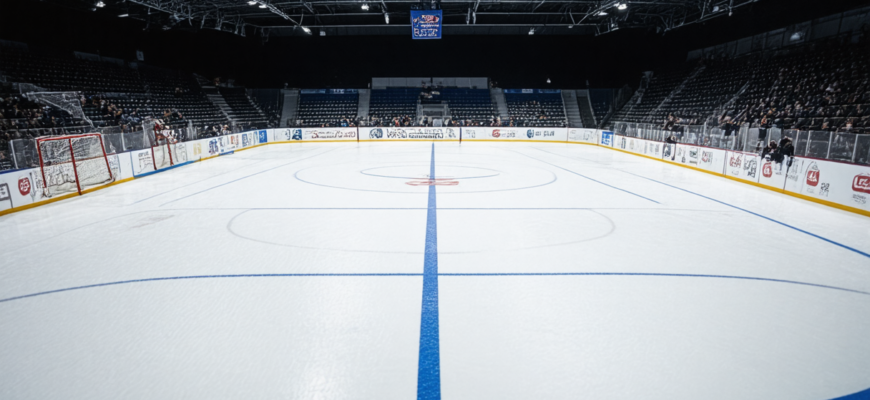
Whether you’re a beginner stepping onto the ice for the first time or an amateur hockey player aiming to deepen your understanding of the game, comprehending the markings and zones on an ice rink is fundamental. These visual cues are not just lines and circles—they are the blueprint of gameplay, strategy, and safety. This comprehensive guide unpacks the meaning and significance of each marking, helping you to navigate the ice with confidence and a clearer understanding of hockey’s spatial rules.
- Introduction to Ice Rink Layout
- Standard Dimensions of an Ice Rink
- Essential Markings and Zones on the Ice Rink
- Basic Lines on the Rink
- 1. Center Line
- 2. Blue Lines
- 3. Goal Lines
- The Zones of the Ice Rink
- 1. Offensive Zone
- 2. Neutral Zone
- 3. Defensive Zone
- The Role of Circles and Dots in the Rink
- Face-off Circles
- Face-off Dots
- Supplementary Markings and Their Uses
- Red Line and Dot
- Goal Creases
- Lines and Zones Summary Table
- Interpreting and Using These Markings in Gameplay
- Key Tactical Insights
Introduction to Ice Rink Layout
The standard ice hockey rink is meticulously marked to facilitate gameplay, officiating, and player positioning. While dimensions may vary slightly depending on regional standards or league regulations, most rinks follow a universally recognized layout. Understanding this layout is the first step toward mastering the flow of the game.
Standard Dimensions of an Ice Rink
| Parameter | Typical Measurement | Description |
|---|---|---|
| Length | 60 meters (197 feet) (International) or 200 feet (61 meters) (North American) | The distance from end boards to end boards along the ice surface. |
| Width | 30 meters (98.4 feet) (International) or 85 feet (26 meters) (North American) | The distance between sideboards, defining the ice surface width. |
| Corner Radius | Approx. 8-9 meters (26-30 feet) | Radius of the rounded corners where the sidelines meet the end boards. |
Having a grasp of these measurements helps in understanding the scale and proportions of playing zones, along with strategic planning.
Essential Markings and Zones on the Ice Rink
The ice rink’s markings are primarily composed of lines, circles, and zones. Each serves specific purposes in gameplay regulation, positioning, and gameplay flow. Let’s explore each in detail.
Basic Lines on the Rink
1. Center Line
The center line runs across the width of the rink, dividing it into two equal halves. It is typically painted in red and extends from one side to the other.
- Function: Used to regulate face-offs at the start of periods and after goals, as well as offside violations.
- Gameplay Significance: Plays a crucial role during neutral zone plays, marking the boundary between offensive and defensive zones.
2. Blue Lines
The rink features two blue lines, each parallel to the center line, that divide the ice into three zones: offensive, neutral, and defensive.
- Function: Mark off the two large zones on either side of the rink; regulate offside rules.
- Gameplay Significance: When players cross the blue line into the attacking zone, offensive plays are initiated, provided they are not offsides.
3. Goal Lines
Located at each end of the rink behind the goals, goal lines span the ice’s width and are painted in red.
- Function: Used to determine if a goal has been scored (the puck must fully cross the goal line within the net’s posts).
- Gameplay Significance: Goal line technology helps referees determine goal validity and is critical in game officiating.
The Zones of the Ice Rink
The three primary zones in an ice hockey game are the offensive zone, the neutral zone, and the defensive zone. Each influences how players position themselves and how the game unfolds tactically.
1. Offensive Zone
This is the area of the ice in front of a team’s opponent’s goal. It extends from the blue line to the goal line.
- Purpose: Primary area for attack and goal-scoring opportunities.
- Gameplay Considerations: Players attempt to advance the puck, set up plays, and execute shots on goal.
2. Neutral Zone
The central part of the ice, lying between the two blue lines. It acts as a transition area between offense and defense.
- Purpose: Control and transition—teams try to carry the puck through this zone to reach the opponent’s offensive zone.
- Gameplay Considerations: A key battleground for puck possession, forechecking, and defensive plays.
3. Defensive Zone
The area behind a team’s own blue line and in front of their own goal. It extends from the blue line to the end boards.
- Purpose: Defense and clearing the puck to prevent the opponent from scoring.
- Gameplay Considerations: Defensive positioning, clearing zones, and protecting the net are vital roles here.
The Role of Circles and Dots in the Rink
Beyond lines and zones, the ice contains specific circles and dots that facilitate face-offs and official calls.
Face-off Circles
- Center Face-off Circle: Located at the center ice, where the game begins and resumes after goals. This circle has a diameter of approximately 15 feet.
- Face-off Circles in Zones: Four other circles positioned in each offensive and defensive zone, utilized for face-offs following stoppages.
Face-off Dots
- Small dots within each face-off circle mark the precise spot where the puck is dropped for face-offs.
Supplementary Markings and Their Uses
Additional markings on the ice are instrumental in maintaining order and clarity during play.
Red Line and Dot
- The center red dot adorns the ice at the exact center of the rink, where the initial face-off occurs at the start of periods.
Goal Creases
- Shape and Size: A semi-circular area extending 4 feet in front of the net, painted in blue or red.
- Function: Defines the goalie’s protected area. Opponents cannot impede the goalie within this zone unless the puck is present.
Lines and Zones Summary Table
| Marking | Location | Primary Use |
|---|---|---|
| Center Line | Across the rink’s width, mid-ice | Start of play, face-offs, offside rule enforcement |
| Blue Lines | Parallel to center line, dividing zones | Defining offensive, neutral, and defensive zones |
| Goal Line | At each end of the rink behind the net | Determining goal validity |
| Face-off Circles | Centered in each zone + center ice | Face-off locations |
| Goal Creases | In front of each net | Protects goal area and goalie |
Interpreting and Using These Markings in Gameplay
Understanding the markings enhances a player’s ability to position effectively, recognize game situations, and adhere to rules, resulting in a more strategic approach to the game.
Key Tactical Insights
- Offside Awareness: Players must ensure they do not enter the attacking zone before the puck crosses the blue line. Understanding the blue lines, face-off circles, and zones helps prevent offsides.
- Forechecking and Defensive Coverages: Recognizing zone boundaries aids in effective forechecking and coverage strategies.
- Executing Face-offs: Knowledge of circle locations helps players take advantageous face-offs to gain possession.
- Positioning for Shots and Saves: Goal crease awareness ensures players know where the goalkeeper’s protected area is, influencing shot placement and defensive plays.
Mastering the markings and zones of an ice rink is a foundational skill for anyone involved in hockey, especially amateurs seeking to improve their understanding and enjoyment of the game. Each line, circle, and zone serves a specific purpose that guides the flow of play, strategic positioning, and officiating decisions. By familiarizing oneself with these markings, players can approach the ice with greater confidence, make smarter decisions, and enjoy a safer, more engaging hockey experience.
Whether for recreational play or aspiring to higher levels of amateur hockey, an in-depth knowledge of rink markings transforms the way players engage with the game, making every shift, pass, and shot more purposeful and aligned with official rules.
Похожие записи:
 Mastering the Ice: A Comprehensive Guide to the Basic Rules of Ice Hockey for Beginners
  Basic Strategies for Beginner Hockey Players: A Complete Guide for Amateur Enthusiasts
  Mastering Speed and Control in Skating: The Ultimate Guide for Amateur Hockey Players
  Mastering Passing and Receiving the Puck: Essential Skills for Amateur Hockey Players
  Mastering the Art of Effective Ice Stops: Essential Techniques for Amateur Hockey Players
  How to Wear Your Helmet and Pads Safely: A Complete Guide for Amateur Hockey Players
  The Critical Role of Teamwork and Communication in Ice Hockey Success
  Mastering the Ice: Basic Skating Techniques Every New Hockey Player Must Know
  Mastering Hockey Stick Handling: Essential Techniques for Beginners