
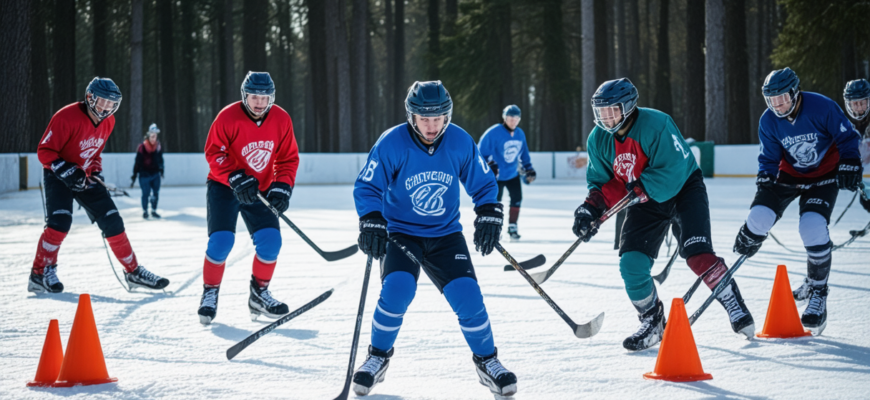
Hockey is a fast-paced and demanding sport that requires a combination of skills, agility, teamwork, and strategic thinking. For amateur players aiming to improve their game, traditional training routines can sometimes become monotonous, leading to decreased motivation and suboptimal results. To counteract this, incorporating fun and engaging drills into practice sessions not only boosts skill development but also keeps players motivated and eager to learn. This comprehensive guide explores how to effectively integrate enjoyable drills into training to elevate your hockey performance.
- Understanding the Importance of Fun Drills in Hockey Training
- Principles for Designing Effective Fun Hockey Drills
- Popular Fun Drills and Exercises for Amateur Hockey Players
- 1. Relay Races with a Twist
- 2. Obstacle Course Drills
- 3. Puck Shooting Accuracy Challenge
- 4. Keep-Away Games
- 5. Scrimmage with Rule Modifications
- Strategies for Integrating Fun Drills into Training Routines
- 1. Balance Between Fun and Fundamentals
- 2. Schedule Regular Themed Sessions
- 3. Foster a Competitive but Supportive Atmosphere
- 4. Use Technology and Visual Aids
- 5. Rely on Peer Leadership
- Monitoring Progress and Adjusting Drills
- 1. Keeping Track of Improvements
- 2. Adapting Drills to Skill Levels
- Benefits of Fun Drills for Amateur Hockey Players
Understanding the Importance of Fun Drills in Hockey Training
Traditional drills focus heavily on technical skills like stickhandling, shooting, and skating precision. While essential, these exercises can sometimes lack excitement, risking player fatigue or disinterest. Fun drills, on the other hand, serve multiple purposes:
- Increase Engagement: Enjoyable exercises motivate players to participate actively.
- Enhance Learning: Playful scenarios often improve memory retention and skill transfer.
- Build Team Chemistry: Interactive drills foster communication and camaraderie.
- Boost Creativity: Creative exercises encourage players to adapt and think strategically under dynamic conditions.
Principles for Designing Effective Fun Hockey Drills
To maximize benefits, certain principles should guide the development of fun hockey drills:
- Relevance to Skills: Drills should target specific skills like puck control, shooting accuracy, or skating agility.
- Progressive Difficulty: Exercises should evolve from simple to complex, maintaining challenge and engagement.
- Incorporation of Competition: Friendly contests push players to perform at their best.
- Inclusion of Variety: Mix different types of drills to prevent monotony and stimulate different skill sets.
- Focus on Fun: Ensure the activity is enjoyable and promotes a positive, energetic environment.
Popular Fun Drills and Exercises for Amateur Hockey Players
1. Relay Races with a Twist
This drill combines speed, agility, and puck control, encouraging friendly competition and team bonding.
| Setup | Execution |
|---|---|
|
|
2. Obstacle Course Drills
Obstacle courses simulate game situations requiring quick decision-making and skill execution.
- Set up cones, tires, or small hurdles that players need to navigate.
- Challenge players to control the puck while maneuvering through obstacles.
- Use timers to add a competitive element and track progress over time.
3. Puck Shooting Accuracy Challenge
This drill sharpens shooting precision while adding a competitive element.
- Place targets at various points in the net—higher, lower, left, and right.
- Each player takes turns shooting, aiming for specific targets.
- Assign point values to each target based on difficulty.
- Track scores across rounds and encourage players to beat their personal bests.
4. Keep-Away Games
An engaging method to improve puck handling and defensive skills while maintaining high energy levels.
- Players form two teams; one team maintains possession in a confined space.
- The opposing team tries to intercept or steal the puck.
- After a set time or number of turnovers, teams switch roles.
- Variations include limiting touches or adding constraints like only using one hand.
5. Scrimmage with Rule Modifications
Creating controlled scrimmages with playful rules encourages real-game practice in a fun setting.
- Implement rules like mandatory pass before shooting or limiting the number of dribbles.
- Encourage creative plays and teamwork.
- Offer small rewards or recognition for creative goals or savvy defense.
Strategies for Integrating Fun Drills into Training Routines
1. Balance Between Fun and Fundamentals
While fun drills are engaging, they should complement core skill development. Reserve specific parts of practice for technical drills, and use fun exercises to reinforce these skills in enjoyable ways.
2. Schedule Regular Themed Sessions
Designate particular training days for themed activities — for example, “Speed and Agility Day” or “Accuracy Challenge Day.” This creates anticipation and variety, preventing boredom and encouraging continuous improvement.
3. Foster a Competitive but Supportive Atmosphere
Encourage friendly rivalry but emphasize sportsmanship and personal improvement. Recognize effort and creativity to motivate participation.
4. Use Technology and Visual Aids
Incorporate apps, timers, or video analysis to track progress and add an interactive layer to fun drills. Visual feedback enhances learning and keeps players invested.
5. Rely on Peer Leadership
Involve more experienced players in organizing and leading drills, which can inspire others and create a sense of team ownership.
Monitoring Progress and Adjusting Drills
1. Keeping Track of Improvements
- Use scoring systems and record times to measure progress over weeks or months.
- Collect feedback from players on what drills they find most enjoyable and effective.
2. Adapting Drills to Skill Levels
- Modify difficulty by adjusting obstacle complexity, time limits, or target sizes.
- Introduce new challenges gradually to keep players engaged and progressing.
Benefits of Fun Drills for Amateur Hockey Players
Implementing fun exercises in practice sessions offers numerous advantages:
| Benefit | Description |
|---|---|
| Enhanced Motivation | Players remain driven and eager to participate when drills are enjoyable. |
| Improved Skill Acquisition | Engaging activities promote better retention of techniques and tactics. |
| Stronger Team Cohesion | Group games foster communication and camaraderie among players. |
| Increased Physical Fitness | Dynamic drills boost stamina, strength, and agility. |
| Reduced Practice Fatigue | Enjoyable exercises prevent burnout and promote long-term participation. |
Integrating fun, innovative drills into hockey training routines is a proven approach to improving skills, boosting motivation, and fostering a positive team environment among amateur players. By carefully designing engaging exercises that challenge players while maintaining enjoyment, coaches and players can create a dynamic training experience that accelerates development. Remember, the key to successful hockey improvement lies not only in repetition and discipline but also in the joy of playing and learning the game. Embrace creativity, competition, and camaraderie through fun drills, and watch performance—and passion—soar to new heights.
Похожие записи:
 Starting with Beginner-Friendly Hockey Drills: A Complete Guide for Amateur Players
  Building Confidence in Your Skating and Puck Skills: A Complete Guide for Amateur Hockey Players
  Mastering Passing and Receiving the Puck: Essential Skills for Amateur Hockey Players
  Basic Strategies for Beginner Hockey Players: A Complete Guide for Amateur Enthusiasts
  The Surprising Benefits of Playing Small-Area Hockey for Amateur Players
  Mastering Speed and Control in Skating: The Ultimate Guide for Amateur Hockey Players
  Mastering Hockey: How Watching Online Tutorials and Videos Can Elevate Your Game for Amateur Players
  Simple and Effective Ways to Improve Your Balance on Skates for Amateur Hockey Players
  Mastering the Art of Following a Hockey Game’s Flow: Essential Tips for Amateur Players to Improve Awareness
  How to Stay Motivated as a Beginner Hockey Player: Tips for Amateur Enthusiasts
  Mastering the Art of Anticipation: How Amateur Hockey Players Can Predict Opponents’ Moves
  Mastering the Ice: Essential Hockey Etiquette and Sportsmanship for Amateur Players
  How to Wear Your Helmet and Pads Safely: A Complete Guide for Amateur Hockey Players
  Mastering Hockey Shooting Techniques from Different Angles: A Guide for Amateurs
  Mastering the Art of Effective Ice Stops: Essential Techniques for Amateur Hockey Players
  Understanding Ice Rink Markings and Zones: A Guide for Amateur Hockey Enthusiasts