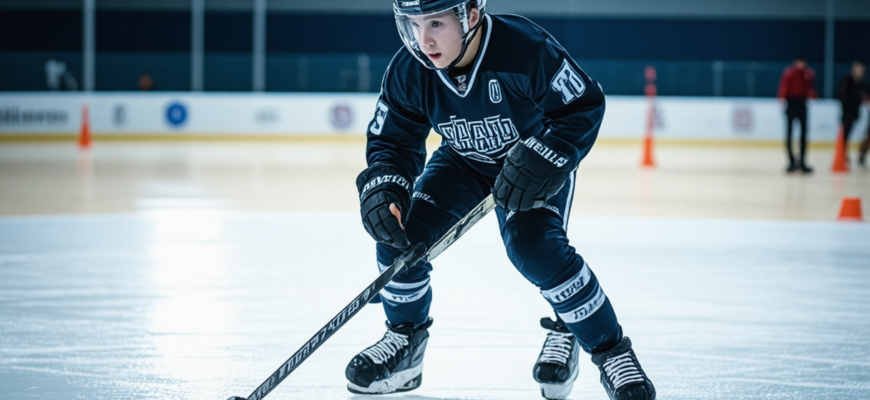
Getting started in hockey requires not only understanding the rules and playing tactics but also developing fundamental skills such as stickhandling. Stickhandling is the art of controlling the puck smoothly and confidently while skating, dodging opponents, and maintaining possession. For beginners, mastering basic stickhandling drills is essential to build confidence and set a strong foundation for advanced techniques. This comprehensive guide explores effective exercises for new players, providing detailed instructions, tips, and tools to elevate your game on the ice.
- Understanding the Importance of Stickhandling
- Essential Equipment for Stickhandling Practice
- Basic Stickhandling Drills for Beginners
- 1. Stationary Puck Control
- Objective:
- Execution:
- Tips:
- 2. Moving Puck Control (Figure-Eight Drill)
- Objective:
- Execution:
- Tips:
- 3. Obstacle Drills (Slalom Navigation)
- Objective:
- Execution:
- Tips:
- 4. One-Handed Stickhandling
- Objective:
- Execution:
- Tips:
- 5. Stickhandling in Motion
- Objective:
- Execution:
- Tips:
- Advanced Techniques to Incorporate Over Time
- Practice Tips and Strategies for Effective Skill Development
- Additional Tools to Enhance Practice
- Common Mistakes to Avoid When Practicing Stickhandling
Understanding the Importance of Stickhandling
Stickhandling is more than just moving the puck with your stick; it is a critical skill that influences the flow of the game. Proper stickhandling allows players to navigate through tight spaces, protect the puck from defenders, and set up scoring opportunities. For new players, developing consistent and controlled stickhandling creates a solid base for all other hockey skills including passing, shooting, and skating.
Moreover, comfortable puck control boosts confidence, enabling players to participate actively and without hesitation. In essence, mastering basic stickhandling drills is an investment in long-term hockey proficiency, making practice sessions more effective and enjoyable.
Essential Equipment for Stickhandling Practice
| Equipment | Description |
|---|---|
| Hockey Stick | A properly sized stick for your height, ideally with a comfortable grip. |
| Puck or Ball | Hockey puck or a training ball designed for indoor practice. |
| Cones or Markers | Used to create slalom patterns and obstacle courses. |
| Training Surface | Ice rink, synthetic ice, or smooth flooring with a non-slip surface for drills. |
| Protective Gear (Optional) | Gloves, helmet, and pads for safety during on-ice practice. |
Basic Stickhandling Drills for Beginners
1. Stationary Puck Control
Objective:
Develop comfortable puck control and hand-eye coordination while stationary.
Execution:
- Stand with feet shoulder-width apart, knees slightly bent, holding your stick with both hands.
- Place the puck in front of you on the ice or floor.
- Using the forehand and backhand, gently push the puck back and forth, ensuring minimal puck movement away from your stick.
- Focus on keeping the puck close, maintaining control at all times.
- Perform this exercise for 1-2 minutes, gradually increasing speed as you improve.
Tips:
- Keep your hands relaxed and close to the blade of the stick for better control.
- Practice alternating between forehand and backhand touches smoothly.
- Maintain an upright stance to enhance balance and stability.
2. Moving Puck Control (Figure-Eight Drill)
Objective:
Enhance puck control while moving the puck in a figure-eight pattern, simulating real-game situations.
Execution:
- Set two cones or markers about 3-4 feet apart, forming the points of the figure-eight.
- Start with the puck near one cone, using forehand and backhand moves to guide the puck around it.
- Move the puck around the second cone in the opposite direction.
- Focus on maintaining close control, keeping the puck on your stick and avoiding collisions with the markers.
- Complete multiple repetitions, aiming for smooth transitions and consistent puck contact.
Tips:
- Keep your knees bent to maintain balance during quick movements.
- Use small, controlled touches rather than forceful pushes.
- Gradually increase speed as your control improves.
3. Obstacle Drills (Slalom Navigation)
Objective:
Improve agility and puck handling ability while skimming through obstacles, simulating game pressure scenarios.
Execution:
- Arrange a line of cones or markers spaced about 2-3 feet apart across your practice area.
- Starting at one end, skate forward while controlling the puck with forehand and backhand touches to weave between the cones.
- Maintain close puck contact and focus on smooth, coordinated movements.
- Complete the course by navigating through all cones without losing control.
Tips:
- Stay low with knees bent to better maneuverability and balance.
- Use your wrists for subtle puck movements rather than excessive arm movement.
- Practice different paths, including tight turns and quick stops.
4. One-Handed Stickhandling
Objective:
Build strength and control in each hand, enhancing overall puck handling capabilities.
Execution:
- Hold the stick with one hand (either left or right), keeping the other hand free or behind your back.
- Practice moving the puck in various directions using only the hand holding the stick.
- Switch hands and repeat the exercise.
- Progress to moving the puck around obstacles or performing small tricks with one hand.
Tips:
- Start with slow, deliberate movements before increasing speed.
- Focus on keeping the puck close and under control with each stroke.
- This drill can be performed both stationary and while skating.
5. Stickhandling in Motion
Objective:
Simulate game conditions where puck control is crucial while skating at different speeds.
Execution:
- Begin skating forward at a slow pace, controlling the puck with smooth touches.
- Gradually increase your speed, maintaining control over the puck.
- Practice changing direction, stopping, and starting while maintaining puck contact.
- Vary your pace, including quick stops and sudden accelerations.
Tips:
- Keep your head up to simulate real-game awareness.
- Use your ankles and knees to absorb shocks and maintain balance.
- Focus on fluid movement rather than forceful puck pushes.
Advanced Techniques to Incorporate Over Time
Once comfortable with basic drills, players can begin integrating more complex exercises such as:
- Deception moves like fake shots and toe drags.
- Using both forehand and backhand rapidly in succession.
- One-on-one obstacle challenges with simulated defender motions.
Practice Tips and Strategies for Effective Skill Development
- Consistent Practice: Regularly dedicate time to stickhandling drills, ideally 3-4 times per week.
- Progressive Intensity: Start slow, focus on control, then gradually increase speed and complexity.
- Focus on Form: Proper technique ensures better muscle memory and prevents bad habits.
- Record and Review: Use video recordings to analyze your movements and identify areas for improvement.
- Integrate with Skating: Combine stickhandling drills with skating exercises for more realistic practice scenarios.
Additional Tools to Enhance Practice
| Tool | Purpose |
|---|---|
| Stick Handling Balls or Dashes | Small objects to improve precision and control. |
| Training Aids (Slalom Poles, Cones) | Designated obstacles for pattern drills. |
| Video Analysis Software | Track progress and refine techniques through visual feedback. |
| Skating Platform or Synthetic Ice | Allows practice even off-ice, maintaining puck control skills. |
Common Mistakes to Avoid When Practicing Stickhandling
- Overreaching with the stick, causing loss of control.
- Stiffness in puck movements; instead, focus on relaxed, controlled touches.
- Ignoring proper stance—standing too upright reduces balance and agility.
- Trying to perform complex moves before mastering fundamentals.
- Neglecting head-up skating; always look around to simulate game situations.
Mastering basic stickhandling drills is a cornerstone for aspiring hockey players. These exercises lay the groundwork for more advanced skills and improve overall confidence on the ice. Consistent practice, proper technique, and gradual progression are key to developing excellent puck control. By incorporating drills such as stationary control, figure-eight exercises, obstacle navigation, one-handed moves, and dynamic puck handling, beginners can achieve significant improvements in their game. Remember, patience and perseverance are essential — each drill is a step toward becoming a more skilled and confident hockey player.
Whether practicing on the ice or on synthetic surfaces, dedicating time to these fundamental exercises will pay off in game situations. As skills improve, players can explore more complex maneuvers and game scenarios, paving the way for a successful hockey journey.
Похожие записи:
 Incorporating Fun Drills to Enhance Hockey Skills: A Guide for Amateur Players
  Ultimate Guide to Drills that Boost Eye and Hand Coordination for Amateur Hockey Enthusiasts
  Mastering the Art of Following a Hockey Game’s Flow: Essential Tips for Amateur Players to Improve Awareness
  Starting with Beginner-Friendly Hockey Drills: A Complete Guide for Amateur Players
  Mastering Passing and Receiving the Puck: Essential Skills for Amateur Hockey Players
  Building Confidence in Your Skating and Puck Skills: A Complete Guide for Amateur Hockey Players
  Mastering Balance and Stability: Essential Techniques for Amateur Hockey Players
  Simple and Effective Ways to Improve Your Balance on Skates for Amateur Hockey Players
  Effective Passing Drills to Boost Teamwork in Hockey for Amateurs
  Essential Safety Tips for Novice Players: Ensuring Safe and Enjoyable Hockey for Amateurs
  Mastering Hockey Stick Handling: Essential Techniques for Beginners
  Basic Strategies for Beginner Hockey Players: A Complete Guide for Amateur Enthusiasts
  Mastering the Art of Effective Ice Stops: Essential Techniques for Amateur Hockey Players
  Conquer Your First Ice Hockey Fears: Essential Tips for Beginners
  Mastering Speed and Control in Skating: The Ultimate Guide for Amateur Hockey Players
  Mastering the Ice: Essential Hockey Etiquette and Sportsmanship for Amateur Players