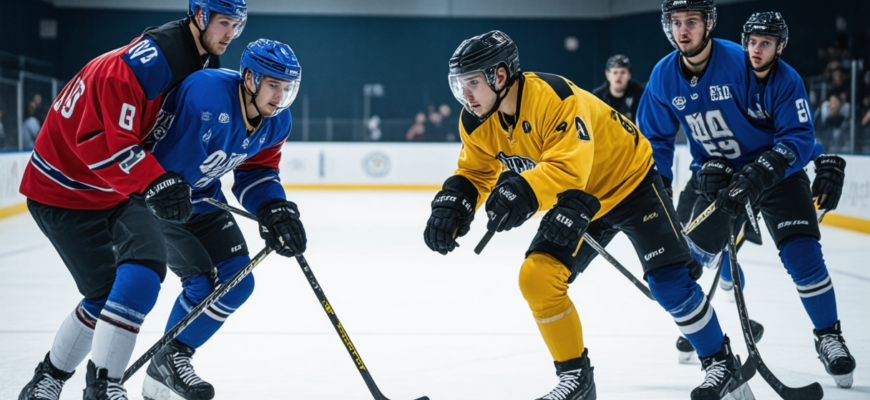
Hockey is a fast-paced, physically demanding sport that relies heavily on teamwork and precise passing. For amateur players looking to elevate their game, mastering simple yet effective passing drills can significantly improve coordination, communication, and overall team dynamics. This comprehensive guide explores various passing exercises designed specifically for amateurs, emphasizing the importance of teamwork on the ice. Whether you’re practicing on a local rink or just starting out, these drills will help your team develop better passing skills and a stronger connection during gameplay.
- Why Passing Skills Are Crucial in Hockey
- Fundamental Principles of Effective Hockey Passing
- Simple Passing Drills for Amateur Hockey Teams
- 1. Pair Passing Drill
- Description
- How to Perform
- Goals
- 2. Circle Passing Drill
- Description
- How to Perform
- Goals
- 3. Three-Man Passing Triangle
- Description
- How to Perform
- Goals
- 4. Up and Down Passing Drill
- Description
- How to Perform
- Goals
- Tips for Maximizing the Effectiveness of Passing Drills
- Common Mistakes to Avoid in Passing Drills
- Incorporating Passing Drills into Practice Routines
- Additional Resources
Why Passing Skills Are Crucial in Hockey
In hockey, passing is more than just transferring the puck; it’s about creating scoring opportunities, maintaining possession, and outsmarting opponents. Excellent passing can turn defense into attack in seconds, while poor passing often leads to turnovers and lost scoring chances.
Some key reasons why passing skills are vital include:
- Maintaining puck possession: Accurate passes reduce turnovers and keep the play alive.
- Creating scoring opportunities: Well-timed passes set up teammates for shots on goal.
- Enhancing team coordination: Effective passing fosters better communication and trust among players.
- Speeding up game tempo: Quick, precise passes allow for faster transitions from defense to offense.
Fundamental Principles of Effective Hockey Passing
Before diving into specific drills, it’s essential to understand the core principles that underpin effective passing:
- Accuracy: The puck should arrive smoothly and precisely in the teammate’s strike zone.
- Speed: Passing at the right speed ensures the teammate can control the puck without difficulty.
- The correct angle: Passes should be directed along the optimal trajectory to reach the intended player quickly.
- Timing: Choosing the right moment to pass is crucial—too early or too late can result in turnovers.
- Communication: Players should communicate intentions to avoid confusion during play.
Simple Passing Drills for Amateur Hockey Teams
Effective practice sessions include exercises that are simple to understand but highly beneficial for motor skill development and teamwork. Below are some of the best passing drills tailored for amateurs, ensuring gradual improvement while keeping the training engaging.
1. Pair Passing Drill
Description
This fundamental drill emphasizes accuracy and receiving skills in a controlled environment. It is suitable for players of all skill levels and serves as a foundation for more complex exercises.
How to Perform
- Players pair up and stand about 5 meters apart facing each other.
- One player starts with the puck and passes to their partner using the forehand or backhand.
- The receiving player controls the puck and immediately passes back.
- Repeat the exercise for 2-3 minutes, then switch roles.
Goals
- Improve passing accuracy.
- Enhance puck control during receiving.
- Develop quick reflexes and decision-making.
2. Circle Passing Drill
Description
This drill helps players practice passing in a dynamic setting, simulating game situations where quick passes are necessary along with movement.
How to Perform
- Arrange 4-6 players in a circle about 8 meters in diameter.
- One player starts with the puck, passing clockwise to the next player.
- After passing, the player moves to the position of the receiver to maintain the circle.
- Continue passing around the circle for 2-3 minutes.
Goals
- Improve passing timing and accuracy in a moving environment.
- Encourage communication and awareness among teammates.
- Build team cohesion through continuous movement and passing.
3. Three-Man Passing Triangle
Description
Designed to develop quick decision-making, this drill involves three players working together to keep the puck moving in a triangular formation.
How to Perform
- Set up three players in an equilateral triangle, approximately 5 meters apart.
- Players pass the puck in sequence around the triangle—Player 1 to Player 2, then Player 2 to Player 3, and back.
- Focus on quick, accurate passes and steady movement.
- Increase speed and incorporate fake passes for added difficulty.
Goals
- Enhance quick passing under pressure.
- Refine angles and timing for passing in tight situations.
- Foster teamwork and spatial awareness.
4. Up and Down Passing Drill
Description
This drill simulates rapid transition play, requiring players to pass the puck while moving forwards and backwards.
How to Perform
- Arrange two lines of players facing each other at about 10 meters apart.
- The first player in one line passes to the first player in the opposite line, then moves to the end of that line.
- The receiving player controls and passes back, then moves to the end of their line.
- Continue the cycle rapidly for 3-4 minutes.
Goals
- Improve passing accuracy during quick transitions.
- Develop swift movement and teamwork.
- Train players to maintain composure under fast-paced conditions.
Tips for Maximizing the Effectiveness of Passing Drills
To ensure that training sessions lead to tangible improvements, consider the following advice:
- Gradually increase complexity: Start with basic passes and add movement, fake passes, or increased speed as players improve.
- Provide constructive feedback: Encourage teammates to communicate positively and correct errors gently.
- Focus on communication: Emphasize verbal cues like “mine,” “wait,” or “check” during drills.
- Use varied drills: Incorporate different exercises to develop versatile passing skills and prevent monotony.
- Ensure proper equipment: Use suitable sticks, pucks, and rink surface to enhance safety and effectiveness.
Common Mistakes to Avoid in Passing Drills
While practicing passing techniques, amateur players often make certain errors that hinder improvement. Recognizing and avoiding these mistakes can accelerate skill development:
| Mistake | Why It’s Problematic | How to Correct |
|---|---|---|
| Passing with too much force | Results in uncontrollable passes and misses targets | Use controlled, firm passes tailored to distance and player skill |
| Ignoring body position | Leads to inaccurate passes and poor puck control | Maintain proper stance, knees slightly bent, and face the target |
| Not communicating | Causes confusion and missed opportunities | Encourage players to use verbal cues and eye contact |
| Rushing passes | Increases errors and turnovers | Promote patience and proper setup before passing |
Incorporating Passing Drills into Practice Routines
For optimal results, passing drills should be integrated into larger training sessions with clear progression. Here’s a sample approach:
- Warm-up (10 minutes): Light skating and stick-handling exercises to prepare the players.
- Main drills (30-40 minutes): Implement a combination of the passing drills described above, gradually increasing complexity.
- Game-like scenarios (20 minutes): Apply passing drills in simulated game situations, emphasizing quick decision-making and teamwork.
- Cool-down and review (10 minutes): Stretching, feedback, and discussing areas for improvement.
Mastering simple passing drills is fundamental for amateur hockey teams aiming to improve their teamwork, communication, and overall game performance. These exercises, focusing on accuracy, speed, and coordination, serve as building blocks for more advanced skills and game strategies. By consistently practicing these drills and incorporating proper technique and communication, amateur players can significantly enhance their on-ice chemistry, making their team more cohesive and formidable during matches. The key lies in regular practice, constructive feedback, and gradually increasing the difficulty of drills to challenge players and foster continuous improvement.
Additional Resources
- Hockey Passing Techniques for Beginners
- Perfecting Your Shot: Shooting Drills for Amateurs
- Building Team Strategies in Amateur Hockey
Remember, consistent effort and a positive attitude are essential for growth in any sport. Happy practicing!
Похожие записи:
 Mastering Precision: Essential Drills to Improve Passing Accuracy in Hockey
  Ultimate Guide to Drills that Boost Eye and Hand Coordination for Amateur Hockey Enthusiasts
  The Critical Role of Teamwork and Communication in Ice Hockey Success
  Mastering the Art of Puck Recovery: Strategies for Effective Play in Amateur Hockey
  Mastering Passing and Receiving the Puck: Essential Skills for Amateur Hockey Players
  Mastering the Ice: Essential Defensive Positioning Strategies in Hockey for Amateurs
  Essential Stickhandling Drills for New Hockey Players: Improve Your Skills on Ice
  Incorporating Fun Drills to Enhance Hockey Skills: A Guide for Amateur Players
  Mastering the Art of Reading the Game in Hockey: A Guide for Amateurs
  Mastering the Ice: The Essential Guide to Participating in Friendly Scrimmages for Hockey Amateurs
  Mastering the Basics: Introduction to Offsides and Icing Rules in Hockey for Amateurs
  Starting with Beginner-Friendly Hockey Drills: A Complete Guide for Amateur Players
  Simple and Effective Ways to Improve Your Balance on Skates for Amateur Hockey Players
  Mastering the Basics: Wrist Shot and Slap Shot Techniques in Hockey for Amateurs
  Mastering the Art of Effective Ice Stops: Essential Techniques for Amateur Hockey Players
  Mastering Hockey Shooting Techniques from Different Angles: A Guide for Amateurs