
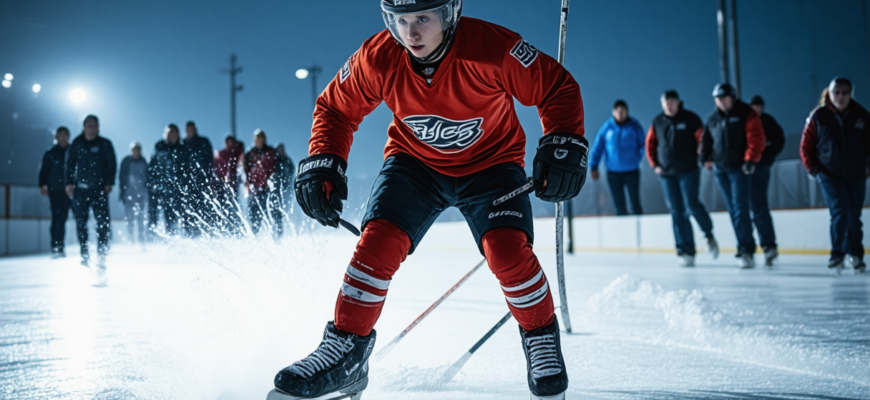
For amateur hockey enthusiasts aiming to enhance their performance on the ice, mastering fundamental skating techniques is paramount. Power skating, a specialized training approach focusing on speed, efficiency, and power, forms the backbone of effective on-ice movement. Whether a beginner or a skater looking to refine basic skills, understanding and practicing introductory power skating exercises can significantly improve agility, balance, and overall hockey performance. This comprehensive guide explores key exercises, their benefits, and practical tips for integrating power skating into training routines.
- Understanding Power Skating: What Is and Why Is It Important?
- Preparation for Power Skating Exercises
- Foundational Power Skating Exercises for Beginners
- 1. Forward Stride Technique
- 2. Basic Stopping Drills (T-Stop and Hockey Stop)
- 3. Edge Control Exercises
- Intermediate Power Skating Exercises to Build Speed and Agility
- 4. Power Push Drills
- 5. Crossover Technique
- 6. Tight Turns and Pivoting
- Advanced Power Skating Techniques for Improved Performance
- 7. Sprint Starts and Acceleration
- 8. Power Cross-Over Sprints
- Incorporating Power Skating into Training Regimens
- Common Mistakes and How to Avoid Them
- Safety Tips for Power Skating
- Unlocking Your Potential Through Power Skating
Understanding Power Skating: What Is and Why Is It Important?
Power skating is a technique-oriented method designed to develop muscular strength, endurance, and technical proficiency on ice. Unlike recreational skating, which emphasizes leisure and casual movement, power skating focuses on optimized stride mechanics, acceleration, deceleration, and edge control, all crucial attributes for successful hockey gameplay.
Core benefits include:
- Enhanced acceleration and top speed
- Improved maneuverability and agility
- Better endurance for sustained performance
- Stronger skating strides with efficient energy use
Preparation for Power Skating Exercises
Before engaging in power skating drills, skaters should ensure proper warm-up routines. This reduces injury risk and primes muscles for intense activity. Typical warm-up includes light skating, dynamic stretching, and mobility exercises.
| Warm-up Component | Description |
|---|---|
| Light Skating | 5-10 minutes of easy, relaxed skating to get blood flowing. |
| Dynamics Stretching | Leg swings, arm circles, hip rotations. |
| Mobility Exercises | Ankle rolls, lunges, and squats to activate key muscle groups. |
Foundational Power Skating Exercises for Beginners
1. Forward Stride Technique
The backbone of skating is a proper stride. The forward stride exercise emphasizes stride length, push power, and glide control.
- Stand with feet shoulder-width apart, knees slightly bent.
- Push off with one leg, extending it fully while the other remains bent and ready to push.
- Maintain a low body position, torso slightly forward, to maximize power and balance.
- Focus on controlled gliding after each push.
- Repeat alternating legs, maintaining a steady rhythm.
Tip: Keep your head up and shoulders relaxed to improve posture and awareness.
2. Basic Stopping Drills (T-Stop and Hockey Stop)
Effective stopping is crucial when navigating the ice safely. Beginners should start with controlled stops.
- T-Stop: Push one skate perpendicular to the other, forming a “T” shape, while applying gradual pressure to decelerate.
- Hockey Stop: Shift weight to one side and turn sharply, applying edge control to halt quickly.
3. Edge Control Exercises
Edge work improves balance and maneuvering. Practice is essential for both beginner and advanced skaters.
- Stand on one foot, and gently rock onto the inside and outside edges.
- Perform circular motions on each edge, maintaining stability.
- Progress to skating small circles focusing on edge engagement.
Intermediate Power Skating Exercises to Build Speed and Agility
4. Power Push Drills
This exercise emphasizes explosive push-offs to generate acceleration.
- Start in a stance with knees bent, glide forward.
- Use forceful legs pushes to accelerate over a set distance (~10 meters).
- Focus on maximum push strength, then glide and recover.
- Repeat several times, increasing push intensity gradually.
5. Crossover Technique
Crossover skating enhances turning ability and speed in tight spaces.
- Begin by skating forward, crossing one foot over the other in a smooth, controlled manner.
- Maintain balance on the outside edges.
- Practice both left and right crossovers.
6. Tight Turns and Pivoting
Exercises focusing on rapid direction changes are vital for game situations.
- Set up cones or markers in a zigzag pattern.
- Perform quick turns around each cone, emphasizing edge control and body positioning.
- Include backward-to-forward transitions for versatility.
Advanced Power Skating Techniques for Improved Performance
7. Sprint Starts and Acceleration
Practicing explosive starts sharpens reaction time and accelerates out of stops or face-offs.
- Assume a low, athletic stance.
- On command, push off forcefully to reach maximum speed within a short distance.
- Focus on quick, powerful pushes and rapid transition to full stride.
8. Power Cross-Over Sprints
Combine crossovers with sprints to simulate game speed scenarios.
- Perform crossovers over a set distance, increasing speed each time.
- This drill enhances agility, endurance, and efficient energy transfer during high-speed skating.
Incorporating Power Skating into Training Regimens
For maximum effectiveness, power skating exercises should be integrated methodically into broader training routines. Here are recommended guidelines:
- Frequency: 2–3 sessions per week, with a rest day in between.
- Duration: 30–45 minutes per session, including warm-up and cool-down.
- Progression: Start with foundational exercises, gradually increasing complexity and intensity.
- Cross-training: Combine skating with strength training, flexibility exercises, and endurance drills.
Common Mistakes and How to Avoid Them
| Mistake | Solution |
|---|---|
| Poor Posture | Maintain a low center of gravity, shoulders over hips, head up. |
| Overusing Inside Edges | Practice outside edge control and balance exercises separately. |
| Rushing Technique | Focus on smooth, controlled movements before increasing speed. |
| Neglecting Warm-up | Always warm-up thoroughly to prepare muscles and prevent injury. |
Safety Tips for Power Skating
Safety is paramount during skating training. To minimize injury risks and maximize enjoyment, consider the following tips:
- Always wear protective gear, including helmet, gloves, knee and elbow pads.
- Use well-maintained, properly fitted skates.
- Practice in designated ice rinks or safe outdoor areas suitable for skating.
- Warm-up adequately to prepare muscles and joints.
- Stay within your skill level; avoid overly challenging exercises without supervision.
Unlocking Your Potential Through Power Skating
Mastering introductory power skating exercises provides the foundation for more advanced techniques and heightened on-ice performance. Consistent practice, attention to proper technique, and gradual progression are key to unlocking speed, agility, and efficiency. For amateur hockey players, integrating these exercises into regular training routines can lead to noticeable improvements, making the game more enjoyable, competitive, and safe. Remember, patience and perseverance are essential—each iteration brings closer mastery over the skating skills that underpin successful hockey gameplay.
Whether aiming for faster speed, sharper turns, or better endurance, focusing on foundational power skating mechanics will serve as a vital component of any amateur athlete’s development on the ice.
Похожие записи:
 Building Confidence in Your Skating and Puck Skills: A Complete Guide for Amateur Hockey Players
  Essential Stickhandling Drills for New Hockey Players: Improve Your Skills on Ice
  Mastering Speed and Control in Skating: The Ultimate Guide for Amateur Hockey Players
  Mastering the Fundamentals of Puck Retrieval and Chase in Hockey: Essential Skills for Amateur Players
  Mastering the Ice: Basic Skating Techniques Every New Hockey Player Must Know
  Mastering Passing and Receiving the Puck: Essential Skills for Amateur Hockey Players
  Mastering Balance and Stability: Essential Techniques for Amateur Hockey Players
  Simple Ways to Build Stamina for Hockey: The Ultimate Guide for Amateur Players
  Incorporating Fun Drills to Enhance Hockey Skills: A Guide for Amateur Players
  Mastering Puck Possession: Essential Techniques for Amateur Hockey Players
  Essential Safety Tips for Novice Players: Ensuring Safe and Enjoyable Hockey for Amateurs
  Starting with Beginner-Friendly Hockey Drills: A Complete Guide for Amateur Players
  Mastering the Art of Effective Ice Stops: Essential Techniques for Amateur Hockey Players
  Essential Offensive Strategies in Hockey for Amateur Players
  Mastering Precision: Essential Drills to Improve Passing Accuracy in Hockey
  Effective Simple Drills to Boost Puck Control and Agility for Amateur Hockey Players