
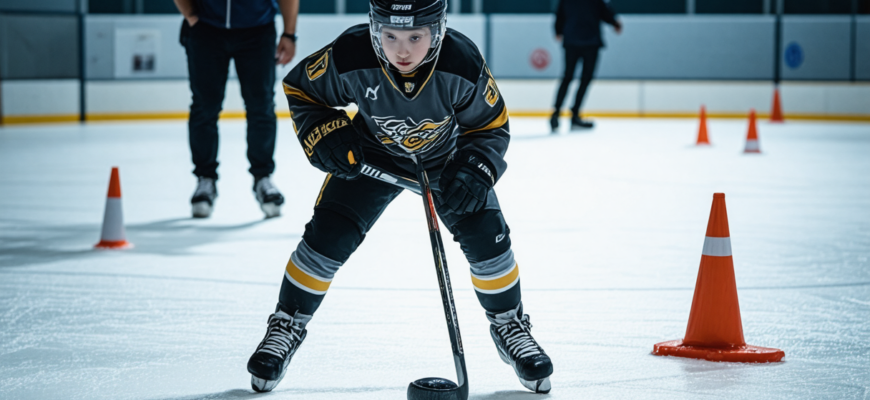
In the world of hockey, the ability to quickly process visual information and translate it into precise hand movements is crucial. Whether you’re a beginner or an experienced player looking to sharpen your skills, improving eye and hand coordination can significantly elevate your game. This comprehensive guide explores various drills, exercises, and techniques that are designed to enhance these vital skills specifically for amateur hockey players. Emphasizing practical methods, scientific principles, and progressive challenges, this article aims to provide a pathway toward more accurate passes, better puck handling, and improved overall play.
- Understanding the Importance of Eye and Hand Coordination in Hockey
- Fundamental Principles Behind Coordination Drills
- Neuroscience of Eye-Hand Coordination
- Principles of Effective Training
- Top Drills to Improve Eye and Hand Coordination
- 1. Wall Pass Drills
- 2. Stickhandling Obstacle Course
- 3. Two-Ball Coordination Exercise
- 4. Vision Tracking and Focusing Drills
- 5. Reaction Ball Exercises
- Incorporating Drills into Training Regimen
- Creating a Balanced Training Schedule
- Progress Tracking and Goals
- Additional Tips for Enhancing Coordination
- Common Mistakes to Avoid
- Enhancing Coordination with Technology and Tools
- References & Further Reading
Understanding the Importance of Eye and Hand Coordination in Hockey
Hockey is a fast-paced sport that demands split-second decisions and seamless physical responses. The ability to read the puck, anticipate opponents’ moves, and execute precise maneuvers requires excellent coordination between the eyes and hands. Good eye and hand coordination enable players to:
- Track the puck accurately during skating, passing, and shooting.
- Maintain situational awareness on the ice.
- Execute precise stickhandling maneuvers under pressure.
- Improve reaction time and decision-making speed.
- Reduce turnovers and improve overall gameplay efficiency.
Developing these skills involves targeted exercises and consistent training. The next sections delve into specific drills that help achieve this objective.
Fundamental Principles Behind Coordination Drills
Neuroscience of Eye-Hand Coordination
Effective coordination relies on the interaction between the visual cortex, motor cortex, and cerebellum. These brain regions process visual stimuli, plan motor responses, and fine-tune movements. Repeated practice helps strengthen neural pathways, leading to quicker, more accurate responses.
Principles of Effective Training
- Progressive Difficulty: Begin with simple drills, gradually increasing complexity to avoid frustration and encourage development.
- Consistency: Regular practice is essential to reinforce neural pathways and muscle memory.
- Focus on Quality: Precision during drills is more beneficial than speed alone.
- Multi-sensory Engagement: Combining sight, touch, and proprioception enhances learning.
Top Drills to Improve Eye and Hand Coordination
1. Wall Pass Drills
This basic yet effective exercise improves stickhandling, timing, and visual tracking.
- Stand approximately 2 meters from a sturdy wall.
- Use a hockey ball or a small rubber ball suitable for bouncing.
- Pass the ball against the wall with your stick, aiming for consistency.
- Catch the rebounding ball with the same hand and repeat.
- Focus on maintaining eye contact with the ball and controlling its return.
Variation: Alternate between forehand and backhand passes, increasing speed as proficiency improves.
2. Stickhandling Obstacle Course
This drill enhances fine motor control and hand-eye coordination through maneuvering a puck or ball through obstacles.
- Create a series of cones, bottles, or sticks arranged on the ice or floor.
- Dribble or push the puck around obstacles using small, controlled stick movements.
- Maintain constant visual contact with the puck.
- Incorporate different patterns and directional changes.
Tip: Use a weighted stick or heavier puck to develop muscle control.
3. Two-Ball Coordination Exercise
This drill trains the brain to manage multiple stimuli simultaneously, boosting reaction time.
- Place two balls or pucks in front of you, spaced evenly apart.
- Using a stick, alternately tap each puck in sequence, focusing on quick, precise movements.
- Gradually increase speed, ensuring accuracy remains high.
- Mix in random directions or patterns to challenge adaptability.
4. Vision Tracking and Focusing Drills
Enhance your ability to track fast-moving objects with these exercises.
- Use a treat or small object on a string, moving it in various patterns (circles, figure-eights) at different speeds.
- Focus your eyes on the object, keeping it sharply in view while moving your head slightly to simulate puck tracking.
- Incorporate eye exercises like shifting gaze between near and far objects brightly lit at different distances.
Pro Tip: Employ specialized visual training tools or apps designed for athletes for advanced tracking exercises.
5. Reaction Ball Exercises
Designed for reactive agility, this exercise improves reflexes and eye-hand synchronization.
- Use a reactive or reaction ball with an irregular bounce pattern.
- Drop or toss the ball against a wall or to a partner.
- Catch or tap the ball quickly after it bounces unpredictably.
- Focus on minimum response time and maintaining focus on the ball’s movements.
Incorporating Drills into Training Regimen
Creating a Balanced Training Schedule
To maximize effectiveness, integrate these drills into a regular training routine. Here’s an example weekly plan:
| Day | Focus | Duration | Notes |
|---|---|---|---|
| Monday | Wall Pass Drills & Reaction Ball Exercises | 30 minutes | Warm-up included |
| Tuesday | Obstacle Course & Vision Tracking | 45 minutes | Optional: Add light skating |
| Wednesday | Rest or light stretching | – | Recovery is essential |
| Thursday | Two-Ball Coordination & Reaction Drills | 40 minutes | Focus on accuracy over speed |
| Friday | Technical Stickhandling & Visual Exercises | 45 minutes | Combine with on-ice practice |
| Saturday | Game Play or Scrimmage | 1 hour | Apply skills in real situations |
| Sunday | Active rest and mental training | – | Watch game footage or mental visualization exercises |
Progress Tracking and Goals
Set measurable goals, such as increasing reaction time, improving puck control, or reducing errors during games. Record progress weekly with video recordings or coach feedback to adjust training intensity.*
Additional Tips for Enhancing Coordination
- Focus on Proper Technique: Quality input ensures better neural reinforcement than merely increasing repetitions.
- Use Visual Aids: Incorporate tools like contrast markers, colored cones, or light-up balls for enhanced visual stimulation.
- Maintain Good Posture and Balance: Proper body mechanics during drills translate to better control during gameplay.
- Stay Mentally Focused: Mindfulness and concentration exercises can boost overall coordination and reaction speed.
- Cross-Training: Incorporate activities like tennis, table tennis, or juggling to diversify sensory input and motor skills.
Common Mistakes to Avoid
- Neglecting warm-up before drills, increasing injury risk.
- Focusing solely on speed, compromising precision and control.
- Performing exercises with poor form or inconsistent technique.
- Not progressively increasing difficulty, leading to plateaus.
- Skipping rest days, which can cause fatigue and hinder learning.
Enhancing Coordination with Technology and Tools
Modern technology offers various tools for targeted training:
- Reaction Timing Apps: Devices that measure response times and provide feedback.
- Virtual Reality (VR): Simulations that mimic game scenarios for realistic training.
- Light-up Pucks and Cones: Visual stimuli that require quick reactions.
- Video Analysis Software: Review gameplay to identify coordination gaps and areas for improvement.
Improving eye and hand coordination is a fundamental aspect of elevating amateur hockey skills. Through dedicated drills, consistency, and smart training strategies, players can develop faster reactions, better puck control, and more accurate passes. While these exercises are designed for all levels, integrating them into a balanced training regimen ensures steady progress. Remember, patience and perseverance are key — sharpening coordination is a gradual process with long-term benefits that translate directly into on-ice performance.
References & Further Reading
- Neuroscience of Sports Training – Journal of Sports Sciences
- Impact of Visual Training on Athletes – Sports Vision Journal
- Hockey Skills Development – Coaching Science Publications
- Effective Drills for Hockey Players – Hockey Canada Technical Manuals
By adopting these practices and maintaining a disciplined approach, amateur hockey enthusiasts can unlock new levels of skill and confidence on the ice. Happy training and best of luck in your hockey journey!
Похожие записи:
 Effective Simple Drills to Boost Puck Control and Agility for Amateur Hockey Players
  Effective Passing Drills to Boost Teamwork in Hockey for Amateurs
  Starting with Beginner-Friendly Hockey Drills: A Complete Guide for Amateur Players
  Essential Stickhandling Drills for New Hockey Players: Improve Your Skills on Ice
  Mastering Faceoff Techniques: A Comprehensive Guide for Amateur Hockey Enthusiasts
  Mastering Precision: Essential Drills to Improve Passing Accuracy in Hockey
  Incorporating Fun Drills to Enhance Hockey Skills: A Guide for Amateur Players
  Mastering Fast Reflexes: Unlock Your Potential as a Hockey Goaltender
  Mastering Speed and Control in Skating: The Ultimate Guide for Amateur Hockey Players
  Simple Ways to Build Stamina for Hockey: The Ultimate Guide for Amateur Players
  Basic Strategies for Beginner Hockey Players: A Complete Guide for Amateur Enthusiasts
  Mastering the Art of Shooting with a Stick in Hockey: The Ultimate Guide for Beginners
  Top Features to Look for in Amateur Hockey Masks: A Complete Guide for Enthusiasts
  Understanding Ice Rink Markings and Zones: A Guide for Amateur Hockey Enthusiasts
  Mastering the Art of Reading the Game in Hockey: A Guide for Amateurs
  Mastering the Fundamentals of Puck Retrieval and Chase in Hockey: Essential Skills for Amateur Players