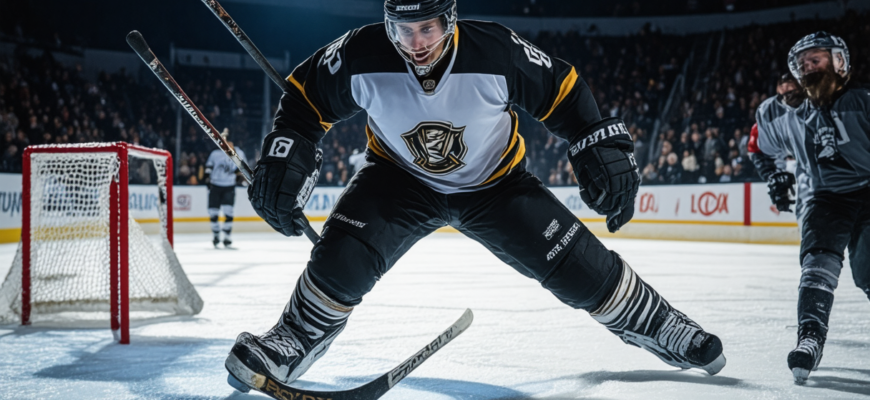
In the dynamic world of ice hockey, the role of the goaltender is one of the most crucial and demanding positions on the ice. A successful goalie not only relies on skill and technique but also on lightning-fast reflexes that can make the difference between a saved puck and an opponent’s goal. Developing quick reflexes is essential for amateur players aspiring to elevate their game and stand out on the ice.
- Understanding the Importance of Reflexes in Hockey Goaltending
- Key Factors Affecting Reflex Development
- Strategies for Developing Quick Reflexes as a Hockey Goaltender
- 1. Visual Decision-Making Drills
- 2. Reaction Time Enhancement Techniques
- 3. Reflex-Training Equipment
- 4. Incorporating Reaction Drills into Practice Sessions
- Physical Conditioning for Enhanced Reflexes
- 1. Core Stability and Balance
- 2. Plyometric Exercises
- 3. Flexibility and Mobility
- Technical Skills to Complement Reflex Development
- Sample Training Schedule for Developing Reflexes
- Measuring Progress in Reflex Development
- Common Mistakes to Avoid When Developing Reflexes
- Final Tips for Aspiring Amateur Goalies
Understanding the Importance of Reflexes in Hockey Goaltending
Reflexes refer to the quick, automatic responses of the body to stimuli. For goalies, this means instant reactions to shots, passes, deflections, and unexpected plays. The faster a goalie reacts, the higher the chances of blocking shots and preventing goals.
In high-pressure situations, reflexes often determine the outcome of a game. A goalie with well-honed reflexes can compensate for lesser size or experience, making them a formidable presence in the crease. Several studies indicate that elite goalies process visual information more efficiently, allowing them to anticipate shots and react quicker than average players.
Key Factors Affecting Reflex Development
- Neurological speed — How quickly the brain processes visual and auditory information.
- Hand-eye coordination — The ability to track moving objects and respond immediately.
- Reaction time — The interval between stimulus perception and response execution.
- Physical agility — Quick body movements and positioning skills.
Strategies for Developing Quick Reflexes as a Hockey Goaltender
1. Visual Decision-Making Drills
Enhancing visual processing speeds helps goalies react faster to incoming shots. Implementing specific drills can sharpen visual acuity and anticipation skills.
- Focus tracking exercises: Use tennis balls or small objects to improve smooth pursuit tracking. Move an object across your field of vision and try to follow it without moving your head.
- Peripheral vision training: Place objects in your peripheral vision zone while keeping your focus on a central point. React quickly when they appear or change.
- Video analysis: Study footage of real games to recognize common shot patterns and shooting lanes, helping anticipate plays during live action.
2. Reaction Time Enhancement Techniques
Shortening reaction times is key for effective goaltending. Several methods can help achieve this:
- Use reaction lights or cones: Devices that flash unpredictable lights can be used to train quick responses.
- Hand-eye coordination exercises: Practice activities like juggling or catching small ball throws to improve coordination.
- Reactive pad drills: Have a partner randomly shoot pucks or balls toward different areas, requiring quick responses.
3. Reflex-Training Equipment
Modern training tools can significantly accelerate reflex development:
| Equipment | Description | Benefit |
|---|---|---|
| Reaction Balls | Irregularly shaped balls that bounce unpredictably when dropped or thrown | Improves hand-eye coordination and reaction speed |
| Dynamic Puck Machines | Devices that shoot pucks at varying speeds and angles randomly | Simulates game-like situations for faster reactions |
| Light Training Systems | Devices with lights that activate randomly for the player to respond to | Enhances visual processing and reaction timing |
4. Incorporating Reaction Drills into Practice Sessions
Consistency is crucial for reflex development. Goalies should integrate reaction drills into their regular training routines:
- Start with simple drills and gradually increase difficulty levels
- Use interval training to practice rapid responses over extended periods
- Record and analyze performance to identify areas needing improvement
Physical Conditioning for Enhanced Reflexes
Reflex development is closely tied to physical fitness. Maintaining overall strength, agility, and stamina supports faster reactions. Focus on the following:
1. Core Stability and Balance
A stable core allows for quick, controlled movements and better recovery after saves. Incorporate exercises like planks, Russian twists, and balance board workouts.
2. Plyometric Exercises
Plyometrics improve explosive power essential for rapid lateral movements and quick dives. Examples include box jumps, squat jumps, and bounding drills.
3. Flexibility and Mobility
Greater flexibility enables wider ranges of motion, making reactions smoother and reducing injury risk. Stretch regularly and include dynamic warm-ups before practice.
Technical Skills to Complement Reflex Development
Reflexes alone are not enough; they must be paired with solid technique to be effective. Focus on:
- Proper positioning: Anticipating shot angles reduces reaction time required for saves.
- Efficient glove and blocker hand positioning: Quick hand movements rely on correct technique.
- Deep crease awareness: Knowing when and how to come out or stay back enhances reaction opportunities.
Sample Training Schedule for Developing Reflexes
Consistency and varied training stimuli are vital. Here’s a sample weekly plan:
| Day | Focus Area | Activities |
|---|---|---|
| Monday | Visual skills | Focus tracking drills, peripheral vision exercises |
| Tuesday | Reaction speed | Reaction light drills, dynamic puck shooting |
| Wednesday | Physical conditioning | Plyometric workout, core stability training |
| Thursday | Combination drills | Reaction pad drills integrated with positional practice |
| Friday | Game simulation | Scrimmages or practice matches simulating in-game shot patterns |
| Saturday | Recovery and flexibility | Stretching, yoga, light cardio |
| Sunday | Review and assessment | Video analysis, performance review, goal setting |
Measuring Progress in Reflex Development
Tracking improvements ensures motivation and highlights areas needing focus:
- Use reaction time measurement apps or tools to quantify response speed
- Record training sessions to analyze reaction accuracy and speed
- Solicit feedback from coaches during practice drills
Common Mistakes to Avoid When Developing Reflexes
- Overtraining: Excessive drills can lead to fatigue and injury. Balance training with rest and recovery.
- Neglecting Technique: Improving reflexes also depends on correct positioning and movement skills.
- Ignoring Mental Focus: Stay alert and avoid distractions that can impair reaction speed.
- Relying Solely on Equipment: While helpful, drills using equipment should complement, not replace, live game practice.
Final Tips for Aspiring Amateur Goalies
- Practice regularly and intentionally to see measurable improvement
- Stay patient; reflexes can be enhanced over time with persistent effort
- Combine physical, visual, and mental training for comprehensive development
- Watch professional goalies and analyze their reactions and positioning
- Stay motivated by setting clear, achievable goals and tracking progress
Developing quick reflexes is a vital component of becoming a skilled ice hockey goaltender. By integrating specialized drills, utilizing modern equipment, maintaining physical fitness, and honing technical skills, amateur players can significantly improve their reaction speed and overall performance. Remember that consistency, patience, and a holistic approach are key to unlocking fast, accurate reactions that can enhance game confidence and success. Whether for fun or competitive aspirations, every effort invested in sharpening reflexes brings players closer to their full potential in the crease.
Embrace the challenge, stay dedicated to training, and watch your reflexes—and game—reach new heights.
Похожие записи:
 Ultimate Guide to Drills that Boost Eye and Hand Coordination for Amateur Hockey Enthusiasts
  Mastering the Art of Reading the Game in Hockey: A Guide for Amateurs
  Mastering the Ice: Essential Defensive Positioning Strategies in Hockey for Amateurs
  Mastering Basic Body Positioning and Stance in Hockey: A Guide for Beginners
  Mastering Faceoff Techniques: A Comprehensive Guide for Amateur Hockey Enthusiasts
  Mastering the Basics: Wrist Shot and Slap Shot Techniques in Hockey for Amateurs
  Mastering Precision: Essential Drills to Improve Passing Accuracy in Hockey
  Mastering the Art of Shooting with a Stick in Hockey: The Ultimate Guide for Beginners
  Mastering the Fundamentals of Puck Retrieval and Chase in Hockey: Essential Skills for Amateur Players
  Mastering Puck Possession: Essential Techniques for Amateur Hockey Players
  Effective Simple Drills to Boost Puck Control and Agility for Amateur Hockey Players
  Mastering the Art of Puck Recovery: Strategies for Effective Play in Amateur Hockey
  Mastering the Art of Dodging and Avoiding Opponents in Hockey: Tips for Amateur Players
  Mastering the Art of Following a Hockey Game’s Flow: Essential Tips for Amateur Players to Improve Awareness
  Mastering Consistency: Proven Strategies to Stay Motivated and Improve in Hockey for Amateurs
  Mastering Hockey: How Watching Online Tutorials and Videos Can Elevate Your Game for Amateur Players