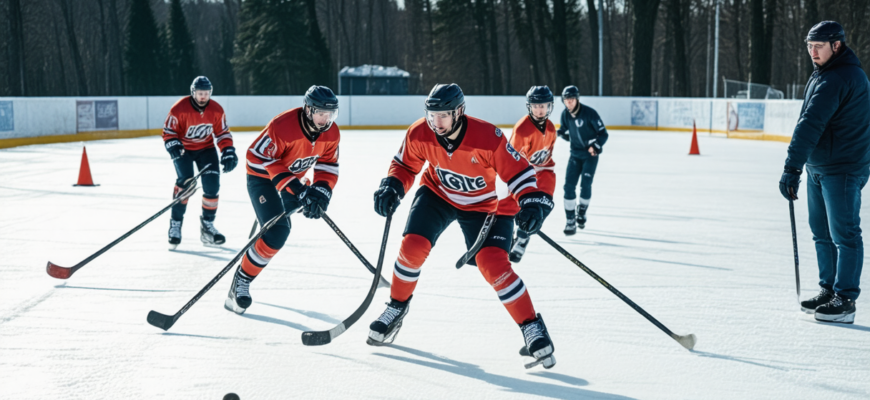
Hockey, renowned for its speed, agility, and precision, demands a combination of technical skills, physical endurance, and mental focus. For amateur players aiming to elevate their game, establishing effective and straightforward drill routines is essential. Such routines not only foster continuous development but also build confidence on the ice. This comprehensive guide explores practical and easy-to-implement hockey drills designed to ensure steady progress for amateur enthusiasts.
- Why Consistent Practice Matters in Hockey
- Fundamental Principles for Effective Drilling
- 1. Focus on Quality Over Quantity
- 2. Gradually Increase Intensity
- 3. Incorporate Rest and Recovery
- 4. Use Visual Aids and Metrics
- Effective and Simple Hockey Drill Routines for Amateurs
- 1. Puck Control and Stickhandling Routine
- 2. Shooting Accuracy Drills
- 3. Edge Control and Skating Balance
- 4. Passing and Receiving Skills
- 5. Endurance and Conditioning
- Sample Weekly Routine for Amateur Hockey Enthusiasts
- Tips for Maximizing Training Efficiency
- Common Mistakes to Avoid
Why Consistent Practice Matters in Hockey
Unlike casual skating, hockey requires a blend of specific skills like puck control, shooting accuracy, quick maneuvering, and strategic positioning. These skills develop gradually through repeated practice, reinforcing muscle memory and improving decision-making speed. Consistent practice routines help players identify their strengths and weaknesses, monitor progress, and achieve long-term improvement.
Furthermore, regular drills contribute to enhanced physical fitness, increased flexibility, and better stamina— vital for maintaining peak performance during matches. For amateurs juggling multiple responsibilities, structured routines ensure efficient use of practice time, making each session meaningful and productive.
Fundamental Principles for Effective Drilling
1. Focus on Quality Over Quantity
Perform each drill with attention to detail. Proper technique ensures skill mastery and reduces injury risk. It’s better to execute a fewer number of repetitions correctly than to rush through numerous poorly performed ones.
2. Gradually Increase Intensity
Start with basic drills at a comfortable pace, then progressively add complexity or speed. This incremental approach prevents burnout and promotes continuous growth.
3. Incorporate Rest and Recovery
Balancing exertion with rest allows muscles to recover and prevents fatigue. Short breaks within routines help maintain high quality in each repetition.
4. Use Visual Aids and Metrics
Recording progress with videos, timers, or score sheets motivates improvement and offers tangible benchmarks for future goals.
Effective and Simple Hockey Drill Routines for Amateurs
1. Puck Control and Stickhandling Routine
Enhancing puck control forms the foundation of almost all hockey skills. Here’s a straightforward routine to improve stickhandling under pressure:
- Setup: Use cones or markers arranged in a zigzag pattern at intervals of 3-4 feet.
- Execution: Dribble the puck through the cones using forehand and backhand control. Keep the puck close to your stick blade, maintaining low stance.
- Duration: 3 sets of 2-minute drills with 30-second breaks.
- Progression: Increase speed or reduce the cone spacing as skills improve.
2. Shooting Accuracy Drills
Shooting precision is critical for scoring while maintaining control over shot power. This routine helps develop accuracy and wrist strength:
- Setup: Place targets or nets at specific areas within the goal (top corners, low corners).
- Execution: Take 10 shots from a fixed position, aiming to hit designated targets. Switch positions to simulate different angles.
- Number of Repetitions: 3 sets of 10 shots, rest 1 minute between sets.
Pro tip: Use a stopwatch or timer to track improvement in shot speed over time.
3. Edge Control and Skating Balance
Good edge control ensures swift turns and effective maneuvering on ice. Use this routine to enhance balance and agility:
- Setup: Mark a straight line on the ice (or use a designated area).
- Execution: Skate along the line on edges only, switching between inside and outside edges. Focus on smooth stops, starts, and tight turns.
- Repetitions: 4 sets of 1-minute continuous skating, with 30-second rest intervals.
4. Passing and Receiving Skills
Accurate passing is essential for team play, even in casual amateur hockey. This routine enhances passing techniques:
- Setup: Pair up with a partner or use a rebounder net.
- Execution: Pass the puck back and forth at a distance of 10-15 feet, ensuring controlled passes and soft receives.
- Variations: Incorporate one-touch passes, quick exchanges, or gentle saucer passes.
- Repetitions: 5-minute continuous passing, focusing on accuracy and fluid motion.
5. Endurance and Conditioning
Maintaining stamina allows amateur players to perform consistently throughout the game. An effective routine includes high-intensity skating combined with recovery:
- Interval Training: Sprint for 30 seconds, then skate slowly for 60 seconds. Repeat 8-10 times.
- Long-Distance Skating: Skate continuously for 5-10 minutes at a moderate, steady pace.
Regular endurance exercises improve overall athletic performance and resist fatigue during critical moments in matches.
Sample Weekly Routine for Amateur Hockey Enthusiasts
| Day | Focus Area | Activities |
|---|---|---|
| Monday | Puck Control & Accuracy | Stickhandling zigzag + Shooting accuracy drills |
| Tuesday | Edges & Balance | Edge skating exercises & turning drills |
| Wednesday | Passing & Team Play | Partner passing drills + rebounder exercises |
| Thursday | Endurance & Conditioning | Interval sprints + long-distance skating |
| Friday | Skill Integration | Combined drills: puck control, shooting, skating |
| Saturday/Sunday | Rest or Light Practice | Optional light skating or flexibility exercises |
Tips for Maximizing Training Efficiency
- Set Clear Goals: Define what you want to improve each week—whether it’s puck control, shooting accuracy, or skating speed.
- Track Progress: Use training logs, videos, or measurement tools to observe improvements over time.
- Cross-Train: Incorporate complementary exercises such as weight training, flexibility routines, or aerobic workouts.
- Stay Motivated: Vary drills to prevent boredom and keep enthusiasm high.
- Warm Up and Cool Down: Always start with light warm-up skating and end with stretching to prevent injuries.
Common Mistakes to Avoid
- Neglecting Proper Technique: Prioritize correct form over repetitions to build effective habits.
- Overtraining: Excessive practice may lead to burnout or injury. Balance practice with adequate rest.
- Inconsistent Routine: Skipping sessions hampers progress. Schedule and stick to your routines.
- Ignoring Strength & Flexibility: Focus solely on skill drills without supporting physical conditioning.
For amateur hockey players, establishing simple yet effective drill routines is the key to steady improvement. By focusing on fundamental skills such as puck control, shooting, skater balance, passing, and endurance, players can enhance their performance on the ice in a manageable and enjoyable way. Consistency, proper technique, and gradual progression are the cornerstones of successful development. Incorporating these routines into the weekly training schedule will foster confidence, skill mastery, and improved gameplay, making hockey more rewarding and enjoyable for amateurs at all levels.
Remember, the journey to becoming a skilled hockey player is a marathon, not a sprint. Keep practicing, stay motivated, and enjoy every step of your skating adventure!
Похожие записи:
 Simple Ways to Build Stamina for Hockey: The Ultimate Guide for Amateur Players
  Mastering Consistency: Proven Strategies to Stay Motivated and Improve in Hockey for Amateurs
  Effective Simple Drills to Boost Puck Control and Agility for Amateur Hockey Players
  Effective Passing Drills to Boost Teamwork in Hockey for Amateurs
  Mastering the Basics: Wrist Shot and Slap Shot Techniques in Hockey for Amateurs
  Simple and Effective Ways to Improve Your Balance on Skates for Amateur Hockey Players
  Mastering Precision: Essential Drills to Improve Passing Accuracy in Hockey
  Mastering Hockey Shooting Techniques from Different Angles: A Guide for Amateurs
  Mastering the Art of Reading the Game in Hockey: A Guide for Amateurs
  Mastering the Ice: Essential Defensive Positioning Strategies in Hockey for Amateurs
  Essential Safety Tips for Novice Players: Ensuring Safe and Enjoyable Hockey for Amateurs
  Mastering the Ice: The Essential Guide to Participating in Friendly Scrimmages for Hockey Amateurs
  Mastering the Basics: Introduction to Offsides and Icing Rules in Hockey for Amateurs
  Ultimate Guide to Drills that Boost Eye and Hand Coordination for Amateur Hockey Enthusiasts
  Mastering the Art of Shooting with a Stick in Hockey: The Ultimate Guide for Beginners
  Introductory Power Skating Exercises: Essential Skills for Aspiring Hockey Players