
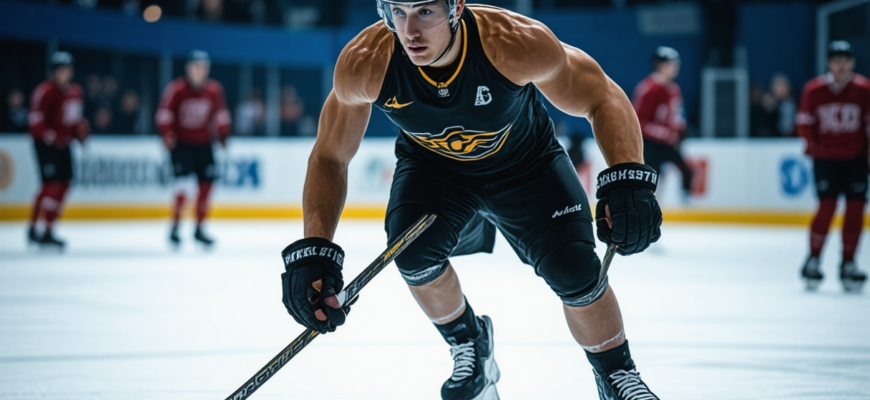
Hockey is a fast-paced, physically demanding sport that requires a combination of speed, agility, strength, and tactical skill. While many players focus on developing their skating, shooting, and game awareness, one fundamental aspect often underestimated is core strength. A robust core forms the foundation for nearly every movement on the ice, influencing power, balance, injury prevention, and overall game effectiveness. This comprehensive guide explores the vital importance of core strength in hockey, how it affects performance, and effective strategies for players aiming to elevate their game through targeted core training.
- Understanding Core Strength: What Does It Entail?
- Definition of Core Muscles
- The Role of Core Muscles in Movement and Stability
- The Importance of Core Strength in Hockey
- Enhancement of Power and Shooting Accuracy
- Improved Balance and Agility
- Injury Prevention and Longevity
- Enhancement of Endurance and Fatigue Resistance
- How Core Strength Directly Influences Specific Hockey Skills
- Skating Performance
- Shooting and Passing Accuracy
- Body Checks and Defensive Movements
- Assessing Your Core Strength: Simple Tests
- Plank Test
- Side Plank Test
- Bridge Test
- Effective Core Training Exercises for Hockey Players
- Fundamental Exercises
- Advanced Exercises and Functional Drills
- Designing a Core Strengthening Program for Hockey Players
- Training Frequency and Progression
- Sample Weekly Routine
- Additional Tips for Effective Training
- Common Mistakes to Avoid in Core Training
- Integrating Core Strength into Hockey Training Regimes
- The Foundation of Superior Hockey Performance
- References and Further Reading
Understanding Core Strength: What Does It Entail?
Definition of Core Muscles
The core comprises muscles located in the central part of the body, providing stability and support to the spine, pelvis, and hips. Key muscles include:
- Rectus abdominis (the “six-pack” muscles)
- Obliques (side abdominal muscles)
- Transversus abdominis (deep core muscles)
- Erector spinae (lower back muscles)
- Pelvic floor muscles
- Hip muscles, including glutes and hip flexors
The Role of Core Muscles in Movement and Stability
The core acts as the central hub for almost all bodily movements. It stabilizes the spine and pelvis, harmonizing limb movements and allowing for efficient force transfer. A strong core ensures that power generated during skating, shooting, or checking is accurately transmitted through the body, leading to enhanced performance and reduced fatigue over long periods of play.
The Importance of Core Strength in Hockey
Enhancement of Power and Shooting Accuracy
Effective shooting and puck control demand explosive energy transfer from the lower body through the core to the upper limbs. Strong core muscles allow players to generate more force during shots, passes, and body checks. Improved core stability means a more controlled, consistent shooting technique, which can be decisive in scoring opportunities.
Improved Balance and Agility
In hockey, maintaining balance during rapid turns, stops, and swift directional changes is crucial. Core strength enhances proprioception—the body’s ability to sense its position—and stabilizes the body during complex maneuvers. This results in faster reactions and greater agility, critical for outmaneuvering opponents or recovering quickly from falls and checks.
Injury Prevention and Longevity
Hockey players are prone to injuries, particularly strains or sprains to the lower back, hips, and knees. A strong core acts as a protective layer, absorbing shocks and reducing the strain on joints and ligaments. Well-developed core muscles also improve posture and movement efficiency, decreasing the risk of overuse injuries.
Enhancement of Endurance and Fatigue Resistance
Playing hockey requires sustained energy over the game duration. A resilient core helps maintain proper posture and movement patterns even when fatigue sets in, allowing players to sustain performance levels longer and recover faster after intense shifts.
How Core Strength Directly Influences Specific Hockey Skills
Skating Performance
| Aspect | Impact of Core Strength |
|---|---|
| Stride power | Provides a stable base for powerful push-offs, increasing speed |
| Balance during quick turns | Allows rapid directional changes with minimal loss of speed |
| Stamina during extended skating | Supports posture and energy efficiency, delaying fatigue |
Shooting and Passing Accuracy
- Core stability enables a controlled transfer of energy from the lower body to the upper limbs.
- Reduces unwanted torso movement, improving shot precision.
Body Checks and Defensive Movements
- Strong core muscles provide stability during physical confrontations.
- Enhances leverage and force during body checks, making them more effective.
Assessing Your Core Strength: Simple Tests
Plank Test
- Get into a forearm plank position with elbows aligned under shoulders.
- Hold position as long as possible with proper form.
- Time your hold to evaluate endurance.
Side Plank Test
- Lie on your side, supporting your body on one forearm and the side of your foot.
- Lift hips to form a straight line from head to heels.
- Hold for as long as possible.
Bridge Test
- Lie on your back with knees bent, feet flat on the floor.
- Lift hips off the ground, squeezing glutes.
- Hold and lower slowly.
Weak scores indicate areas for targeted improvement, guiding the design of personalized training programs.
Effective Core Training Exercises for Hockey Players
Fundamental Exercises
- Planks: Variations include forearm, side, and extended arm planks to develop endurance and stability.
- Bridges: Focus on glute strength and posterior chain stability.
- Russian Twists: Enhance rotational core strength crucial for shooting and skating turns.
- Bird Dogs: Improve coordination between limbs and core stability.
- Superman Exercise: Strengthen lower back muscles vital for maintaining posture during gameplay.
Advanced Exercises and Functional Drills
- Medicine Ball Rotational Throws: Mimic hockey shooting motions for explosive rotational power.
- V-Ups and Leg Raises: Strengthen the lower abdominals.
- Stability Ball Exercises: Incorporate balance and dynamic stability challenges.
- Sandbag Deadlifts: Build core strength through functional, sport-specific movement patterns.
- Balance Board Training: Improve proprioception and dynamic stability on uneven surfaces.
Designing a Core Strengthening Program for Hockey Players
Training Frequency and Progression
Core workouts should be performed 2–3 times per week, allowing adequate recovery. Begin with fundamental exercises, gradually increasing intensity, duration, and complexity. Proper technique is essential to prevent injury and maximize gains.
Sample Weekly Routine
| Day | Workout Focus |
|---|---|
| Monday | Basic core exercises: planks, bridges, Russian twists |
| Wednesday | Rotational power drills: medicine ball throws, V-Ups |
| Friday | Advanced balance and stability: ball exercises, balance board drills |
Additional Tips for Effective Training
- Maintain consistent breathing during exercises.
- Engage core muscles throughout all movements, not just during specific exercises.
- Combine core workouts with flexibility and mobility exercises.
- Integrate sport-specific drills to transfer core strength into game skills.
Common Mistakes to Avoid in Core Training
- Neglecting lower back exercises: Imbalance can cause injury.
- Overtraining core muscles without proper rest: Leads to fatigue and diminishing returns.
- Using improper form: Reduces effectiveness and increases injury risk.
- Focusing solely on superficial abs: Overlooking deep core muscles reduces functional stability.
Integrating Core Strength into Hockey Training Regimes
For optimal results, core training should complement overall conditioning, skating drills, and tactical practice. Incorporate dynamic stretching post-workout and focus on recovery strategies such as foam rolling and adequate sleep to maximize gains. Continual assessment and progression ensure sustained improvement and resilience on the ice.
The Foundation of Superior Hockey Performance
In conclusion, core strength is a fundamental pillar for any hockey player aiming to improve performance, prevent injuries, and sustain competitive longevity. By understanding its importance and systematically incorporating targeted exercises, players can unlock greater power, agility, and stability essential for excelling in this demanding sport. Whether a novice or an aspiring pro, developing a resilient core is a strategic investment in mastering hockey skills and enjoying the game at a higher level.
References and Further Reading
- Smith, J. (2018). “Core Training for Athletes.” Sports Science Journal.
- Johnson, L. (2020). “Functional Movement Patterns in Ice Hockey.” International Journal of Sports Medicine.
- National Strength and Conditioning Association. “Sport-specific Core Training Guidelines.”
Похожие записи:
 The Crucial Role of Fitness and Strength in Hockey Performance
  Off-Ice Strength Training Exercises for Amateur Hockey Fans: Boost Your Performance Off the Ice
  The Crucial Role of Practice Drills in Enhancing Hockey Skills for Amateurs
  The Critical Role of Rest and Recovery in Amateur Hockey Success
  The Critical Role of Teamwork and Communication in Ice Hockey Success
  The Critical Role of Communication on the Ice for Achieving Superior Team Coordination in Amateur Hockey
  Effective Warm-up and Cool-down Routines for Amateur Hockey Players: Maximize Performance and Minimize Injuries
  Speed Drills to Enhance Your On-Ice Performance in Hockey: A Comprehensive Guide for Amateurs
  Mastering Proper Hockey Stick Use: Tips to Enhance Performance and Prevent Injuries
  Understanding the Role of Coaches in Amateur Hockey Development
  The Essential Role of Hip Pads in Amateur Hockey Safety
  Mastering Power Play: Essential Strategies for Effective Hockey Performance
  Mastering the Fit: How to Properly Fit and Adjust Hockey Gloves for Optimal Performance
  Mastering Balance and Stability: Essential Techniques for Amateur Hockey Players
  Must-Have Gloves for Amateur Hockey Enthusiasts: Essential Protection and Performance
  Ultimate Guide: How to Fit Your Hockey Skates Correctly for Peak Performance