
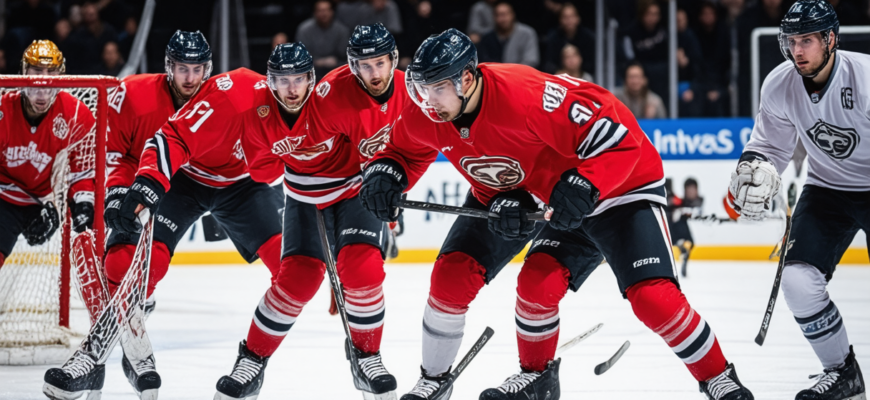
In the fast-paced world of ice hockey, special team situations—particularly the power play—offer a golden opportunity for teams to score and shift momentum. For amateur players seeking to improve their game, understanding the fundamental principles of executing a successful power play is vital. This comprehensive guide delves into the core strategies, practical tips, and tactical insights necessary to maximize efficiency during power play scenarios.
- Understanding the Power Play Scenario
- The Significance of Power Play Efficiency for Amateurs
- Core Principles of a Successful Power Play
- 1. Proper Positioning and Formation
- 2. Puck Movement and Passing
- 3. Shooting Strategy
- 4. Movement and Creativity
- 5. Maintaining Structure and Discipline
- Practical Tips for Amateur Teams
- 1. Practice Set Plays and Scenarios
- 2. Emphasize Communication
- 3. Develop Puck Support Skills
- 4. Focus on Breakout and Entry Techniques
- 5. Maintain Positive Attitude and Adaptability
- Common Power Play Formations and Their Advantages
- Formulas and Metrics to Measure Power Play Success
- Power Play Conversion Rate
- Expected Goals (xG)
- Common Mistakes to Avoid
- Key Takeaways for Amateur Players
- Additional Resources
Understanding the Power Play Scenario
Before exploring specific tactics, it is critical to comprehend what a power play entails. In hockey, a power play occurs when one team has more players on the ice due to an opponent’s penalty. Typically, teams enjoy a numerical advantage of 5-on-4, 5-on-3, or even 5-on-2 situations.
The primary objective during a power play is to capitalize on this advantage by creating quality scoring chances while maintaining proper defensive discipline to prevent counterattacks.
The Significance of Power Play Efficiency for Amateurs
While professional teams meticulously train their power play units, amateur players often face challenges like lack of coordination, limited practice time, or insufficient tactical knowledge. However, mastering foundational principles can significantly enhance performance and overall team success. Effective power play execution not only increases scoring chances but also boosts team confidence and game dynamics.
Core Principles of a Successful Power Play
1. Proper Positioning and Formation
Choosing the right formation sets the foundation for a potent power play. Common formations include:
- One-T-2 (One T and Two Defensemen): Offers solid coverage with options for shooting and passing.
- Box Formation: Placing players in a square; good for maintaining puck control.
- Diamond Formation: Focuses on passing lanes and driving the puck towards the net.
Each formation has advantages depending on team skill levels and game situations. The key is to maintain proper spacing to facilitate passing lanes, shooting opportunities, and effective puck circulation.
2. Puck Movement and Passing
Fast, precise puck movement is crucial. It creates confusion among defenders, opens shooting lanes, and reduces the likelihood of turnovers. Key tips include:
- Use quick, short passes to maintain control.
- Move the puck laterally across the ice to draw defenders out of position.
- Utilize the “give-and-go” technique for sudden passes behind defenders.
3. Shooting Strategy
Creating high-quality shots is essential during the power play. Players should:
- Keep shots low and on target to increase scoring chances.
- Look for rebounds and deflections.
- Change shooting angles to confuse the goaltender.
Power play shooters should aim to pick spots, targeting corners or areas less accessible to the goalie.
4. Movement and Creativity
Static positioning allows defenders to easily block shots and intercept passes. Incorporate movement like:
- Cross-ice passes to shift the defense.
- Player rotation around the net to create odd-angle shots.
- Deception moves like fakes and dummies to create space.
5. Maintaining Structure and Discipline
While creativity is encouraged, maintaining structure is vital. Common mistakes include over-passing or neglecting defensive responsibilities. Strategies for discipline include:
- Avoid rushing passes under pressure.
- Keep the puck in the attacking zone using controlled passes.
- Stay aware of the defensive positions and cover passing lanes.
Practical Tips for Amateur Teams
Implementing advanced tactics begins with simple, effective habits. Here are practical tips tailored for amateur teams looking to improve their power play:
1. Practice Set Plays and Scenarios
Designing specific set plays allows players to execute familiar patterns under pressure. Regular practice instills confidence and helps team members anticipate each other’s movements.
2. Emphasize Communication
Clear and constant communication ensures players are aware of positioning, intended passes, and defensive coverage. Use verbal calls and hand signals during games and drills.
3. Develop Puck Support Skills
Encourage players to support the puck carrier by providing passing options. Effective puck support reduces turnovers and creates scoring chances.
4. Focus on Breakout and Entry Techniques
A power play begins with a clean breakout and entry into the offensive zone. Practice controlled puck retrieval, passing through neutral zones, and establishing entry with speed and control.
5. Maintain Positive Attitude and Adaptability
Flexibility in tactics and a positive team mindset foster resilience. Adjust strategies based on opponent behavior or game flow.
Common Power Play Formations and Their Advantages
| Formation | Description | Advantages |
|---|---|---|
| 1-3-1 | One player at the top, three across the middle, and one near the goal | Creates multiple shooting angles; good for puck circulation |
| Box | Four players positioned in a square or rectangle | Balanced offensive and defensive coverage; easy to teach |
| Diamond | Players form a diamond shape around the net | Optimal for shooting lanes and quick passing |
| Umbrella | Players spread out in an umbrella shape around the top of the circle | Allows for quick shots from the point and cross-ice passes |
Formulas and Metrics to Measure Power Play Success
Power Play Conversion Rate
This essential metric measures efficiency and is calculated by:
Power Play Goals (PPG) ÷ Power Play Opportunities (PPO) × 100%
Example: If a team scores 8 goals in 20 power play opportunities, their conversion rate is:
(8 ÷ 20) × 100% = 40%
Expected Goals (xG)
A more advanced metric predicting the likelihood of scoring based on shot quality, position, and situation. Though more complex, amateur teams can use basic shot maps and positions to evaluate their power play effectiveness.
Common Mistakes to Avoid
- Overpassing: Excessive passing can lead to turnovers; aim for quick, decisive plays.
- Ignoring Defensive Responsibilities: Losing track of opponents or neglecting to clear the crease can lead to counterattacks.
- Rushing Shots: Taking low-percentage shots without setup reduces scoring chances.
- Static Formation: Not moving or adjusting based on defenders leaves the power play predictable.
Key Takeaways for Amateur Players
Executing an effective power play in hockey is a combination of proper positioning, quick puck movement, strategic shooting, and disciplined movement. For amateur teams, focusing on fundamental principles—such as maintaining good spacing, practicing set plays, and fostering clear communication—can dramatically improve their success rate during these crucial moments. Regular practice, analysis, and adaptability are essential to develop a potent power play that can turn game situations in your favor.
Additional Resources
- Video tutorials on power play drills
- Example formations and practice routines
- Statistics tracking sheets for performance analysis
By mastering these basic tips and consistently applying them during practice and games, amateur hockey teams can elevate their power play performance, increase scoring opportunities, and contribute significantly to team success. Remember, patience and persistence are key, as strategic improvement takes time and dedication.
Похожие записи:
 Effective Wing and Center Play Strategies for Offense in Hockey: Simplified Tactics for Amateurs
  Mastering the Art of Puck Recovery: Strategies for Effective Play in Amateur Hockey
  Mastering Power Plays and Penalty Kill Tactics for Amateur Hockey Teams
  Effective Offensive Strategies to Break Through Defensive Lines in Hockey
  Essential Offensive Strategies in Hockey for Amateur Players
  Mastering the Ice: Essential Defensive Positioning Strategies in Hockey for Amateurs
  Mastering Team Chemistry: Essential Tips for Effective Collaboration in Amateur Hockey
  Mastering Proper Hockey Stick Use: Tips to Enhance Performance and Prevent Injuries
  Introductory Power Skating Exercises: Essential Skills for Aspiring Hockey Players
  Effective Passing Drills to Boost Teamwork in Hockey for Amateurs
  Basic Strategies for Beginner Hockey Players: A Complete Guide for Amateur Enthusiasts
  Mastering the Art of Effective Ice Stops: Essential Techniques for Amateur Hockey Players
  Mastering Passing and Receiving the Puck: Essential Skills for Amateur Hockey Players
  Mastering Recovery and Rebound Control: Essential Skills for Amateur Hockey Players
  Mastering Puck Possession: Essential Techniques for Amateur Hockey Players
  Must-Have Gloves for Amateur Hockey Enthusiasts: Essential Protection and Performance