
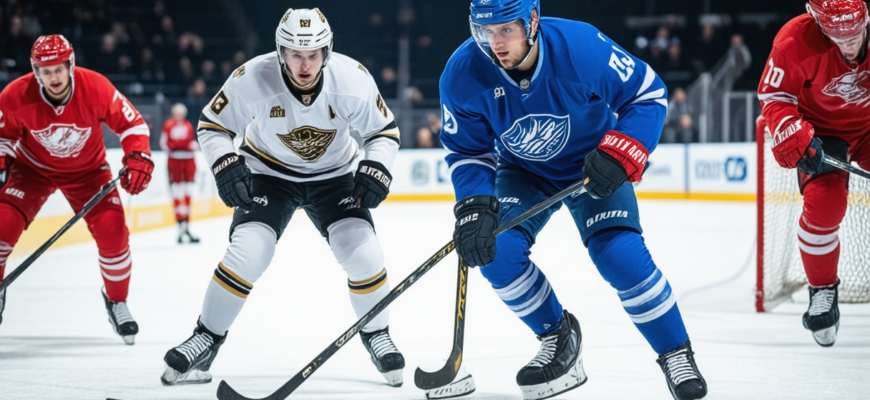
Hockey is a dynamic sport that combines speed, skill, and tactical thinking. For amateur players and teams looking to improve their offensive game, mastering straightforward yet effective strategies can significantly elevate performance. This article explores simple wing and center play tactics designed to optimize offensive opportunities, enhance team coordination, and maximize scoring chances. Whether you’re a beginner or a seasoned amateur, understanding these foundational strategies can be instrumental in bringing your gameplay to the next level.
- Understanding the Basic Offensivе Structure in Hockey
- Core Concepts Behind Simple Offensive Strategies
- Fundamental Offensive Tactics for Amateurs
- 1. The Give-and-Go (Puck Support & Quick Passes)
- 2. The Overload Attack
- 3. The Zig-Zag (Loop) Play for Flank Penetration
- Simple Center Play Strategies to Catalyze Offense
- 1. The Central Loop or Circulation
- 2. The Screen and Rebound Play
- 3. The Circular Passing Pattern
- Practical Drills to Reinforce Basic Offensive Strategies
- 1. Passing and Shooting Circuits
- 2. Overload Simulation Drills
- 3. Center Circulation Exercise
- Offensive Strategy Tips for Beginners and Amateurs
- Common Mistakes to Avoid
- Summary Table of Key Strategies
- Final Thoughts
- Additional Resources
Understanding the Basic Offensivе Structure in Hockey
Before diving into specific strategies, it’s essential to grasp the fundamental offensive layout on the ice. Hockey teams typically deploy three forward positions: left wing, center, and right wing. Each plays a distinct role, but they work cohesively to create scoring opportunities.
| Position | Primary Responsibilities | Key Skills |
|---|---|---|
| Center | Facilitates play, controls the puck, orchestrates offensive tactics | Playmaking, vision, speed, faceoff mastery |
| Wing (Left and Right) | Advance puck, support the center, take shots, execute flank plays | Speed, shooting accuracy, positioning |
Core Concepts Behind Simple Offensive Strategies
Effective offensive play is built on a few core principles:
- Spacing: Maintaining proper distance to ensure options for passing and shooting.
- Timing: Coordinated maneuvers that maximize chances while catching defenders off guard.
- Creativity within simplicity: Using basic tactics cleverly rather than complex moves that may cause confusion.
Fundamental Offensive Tactics for Amateurs
1. The Give-and-Go (Puck Support & Quick Passes)
This classic tactic involves a player passing the puck to a teammate then immediately moving to an open space to receive a return pass. It creates a quick, effective way to bypass defenders and generate scoring chances.
- Execution: The puck carrier passes to a teammate, then quickly skates forward or sideways to an open space.
- Result: The receiving player gets a shot on goal with minimal defensive interference.
2. The Overload Attack
This strategy involves concentrating offensive players on one side of the ice to overwhelm the defense, creating lanes for shooters or quick passes to open teammates.
- Steps:
- Mobilize both wings and the center to converge on one side.
- Use quick passes to disorient defenders.
- Look for gaps in the defensive structure for shots or extra passes.
3. The Zig-Zag (Loop) Play for Flank Penetration
This involves a controlled diagonal or zig-zag movement by forwards to stretch opponents and create shooting lanes.
- Execution: Wings and center exchange positions to find space near the net or open shooting areas.
- Outcome: Forces defense to reconfigure, opening opportunities for shots from the slot or rebounds.
Simple Center Play Strategies to Catalyze Offense
1. The Central Loop or Circulation
The center acts as the hub, circulating the puck along the ice, keeping defenders guessing and opening passing lanes to wings or shooting from the high slot.
- Implementation: The center passes laterally or backwards to wings while maintaining position to support/switch play.
- Advantage: Keeps the offensive pressure consistent, creating sustained shooting opportunities.
2. The Screen and Rebound Play
Centers can position themselves to screen the goalie or be prepared to pounce on rebounds for quick finishes.
- How to: Position slightly in front of the net, take shots from the slot, and anticipate rebounds.
- Tip: Use quick shots from the high slot to surprise the goalie, especially when wingers create screens.
3. The Circular Passing Pattern
This involves continuous, simple passes around the circle between the center and wings, eventually opening shooting lanes or creating misdirection.
- Benefits: Maintains puck control and forces defenders into over-commitment or misalignment.
- Implementation: Focus on quick, safe passes, and staying patient until a clear opening appears.
Practical Drills to Reinforce Basic Offensive Strategies
1. Passing and Shooting Circuits
Set up stations where players practice give-and-go passes and quick shots on goal. Emphasize proper positioning, timing, and accuracy. Use cones for movement patterns to simulate game scenarios.
2. Overload Simulation Drills
Create small-sided games where offensive players concentrate on one side of the ice, practicing overload tactics to train quick decision-making and coordination.
3. Center Circulation Exercise
Design drills where the center and wings pass in a structured pattern, maintaining possession, then randomly switching to shooting or quick passes as defenders apply pressure.
Offensive Strategy Tips for Beginners and Amateurs
- Keep it simple: Focus on basic passing and positioning rather than complex maneuvers.
- Maintain good spacing: Avoid crowding to open passing and shooting lanes.
- Communicate: Constant communication among teammates ensures coordinated movement and quick reactions.
- Be patient: Wait for proper opportunities rather than forcing plays.
- Capitalize on rebounds: Always be ready to shoot on net and pounce on rebounds.
Common Mistakes to Avoid
- Overcomplicating plays: Too many quick passes or complicated setups can cause turnovers.
- Ignoring positional play: Failing to maintain proper distances reduces offensive options.
- Not supporting the puck carrier: Lack of support can lead to turnovers or missed scoring chances.
- Neglecting defensive recovery: Focusing solely on offense may leave openings for counter-attacks.
Summary Table of Key Strategies
| Strategy Name | Description | Main Benefits |
|---|---|---|
| Give-and-Go | Rapid passing and supporting runs to create quick shots | Speedy, close-range scoring chances |
| Overload Attack | Concentration of players on one side to overwhelm defense | High-pressure opportunities from flank plays |
| Zig-Zag Play | Diagonal movement to create shooting lanes | Distorts defensive coverage, opens shooting options |
| Center Circulation | Controlled puck movement around the center | Sustained pressure and passing options |
| Screen and Rebound Play | Positioning to block goalie view and pounce on rebounds | Effective goal-scoring from rebounds |
Final Thoughts
In the fast-paced game of hockey, simplicity often leads to the most effective offense, especially for amateur teams and players. By focusing on core tactics such as give-and-go, overloads, and strategic center play, teams can increase their scoring opportunities while reducing mistakes. Regular practice of these techniques, combined with proper positioning, effective communication, and patience, will foster a more cohesive and dangerous offensive unit on the ice.
Remember, mastering basic strategies does not necessitate complex schemes; rather, it emphasizes disciplined execution and team synergy. As amateur players become more comfortable with these fundamental tactics, they’ll notice their ability to create scoring chances improves dramatically, making the game more exciting and fulfilling.
Additional Resources
- Hockey drills for beginners and amateurs
- Video tutorials on basic hockey tactics
- Equipment essentials for amateur hockey players
Похожие записи:
 Mastering Power Play: Essential Strategies for Effective Hockey Performance
  Mastering the Art of Puck Recovery: Strategies for Effective Play in Amateur Hockey
  Effective Offensive Strategies to Break Through Defensive Lines in Hockey
  Mastering Power Plays and Penalty Kill Tactics for Amateur Hockey Teams
  Essential Offensive Strategies in Hockey for Amateur Players
  Mastering the Ice: Essential Defensive Positioning Strategies in Hockey for Amateurs
  Basic Strategies for Beginner Hockey Players: A Complete Guide for Amateur Enthusiasts
  Effective Passing Drills to Boost Teamwork in Hockey for Amateurs
  Mastering Team Strategies and Support in Amateur Hockey: Achieving Success Together
  Mastering Consistency: Proven Strategies to Stay Motivated and Improve in Hockey for Amateurs
  Positioning Basics for Amateur Hockey Players: Unlocking Your Potential on the Ice
  Mastering Team Chemistry: Essential Tips for Effective Collaboration in Amateur Hockey
  Mastering Hockey Shooting Techniques from Different Angles: A Guide for Amateurs
  The Crucial Role of Practice Drills in Enhancing Hockey Skills for Amateurs
  Mastering Recovery and Rebound Control: Essential Skills for Amateur Hockey Players
  Mastering the Ice: The Essential Guide to Participating in Friendly Scrimmages for Hockey Amateurs