
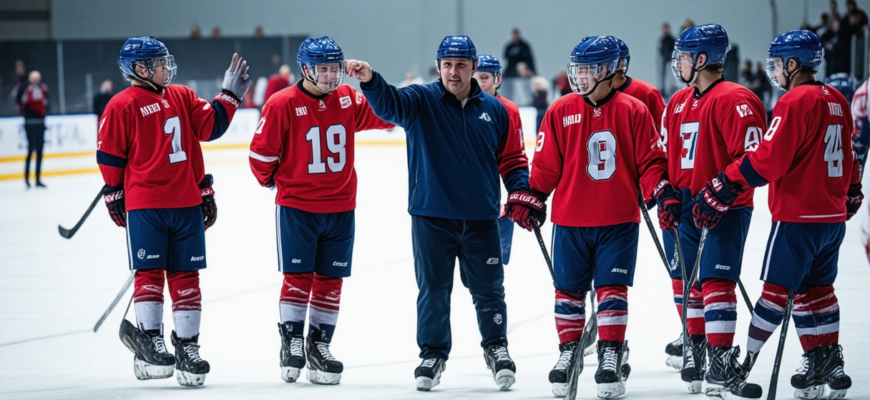
Hockey is a dynamic and fast-paced sport that requires more than just individual skill to succeed. For amateur players, understanding and implementing effective team strategies and fostering a supportive environment on and off the ice are crucial for achieving success. This comprehensive guide delves into the core principles of playing as a cohesive team, offering practical strategies, communication tips, and motivational techniques to elevate your game and build a resilient hockey community.
- Introduction to Team Play in Amateur Hockey
- The Significance of Team Cohesion
- Understanding the Role of Every Player
- Core Strategies for Effective Team Play
- 1. Positioning and Formation
- 2. Communication and Non-verbal Cues
- 3. Supporting Each Other: Defensive and Offensive Cohesion
- Defensive Support
- Offensive Support
- 4. Transition Play and Counterattacks
- Building a Supportive Team Environment
- Leadership and Role Models
- Encouragement and Positive Reinforcement
- Managing Conflicts and Building Trust
- Training Exercises to Foster Teamwork
- 1. Passing Drills
- 2. Small-Sided Games
- 3. Support and Recovery Drills
- Measuring and Improving Team Performance
- Performance Metrics
- Continuous Improvement Strategies
Introduction to Team Play in Amateur Hockey
Unlike professional leagues, amateur hockey often features diverse skill levels, varying experience, and different playing styles. Therefore, cultivating a team-oriented approach is vital for maximizing potential, enjoying the game, and winning matches. Team play hinges on understanding collective tactics, mutual support, and a shared commitment to improvement. This section explores the fundamental importance of teamwork in amateur hockey and how it shapes overall success.
The Significance of Team Cohesion
Team cohesion refers to the unity and harmony among players that enhances coordination and strategic execution. When players trust each other and communicate effectively, they can anticipate teammates’ moves, cover gaps, and execute plays efficiently. Cohesion fosters a positive atmosphere, reduces on-ice conflicts, and boosts morale, making the game more enjoyable and competitive.
Understanding the Role of Every Player
Every team member has a vital role, whether as a forward, defenseman, or goalie. Recognizing individual responsibilities and respecting each position enhances overall performance. Clear role understanding allows players to focus on their tasks while supporting teammates in their roles, creating a seamless team operation.
Core Strategies for Effective Team Play
Implementing strategic approaches tailored for amateur hockey can significantly improve team performance. These strategies include tactical formations, coordinated plays, effective communication, and adaptive game plans. Below is a detailed overview of key strategies.
1. Positioning and Formation
| Formation Type | Description | Advantages |
|---|---|---|
| 2-1-2 | Two defensemen, one center, and two wingers | Balanced attack and defense, suitable for beginners |
| 3-2 | Three forwards and two defensemen | Focus on offensive pressure while maintaining defense |
| Box or Diamond | Defensive configuration emphasizing zone coverage | Strong defensive structure, useful in protecting leads |
Choosing the right formation depends on the team’s skill level, opponent’s tactics, and game situation. Regular practice of positional discipline improves coordination and reduces defensive lapses.
2. Communication and Non-verbal Cues
Effective communication on the ice is fundamental. Verbal cues such as calling “pass,” “shot,” or “covering area” keep players coordinated. Additionally, non-verbal signals like eye contact, nods, or hand gestures can be crucial during high-pressure moments.
- Pre-Game Talks: Establish signals and strategies
- On-Ice Communication: Use clear, concise calls
- Post-Play Feedback: Constructive discussions for improvement
3. Supporting Each Other: Defensive and Offensive Cohesion
Support manifests through mutual assistance in both offense and defense:
Defensive Support
- Covering for teammates who get beaten
- Maintaining proper distance to prevent gaps
- Clearing rebounds and blocking shooting lanes
Offensive Support
- Providing passing options
- Creating screens for shooters
- Applying pressure on the opponent’s defense
4. Transition Play and Counterattacks
Fast transitions from defense to offense can catch opponents off guard. Practice quick breakout passes, support passing lanes, and recover swiftly on defense to capitalize on turnovers.
Building a Supportive Team Environment
A positive team environment fosters motivation, resilience, and continuous improvement. Creating such an environment involves leadership, respect, and shared goals.
Leadership and Role Models
In amateur teams, informal leadership often emerges naturally. Encouraging experienced players to mentor newcomers helps build confidence and cohesion. Recognizing leadership qualities and empowering players enhances team dynamics.
Encouragement and Positive Reinforcement
- Acknowledge good plays and effort
- Provide constructive feedback tactfully
- Celebrate team successes collectively
Managing Conflicts and Building Trust
Differences in playing styles or personalities can lead to conflicts. Open dialogue and mutual respect are key to resolving issues. Establishing team norms and conflict resolution policies promotes a harmonious environment.
Training Exercises to Foster Teamwork
1. Passing Drills
- Set up players in pairs or small groups
- Practice quick passes with emphasis on accuracy and timing
- Incorporate movement to simulate game situations
2. Small-Sided Games
- Play 3-on-3 or 4-on-4 matches
- Focus on spatial awareness and communication
- Encourage creative plays and teamwork
3. Support and Recovery Drills
- Simulate situations where teammates are out of position
- Practice support positioning and quick recovery
- Enhance understanding of support zones
Measuring and Improving Team Performance
Regular review and analysis are essential to identify strengths and areas for improvement. Use video recordings, performance statistics, and peer feedback to track progress.
Performance Metrics
- Pass completion rate
- Number of shot-on-goal
- Successful defensive recoveries
- Team communication effectiveness
Continuous Improvement Strategies
- Set achievable goals for each session
- Encourage self-assessment and peer feedback
- Adjust tactics based on opponent analysis
Playing as a team and supporting each other are fundamental components of successful amateur hockey. By understanding strategic formations, enhancing communication, fostering a positive environment, and practicing targeted training drills, amateur teams can significantly improve their performance and enjoyment of the game. The spirit of teamwork not only elevates individual skills but also cultivates camaraderie and resilience, turning a group of players into a formidable and cohesive team ready to face any challenge on the ice.
Remember, hockey is as much about the collective effort as individual talent. Building trust, supporting teammates, and executing well-planned strategies create a winning environment that benefits everyone involved. Embrace teamwork, support each other relentlessly, and watch your amateur hockey experience reach new heights.
Похожие записи:
 The Critical Role of Communication on the Ice for Achieving Superior Team Coordination in Amateur Hockey
  Mastering Team Chemistry: Essential Tips for Effective Collaboration in Amateur Hockey
  The Critical Role of Teamwork and Communication in Ice Hockey Success
  Mastering the Ice: Essential Defensive Positioning Strategies in Hockey for Amateurs
  Basic Strategies for Beginner Hockey Players: A Complete Guide for Amateur Enthusiasts
  Mastering Power Play: Essential Strategies for Effective Hockey Performance
  Mastering the Art of Puck Recovery: Strategies for Effective Play in Amateur Hockey
  Effective Offensive Strategies to Break Through Defensive Lines in Hockey
  Essential Offensive Strategies in Hockey for Amateur Players
  Effective Wing and Center Play Strategies for Offense in Hockey: Simplified Tactics for Amateurs
  Positioning Basics for Amateur Hockey Players: Unlocking Your Potential on the Ice
  Mastering Recovery and Rebound Control: Essential Skills for Amateur Hockey Players
  Mastering Power Plays and Penalty Kill Tactics for Amateur Hockey Teams
  Mastering the Ice: The Essential Guide to Participating in Friendly Scrimmages for Hockey Amateurs
  Mastering Consistency: Proven Strategies to Stay Motivated and Improve in Hockey for Amateurs
  Mastering the Fundamentals of Puck Retrieval and Chase in Hockey: Essential Skills for Amateur Players