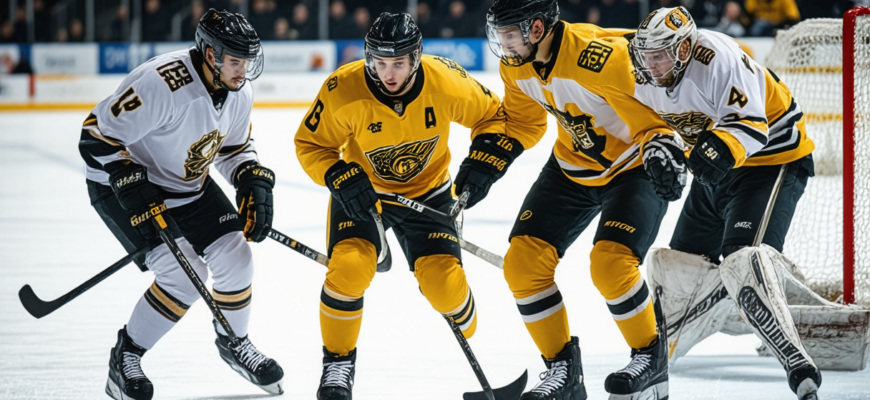
Hockey is a fast-paced, highly strategic sport where offensive tactics play a crucial role in controlling the game. For amateur players aiming to improve their gameplay, understanding how to effectively break through defensive setups is essential. Well-executed offensive strategies can create scoring opportunities, energize the team, and ultimately lead to victory. This comprehensive guide explores various offensive tactics, techniques, and practical drills that help players overcome strong defenses and maximize their scoring potential.
- Understanding the Defensive Setup: The First Step to Offensive Success
- Common Defensive Formations in Hockey
- Core Offensive Strategies to Break Down Defensive Lines
- 1. Cycle Plays and Quick Passing
- Implementation of the Cycle
- 2. Overloading Specific Zones
- Steps to Overload Effectively
- 3. Creating and Exploiting Shooting Lanes
- Techniques to Open Shooting Lanes
- Specialized Offensive Techniques for Amateur Players
- 1. Dekes and Fakes
- Common Deking Maneuvers
- 2. Speed and Agility Drills
- Sample Drills
- 3. Effective Puck Protection
- Techniques for Puck Protection
- Practical Drills to Enhance Offensive Effectiveness
- 1. 1-On-1 Attack Drills
- 2. Power Play Set-Ups
- 3. Zone Entry Techniques
- Analyzing Successful Offensive Plays: Case Studies
- Combining Strategies for Success
Understanding the Defensive Setup: The First Step to Offensive Success
Before delving into offensive strategies, it’s critical to understand the typical defensive organizations teams employ. Recognizing these structures allows offensive players to tailor their approach accordingly.
Common Defensive Formations in Hockey
- Box Defense: Four defenders form a square near the crease, tightly covering players and blocking shooting lanes.
- Diamond Defense: Defenders arrange in a diamond shape, providing strong positional coverage and quick transitions.
- Stacked Defense: Defensive players concentrate in one area, often in front of the net, to prevent scoring chances.
Understanding these formations helps offensive players identify potential gaps and develop targeted strategies to exploit them.
Core Offensive Strategies to Break Down Defensive Lines
Breaking through a well-organized defense requires a combination of individual skill, team coordination, and tactical ingenuity. The following are the most effective offensive strategies for amateur hockey players looking to create scoring chances.
1. Cycle Plays and Quick Passing
One of the fundamental offensive tactics in hockey is the cycle, a continuous series of passes and puck movement that confuses defenders and creates open shooting lanes.
Implementation of the Cycle
- Maintain possession: The puck carrier should keep control and look for options to pass or curl back.
- Support players: Teammates position themselves close to the puck carrier to enable short, quick passes.
- Change the angle: The puck is passed from side to side, shifting the defensive coverage and creating gaps.
Benefits of the cycle include:
- Disrupts defensive positioning
- Creates shooting opportunities from unexpected angles
- Builds offensive pressure
2. Overloading Specific Zones
This tactic involves concentrating multiple offensive players in a particular area of the ice, such as the half-boards or the crease. Overloading forces defenders to collapse, opening up scoring lanes.
Steps to Overload Effectively
- Designate one player to hold the puck near the point or side boards.
- Other forwards position themselves to draw defenders away from the high-danger areas.
- Use quick passes to shift the defense and create shot opportunities or rebounds.
3. Creating and Exploiting Shooting Lanes
Offensive players must be aware of open shooting lanes and work to create or find these opportunities through movement and deception.
Techniques to Open Shooting Lanes
- Pick screens: Teammates set screens in front of the goalie to block their view.
- Fake shots: Use fakes to deceive defenders and open space for a real shot.
- Quick shot release: Avoid giving defenders time to block shots by shooting quickly upon receiving the puck.
Specialized Offensive Techniques for Amateur Players
Beyond team tactics, individual techniques greatly impact offensive effectiveness. Mastering these skills enhances the ability to break through defenses consistently.
1. Dekes and Fakes
Deception is a key element in evading defenders. Effective fakes can include toe-drags, shoulder fakes, and quick lateral movements that mislead opponents.
Common Deking Maneuvers
- Toe Drag: Using the stick to pull the puck around a defender.
- Shoulder Fake: Shifting your upper body to mislead the defender about your intended move.
- Protector Move: Shielding the puck from defenders using the body while maintaining control for a shot or pass.
2. Speed and Agility Drills
Quick acceleration and sharp turns can allow players to outrun defenders or create separation for shots.
Sample Drills
- Sprint and Stop: Sprint for 10 meters, then abruptly stop to simulate game scenarios.
- Lateral Quickness: Use cones or markers to develop rapid lateral movements.
- Edge Control Drills: Practice tight turns on skates to improve agility.
3. Effective Puck Protection
Using the body strategically to shield the puck from defenders allows offensive players to maintain control and look for pass or shot opportunities.
Techniques for Puck Protection
- Keep the stick close to the puck and body.
- Use the feet and hips to block defenders’ access.
- Stay low with a wide stance for better balance.
Practical Drills to Enhance Offensive Effectiveness
Implementing drills that simulate game situations helps amateur players enhance their offensive skills and tactical understanding. Below are essential exercises.
1. 1-On-1 Attack Drills
This drill mimics real-game scenarios where an attacker faces a defender. Focus on dekes, speed, and puck protection to beat the defender and create a shot or pass.
2. Power Play Set-Ups
Practice offensive formations such as 1-3-1 or 2-1-2 to improve coordination during power plays, emphasizing quick puck movement and creating shooting lanes.
3. Zone Entry Techniques
Learn to effectively enter the offensive zone through techniques like controlled carry-ins, dump-ins combined with chase, and carry-and-pass plays.
Analyzing Successful Offensive Plays: Case Studies
| Play Type | Description | Key Factors |
|---|---|---|
| Two-Man Cycle | Two forwards work in tandem to cycle the puck along the boards, creating confusion among defenders and opening shooting lanes. | Quick passing, tight support, and constant movement |
| Screen Shot | Player positions themselves to block the goalie’s view, with a teammate taking a shot from the point. | Proper positioning, timing, and communication |
| Cross-ice Pass | Using a quick cross-ice pass to catch defenders off-guard and generate a quality shot on goal. | Sharp technique, awareness of open space |
Combining Strategies for Success
Breaking through tough defenses in hockey requires a multifaceted approach that combines tactical team plays with individual technical mastery. By understanding defensive formations, employing effective offensive strategies like cycling and overloads, and honing individual skills such as dekes, speed, and puck protection, amateur players can significantly improve their scoring chances. Consistent practice with practical drills and studying successful plays further enhances offensive effectiveness, making the game more rewarding and competitive.
Ultimately, the key is adaptability—learning to read the game, exploiting weaknesses, and maintaining relentless offensive pressure. When teams and players seamlessly integrate these strategies, breaking down even the most disciplined defenses becomes a tangible goal, leading to more exciting and successful hockey matches.
Похожие записи:
 Essential Offensive Strategies in Hockey for Amateur Players
  Mastering the Ice: Essential Defensive Positioning Strategies in Hockey for Amateurs
  Basic Strategies for Beginner Hockey Players: A Complete Guide for Amateur Enthusiasts
  Mastering the Art of Puck Recovery: Strategies for Effective Play in Amateur Hockey
  Positioning Basics for Amateur Hockey Players: Unlocking Your Potential on the Ice
  Mastering Power Plays and Penalty Kill Tactics for Amateur Hockey Teams
  Mastering Team Chemistry: Essential Tips for Effective Collaboration in Amateur Hockey
  Effective Passing Drills to Boost Teamwork in Hockey for Amateurs
  Mastering Consistency: Proven Strategies to Stay Motivated and Improve in Hockey for Amateurs
  Effective Simple Drills to Boost Puck Control and Agility for Amateur Hockey Players
  Mastering the Art of Anticipation: How Amateur Hockey Players Can Predict Opponents’ Moves
  Mastering Faceoff Techniques: The Key to Gaining Puck Control in Hockey
  Mastering the Art of Effective Ice Stops: Essential Techniques for Amateur Hockey Players
  Mastering Recovery and Rebound Control: Essential Skills for Amateur Hockey Players
  Mastering Puck Possession: Essential Techniques for Amateur Hockey Players
  Simple and Effective Ways to Improve Your Balance on Skates for Amateur Hockey Players