
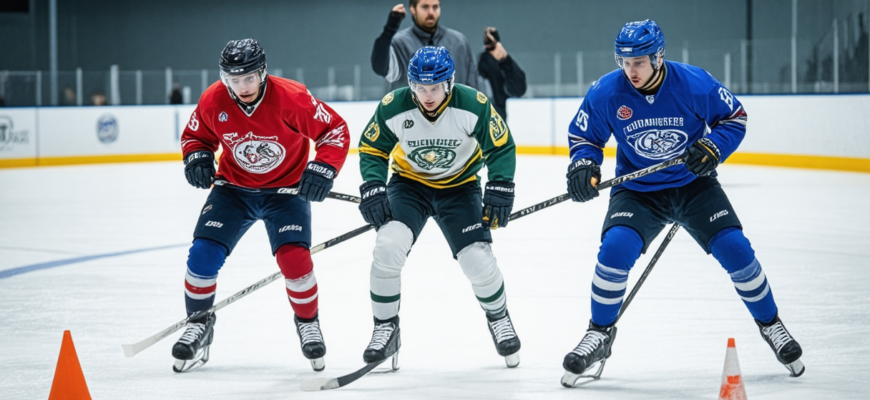
Hockey is a fast-paced, physically demanding sport where speed plays a crucial role. The ability to accelerate quickly, maintain high velocity, and change directions smoothly can be the difference between winning and losing. For amateur players looking to improve their skills on the ice, integrating targeted speed drills into training routines can significantly elevate performance. This comprehensive guide explores various training methods, techniques, and tips to develop explosive speed, agility, and overall skating efficiency.
- Understanding the Importance of Speed in Hockey
- Fundamentals of Speed Development in Hockey
- Biomechanics of Skating Speed
- Common Mistakes Hindering Speed
- Key Components of Effective Speed Drills
- Top Speed Drills for Hockey Players
- 1. Sprint Intervals on Ice
- 2. Resistance Sprint Drills
- 3. Cone and Ladder Agility Drills
- 4. Explosive Starts from Stationary
- 5. Continuous Speed Endurance Drills
- Integrating Strength and Conditioning for Speed
- The Role of Strength Training
- Sample Weekly Training Plan
- Tips for Maximizing Speed Training Effectiveness
- Proper Technique Is Key
- Consistency Over Intensity
- Recovery and Nutrition
- Tracking Progress
- Sample Speed Drills Program for Amateur Players
- Week Sample Program
- Additional Considerations for Effective Speed Improvement
- Incorporate Proper Equipment
- Maintain Mental Focus and Motivation
- Seek Feedback and Coaching
Understanding the Importance of Speed in Hockey
Speed in hockey isn’t just about sprinting across the ice; it encompasses a wide spectrum of skills that enable players to react swiftly, accelerate rapidly, and maneuver effectively. Enhanced speed contributes to several critical aspects of gameplay:
- Breakaways: Faster skating enables more scoring opportunities.
- Defensive Recovery: Quick retreats prevent opponent breakthroughs.
- Transition Play: Speed facilitates seamless transition from defense to offense.
- Overall Play Efficiency: Increased speed reduces fatigue and improves endurance.
As such, developing explosive acceleration and sustained top speed is essential for amateur players aiming to elevate their game.
Fundamentals of Speed Development in Hockey
Biomechanics of Skating Speed
Understanding how the body moves during skating is key to improving speed. Key biomechanical elements include:
- Stride Length and Frequency: Longer strides with quick cadence increase speed.
- Body Position: A low, forward-leaning stance enhances propulsion.
- Core Strength: Stabilizes movements and improves balance.
- Leg Power: Critical for explosive starts and acceleration.
Common Mistakes Hindering Speed
Identifying and correcting these issues can prevent plateaus in performance:
- Overstriding, which causes loss of momentum.
- Poor posture limiting power transfer.
- Lack of explosive push-offs during strides.
- Inadequate focus on recovery routines post-training.
Key Components of Effective Speed Drills
Designing productive speed drills involves focusing on several core components:
- Acceleration Training: Drills that emphasize quick starts.
- Top-Speed Development: Sustain high speeds over short distances.
- Agility and Change of Direction: Maneuvering rapidly while maintaining speed.
- Endurance and Conditioning: Maintaining speed during extended play.
Top Speed Drills for Hockey Players
1. Sprint Intervals on Ice
This classic drill improves explosive acceleration and stamina. It involves short, maximum-effort sprints followed by brief recovery periods.
- Set up markers at 10, 20, and 30 meters across the ice.
- Start in an athletic stance at the starting line.
- Sprint to the first marker as fast as possible.
- Rest for 30-60 seconds, then repeat multiple times.
To maximize benefits, focus on explosive push-off and proper body lean during each sprint.
2. Resistance Sprint Drills
Utilize resistance tools such as parachutes or tow lines to enhance leg strength and acceleration. These drills develop explosive power essential for quick starts.
- Parachute Sprints: Attach a small parachute to your waist and sprint over short distances.
- Towline Sprints: Have a partner provide gentle resistance while you accelerate.
Perform 6-8 repetitions with adequate rest to prevent fatigue.
3. Cone and Ladder Agility Drills
Improving agility directly correlates with faster on-ice performance. These drills enhance foot speed and coordination.
| Exercise | Description | Duration/Reps |
|---|---|---|
| Cone Zig-Zags | Quickly weave through cones spaced 3 meters apart, focusing on tight turns and rapid acceleration. | 3 sets of 30 seconds |
| Ladder Drills | Use an agility ladder to perform various footwork patterns like in-and-out, lateral shuffles, and bonus hops. | 4 repetitions of each pattern |
4. Explosive Starts from Stationary
This drill trains players to react swiftly and generate maximum power immediately.
- Position yourself in an athletic stance with knees bent.
- On signal, explode forward, simulating a breakaway or faceoff start.
- Focus on short, explosive pushes with both legs.
- Repeat 10-12 times with minimal rest.
5. Continuous Speed Endurance Drills
To sustain high speed during extended play, incorporate drills such as:
- Time-Tracked Continuous Skating: Skating at moderate pace over 100 meters, gradually increasing speed each repetition.
- Shuttle Runs: Rapidly change direction between two points, emphasizing quick transitions and maintaining speed.
Integrating Strength and Conditioning for Speed
The Role of Strength Training
While on-ice drills are vital, off-ice strength training significantly contributes to speed development. Focus on:
- Lower body exercises: squats, lunges, deadlifts
- Core stability routines: planks, Russian twists
- Plyometric drills: box jumps, bounding exercises
Sample Weekly Training Plan
To optimize improvements, here is an example of a balanced weekly speed training schedule:
| Day | Focus | Exercises |
|---|---|---|
| Monday | On-ice speed drills | Sprints, agility ladder, explosive starts |
| Tuesday | Strength training | Squats, lunges, core work |
| Wednesday | Active recovery or light skating | Endurance skating, stretching |
| Thursday | Resistance and plyometric drills | Parachute sprints, box jumps, bounding |
| Friday | Speed endurance | Timed continuous skating, shuttle runs |
| Saturday | Skill and agility focus | Cone weaving, stickhandling incorporated with speed drills |
| Sunday | Rest or active recovery |
Tips for Maximizing Speed Training Effectiveness
Proper Technique Is Key
Maintaining correct skating posture—slight forward lean, bent knees, controlled arm swings—ensures effective power transfer and injury prevention. Video analysis or coaching can help refine technique.
Consistency Over Intensity
Consistent training yields better long-term gains than sporadic intense sessions. Establish a routine and progressively increase load and complexity.
Recovery and Nutrition
Muscle recovery is crucial for performance improvements. Incorporate adequate rest, proper nutrition, hydration, and stretching to prevent injuries and enhance progress.
Tracking Progress
Use measurement tools such as stopwatch timing, video analysis, or wearable devices to monitor improvements over time. Set clear, achievable goals to stay motivated.
Sample Speed Drills Program for Amateur Players
To provide a practical example, here is a sample one-week program adapted for amateur players at different skill levels:
Week Sample Program
| Day | Workout Focus | Sample Exercise | Duration/Repetitions |
|---|---|---|---|
| Monday | Sprints and agility | Sprint 20m, cone weaving | 6 sets each |
| Wednesday | Strength and power | Squats, plyometric jumps | 3 sets of 12 each |
| Friday | Endurance skating | Continuous skating at moderate pace | 10 minutes |
| Sunday | Active recovery | Light stretching, foam rolling | 30 minutes |
Additional Considerations for Effective Speed Improvement
Incorporate Proper Equipment
Using well-fitted skates, lightweight sticks, and appropriate protective gear can improve mobility and reduce fatigue during training sessions.
Maintain Mental Focus and Motivation
Tracking improvements and setting incremental goals help maintain motivation and focus during demanding training routines.
Seek Feedback and Coaching
Professional tips and personalized feedback can highlight weaknesses and guide technique adjustments for maximum speed gains.
Enhancing on-ice speed is a multifaceted process that combines technical skill development, targeted drills, strength training, and consistent practice. For amateurs eager to climb the ranks or simply enjoy playing hockey more effectively, implementing these speed drills can lead to noticeable improvements on the ice. Remember to focus on proper technique, incorporate variety in training routines, and prioritize recovery to ensure sustainable progress. As speed is a vital asset in hockey, investing time and effort into dedicated speed training will undoubtedly pay off through faster, more agile, and confident gameplay.
Start integrating these drills into your routine today and watch your hockey performance accelerate to new heights!
Похожие записи:
 Mastering Speed and Control in Skating: The Ultimate Guide for Amateur Hockey Players
  Incorporating Fun Drills to Enhance Hockey Skills: A Guide for Amateur Players
  Off-Ice Strength Training Exercises for Amateur Hockey Fans: Boost Your Performance Off the Ice
  Mastering Proper Hockey Stick Use: Tips to Enhance Performance and Prevent Injuries
  The Crucial Role of Practice Drills in Enhancing Hockey Skills for Amateurs
  The Crucial Role of Fitness and Strength in Hockey Performance
  Mastering Hockey Skills: A Comprehensive Guide to Creating an Effective Personal Practice Routine for Faster Improvement
  The Critical Role of Core Strength in Enhancing Hockey Performance
  Effective Warm-up and Cool-down Routines for Amateur Hockey Players: Maximize Performance and Minimize Injuries
  Effective Passing Drills to Boost Teamwork in Hockey for Amateurs
  Mastering Faceoff Techniques: A Comprehensive Guide for Amateur Hockey Enthusiasts
  Essential Hockey Drills to Elevate Your Skills at Home or During Practice
  Simple Drill Routines for Consistent Improvement in Hockey for Amateurs
  Effective Simple Drills to Boost Puck Control and Agility for Amateur Hockey Players
  Mastering the Ice: A Comprehensive Guide to the Basic Rules of Ice Hockey for Beginners
  Simple Ways to Build Stamina for Hockey: The Ultimate Guide for Amateur Players