
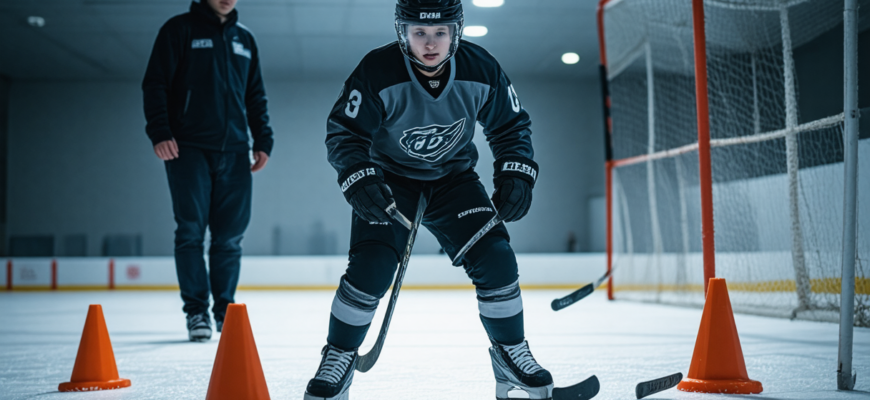
Hockey is a fast-paced and physically demanding sport that requires a combination of technical skills, agility, endurance, and mental sharpness. Whether you are an amateur aiming to improve your game or a dedicated enthusiast wanting to stay sharp between official practices, mastering fundamental hockey drills is essential. These drills can be safely performed at home or during practice sessions, and they help develop core skills that form the backbone of effective gameplay.
- Introduction to Hockey Skills and the Importance of Practice
- Common Challenges for Amateur Hockey Players
- Core Hockey Drills to Develop Skills at Home or During Practice
- 1. Stickhandling and Puck Control Drills
- Setup and Equipment Needed
- Basic Stickhandling Drill
- 2. Shooting Accuracy and Power Drills
- Equipment Needed
- Shooting Drill for Accuracy
- Shooting Power Enhancement
- 3. Skating Technique and Agility Drills
- Supporting Equipment
- Basic Skating and Agility Exercises
- Sample Agility Circuit
- 4. Passing and Receiving Drills
- Solo Passing Practice
- Passing Drill with Partner
- Incorporating Drills into a Training Routine
- Safety Tips and Equipment Considerations
- Additional Resources and Tools for Practice
- Building a Strong Foundation for Hockey Success
- Stay Motivated and Keep Improving
Introduction to Hockey Skills and the Importance of Practice
Hockey requires a combination of various physical and technical skills, including skating, puck control, shooting accuracy, passing, and strategic movement. Developing a consistent practice routine that incorporates basic drills can lead to significant improvements over time. While on-ice practice is irreplaceable, many fundamental skills can be practiced off the ice or at home using simple equipment, which enhances overall performance and builds muscle memory.
Common Challenges for Amateur Hockey Players
- Limited access to ice rinks or training facilities
- Difficulty mastering puck control and stickhandling
- Improving shooting accuracy and power
- Enhancing skating technique and agility
- Developing mental focus and game awareness
Addressing these challenges involves dedicated practice and correct techniques, which this article will outline through effective drills suitable for home or practice settings.
Core Hockey Drills to Develop Skills at Home or During Practice
1. Stickhandling and Puck Control Drills
Stickhandling is fundamental to controlling the puck under pressure and making quick, precise moves. Practicing stickhandling at home can significantly enhance your dexterity and confidence on the ice.
Setup and Equipment Needed
- Puck or Ball (preferably a hockey puck for realism)
- Stick (hockey stick or a similar stick for practice)
- Optional: a small obstacle or cones for navigation
Basic Stickhandling Drill
- Stand in an open area with ample space.
- Place the puck or ball on the ground in front of you.
- Using short, controlled movements, move the puck back and forth across your body, maintaining close contact.
- Increase speed gradually while keeping control.
- Front and side-to-side stickhandling exercises:
| Exercise Type | Description | Duration |
|---|---|---|
| Forehand & Backhand | Switch between forehand and backhand maneuvering of the puck. | 2 minutes |
| Figure-Eight | Navigate a figure-eight pattern around two markers or cones. | 3 minutes |
| Obstacle Navigation | Weave the puck around small obstacles or cones to simulate tight turns. | 3-5 minutes |
2. Shooting Accuracy and Power Drills
Shooting is critical to scoring and plays a decisive role in hockey. Improving shot precision and strength can be done carefully at home with minimal equipment and safe surroundings.
Equipment Needed
- Hockey stick
- Practice net or target (can be made from household items)
- Hockey puck or ball
- Optional: shooting mat for stability
Shooting Drill for Accuracy
- Set up targets in the goal or mark specific spots on a wall or net.
- Stand at a designated shooting spot, maintaining proper stance.
- Focus on hitting specific targets to improve precision.
- Alternate between wrist shots, slap shots, and backhand shots.
- Record your shots to track accuracy progress.
Shooting Power Enhancement
To increase shot strength, focus on proper biomechanics, including weight transfer and follow-through. Use the following formula as a simple guide:
Shooting Power = (Force exerted by legs) x (Speed of stick motion) x (Follow-through distance)
Practice explosive leg drives while maintaining control to maximize power. Repeat multiple times with rest periods to avoid fatigue.
3. Skating Technique and Agility Drills
Skating is the foundation of effective hockey play. Improving balance, stride, and quick directional changes at home enhances on-ice performance.
Supporting Equipment
- Inline skates or rollerblades (if available)
- Cones or markers for creating agility courses
- Wall or sturdy surface for support (optional)
Basic Skating and Agility Exercises
- Forward Skating: Practice gliding smoothly, focusing on stride length and cadence.
- Backward Skating: Reverse skating drills to increase control and confidence.
- Stops and Starts: Practice quick stops and explosive starts to improve acceleration and deceleration.
- Slalom and Quick Turns: Use cones to practice sharp turns and edge control.
Sample Agility Circuit
- Set up 5-8 cones in a straight line or zigzag pattern.
- Perform slalom between cones at high speed.
- Execute quick stops at each cone and accelerate in the opposite direction.
- Repeat for 10-15 minutes, focusing on smooth, controlled movements.
4. Passing and Receiving Drills
Accurate passing and reliable receiving are critical for teamwork. These skills can be practiced solo or with a partner using simple setups, even in small spaces.
Solo Passing Practice
- Use a wall or rebound surface for passing and receiving.
- Stand a few feet from the wall and execute forehand and backhand passes.
- Focus on timing, accuracy, and soft landings to simulate game conditions.
Passing Drill with Partner
- Stand about 5-10 meters apart.
- Pass the puck back and forth, aiming for accuracy and smoothness.
- Incorporate movement: pass while skating toward or away from the partner.
- Increase distance gradually to improve strength and control.
Incorporating Drills into a Training Routine
Consistency is key to seeing improvements. A sample weekly plan might include:
| Day | Focus Area | Recommended Drills | Duration |
|---|---|---|---|
| Monday | Stickhandling & Puck Control | Figures of eight, obstacle weaving | 30-45 minutes |
| Tuesday | Shooting & Power | Accuracy targets, power shots | 30 minutes |
| Wednesday | Skating & Agility | Slalom, stops, starts | 30-45 minutes |
| Thursday | Passing & Receiving | Wall passing, partner drills | 30 minutes |
| Friday | Review & Light Practice | Combination drills, endurance | 30 minutes |
| Weekend | Rest or Light Activity | Stretching, mobility exercises | Optional |
Safety Tips and Equipment Considerations
While practicing at home or in small spaces, safety should be paramount. Here are some key tips:
- Use appropriate footwear, such as inline skates or athletic shoes with good grip.
- Practice in clear, obstacle-free areas to avoid injuries.
- Wear protective gear if training on skates or working with sticks and pucks.
- Ensure proper warm-up and cool-down to prevent muscle strains.
Additional Resources and Tools for Practice
| Resource | Description | Benefits |
|---|---|---|
| Training Apps | Video tutorials and drill planners | Guided routines, progress tracking |
| Online Coaching | Remote tips from professional trainers | Personalized feedback |
| Home Equipment | Practice nets, rebounders, cones, markers | Versatile training options |
Building a Strong Foundation for Hockey Success
Practicing fundamental hockey drills at home or during practice sessions is an excellent way for enthusiasts to enhance their skills, increase confidence, and prepare for on-ice gameplay. Consistency, correct techniques, and a focus on safety lead to steady improvement over time. Incorporating a variety of drills targeted at stickhandling, shooting, skating, and passing will help elevate overall gameplay and turn amateur players into highly skilled competitors. Remember, progress may take time, but with dedication and proper practice routines, significant strides toward hockey mastery are well within reach.
Stay Motivated and Keep Improving
- Set measurable goals, such as improved shot accuracy or faster skating times.
- Record your training sessions to monitor progress.
- Mix different drills to maintain interest and challenge different skills.
- Seek feedback from experienced players or coaches when possible.
Building your skills from the ground up with these foundational drills will ensure that your hockey journey progresses effectively, making the sport more enjoyable and rewarding.
Похожие записи:
 Essential Stickhandling Drills for New Hockey Players: Improve Your Skills on Ice
  Incorporating Fun Drills to Enhance Hockey Skills: A Guide for Amateur Players
  Mastering Precision: Essential Drills to Improve Passing Accuracy in Hockey
  Mastering Recovery and Rebound Control: Essential Skills for Amateur Hockey Players
  Mastering Hockey: How Watching Online Tutorials and Videos Can Elevate Your Game for Amateur Players
  Mastering Passing and Receiving the Puck: Essential Skills for Amateur Hockey Players
  Introductory Power Skating Exercises: Essential Skills for Aspiring Hockey Players
  Effective Simple Drills to Boost Puck Control and Agility for Amateur Hockey Players
  Effective Passing Drills to Boost Teamwork in Hockey for Amateurs
  Mastering the Fundamentals of Puck Retrieval and Chase in Hockey: Essential Skills for Amateur Players
  Ultimate Guide to Drills that Boost Eye and Hand Coordination for Amateur Hockey Enthusiasts
  Building Confidence in Your Skating and Puck Skills: A Complete Guide for Amateur Hockey Players
  Starting with Beginner-Friendly Hockey Drills: A Complete Guide for Amateur Players
  Mastering Power Play: Essential Strategies for Effective Hockey Performance
  Mastering the Basics of Hockey: Essential Rules and Safety Tips for Beginners
  Mastering the Art of Precision: How to Improve Your Hockey Shooting Accuracy