
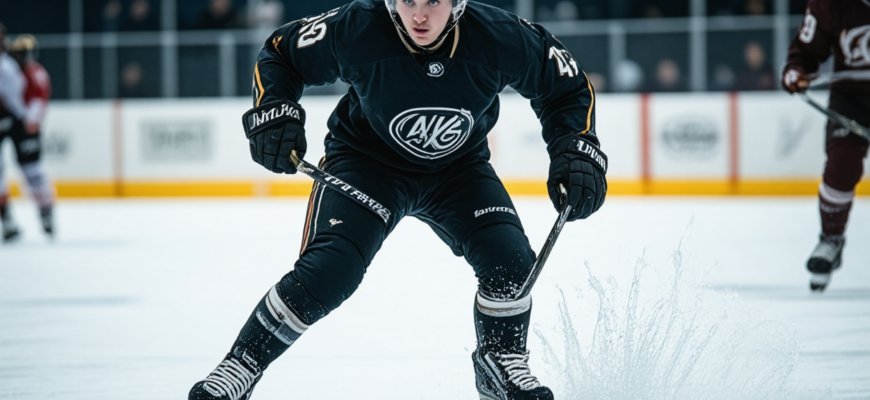
For amateur hockey players, mastering edge control is a critical skill that can significantly improve agility, speed, stability, and overall performance on the ice. Proper edge control allows players to change direction swiftly, accelerate effectively, and maintain balance during complex maneuvers. Despite its importance, many players struggle to develop consistent, reliable edges, often feeling unstable or sluggish when executing turns and stops. This comprehensive guide explores effective training drills aimed at enhancing edge control, supported by biomechanical principles, step-by-step instructions, and practical tips for players at all skill levels.
- Understanding Edge Control in Hockey
- What Is Edge Control?
- The Importance of Edge Control for Amateur Players
- The Biomechanics of Edges
- Training Drills for Improving Edge Control
- Fundamental Drills for Beginners
- 1. Edge Awareness and Balance Drill
- 2. Forward and Backward Edge Slides
- Intermediate Drills to Enhance Precision
- 3. Slalom with Edge Focus
- 4. Power Turns and Crossovers
- Advanced Drills for Game-Like Situations
- 5. Edge Control in Speed Drills
- 6. Edge Control with Puck Handling
- Tips for Effective Training and Skill Retention
- Sample Weekly Training Plan for Edge Control
- Additional Resources
Understanding Edge Control in Hockey
What Is Edge Control?
Edge control refers to a skater’s ability to balance and maneuver effectively on the edges of their skate blades—specifically, the inside and outside edges. It involves controlling the tilt and pressure exerted on these edges to enable smooth turns, stops, and acceleration. Proper edge control hinges on the alignment of the skater’s body, precise weight distribution, and correct skate positioning.
The Importance of Edge Control for Amateur Players
- Enhanced Agility: Better control enables quick changes in direction, crucial during gameplay.
- Increased Speed: Efficient edges allow for smoother gliding and acceleration.
- Improved Balance: Maintaining stability during turns and stops reduces falls and injuries.
- Advanced Stickhandling: Precise edge usage facilitates better puck control under pressure.
The Biomechanics of Edges
Skating with proper edge control involves complex biomechanical movements. The key components include:
- Edge Angle: The tilt of the skate blade relative to the ice determines the edge used.
- Body Lean: Leaning into turns shifts the center of gravity, aiding edge engagement.
- Weight Distribution: Properly shifting body weight onto the outside or inside edge maximizes control.
- Foot Positioning: The positioning of feet and skate blades influences maneuverability.
By developing muscular strength and proprioception (body awareness), players can refine these biomechanical aspects for more effective edge control.
Training Drills for Improving Edge Control
Fundamental Drills for Beginners
1. Edge Awareness and Balance Drill
Objective: Develop an understanding of edge sensations and improve balance on both inside and outside edges.
- Stand on the ice with skates properly laced and balanced.
- Start on a flat, smooth section of ice.
- Gently shift weight onto the inside edge of one skate, maintaining balance for 5 seconds.
- Switch to the outside edge, holding the position again.
- Repeat on both skates for 2-3 minutes.
This drill enhances proprioception and familiarizes beginners with different edge sensations.
2. Forward and Backward Edge Slides
Objective: Improve control and fluidity of edge engagement during forward and backward skating.
- Begin at the blue line or designated boundary.
- Push off gently and glide forward on one skate, maintaining an inside edge.
- Transition smoothly to the outside edge, then switch to the other skate.
- Next, reverse direction: skate backward using inside and outside edges.
- Perform 4-6 repetitions in each direction.
This exercise builds fundamental muscle memory and smooth edge transitions.
Intermediate Drills to Enhance Precision
3. Slalom with Edge Focus
Objective: Develop sharp directional changes and precise edge control.
- Set up a series of cones or markers spaced evenly apart.
- Skate through the cones, making tight turns around each using proper edge engagement.
- Focus on leaning into turns and feeling the edges grip the ice.
- Increase speed as confidence improves.
Tip: Keep knees slightly bent and hips low to optimize edge control during turns.
4. Power Turns and Crossovers
Objective: Improve power, balance, and control during aggressive turns and transitions.
- Start skating at a moderate pace.
- Execute a wide, sweeping turn, engaging the outside edge.
- Upon completing the turn, quickly transition into a crossover to accelerate out of the turn.
- Repeat in both directions, focusing on clean edges and body alignment.
This drill enhances muscular strength and edge efficiency during fast maneuvers.
Advanced Drills for Game-Like Situations
5. Edge Control in Speed Drills
Objective: Combine edge control with speed to simulate game scenarios.
- Set a straight path with cones or markers.
- Skate as fast as possible while maintaining proper edge control, executing tight turns at designated points.
- Focus on smooth shifts between edges without breaking stride.
- Gradually increase speed and complexity of turns.
6. Edge Control with Puck Handling
Objective: Integrate stickhandling with precise edge work under pressure.
- Set up a series of cones or obstacles on the ice.
- Skate through the course, maintaining control of the puck.
- Use inside and outside edges to change directions quickly.
- Prioritize smoothness and balance over speed at first; increase pace as skills improve.
Tips for Effective Training and Skill Retention
- Consistent Practice: Incorporate edge drills into regular training schedules.
- Use Proper Equipment: Skate with well-maintained, correctly fitted skates for optimal edge control.
- Focus on Body Mechanics: Keep knees slightly bent, hips low, and gaze forward.
- Gradual Progression: Start with basic exercises and progressively increase difficulty.
- Video Analysis: Record sessions to identify areas for improvement.
Sample Weekly Training Plan for Edge Control
| Day | Drills | Duration | Focus Areas |
|---|---|---|---|
| Monday | Edge Awareness, Forward/Backward Slides | 30 minutes | Balance, Edge Sensation |
| Wednesday | Slalom, Power Turns | 45 minutes | Turning Precision, Power |
| Friday | Speed Drills, Puck Handling | 45 minutes | Speed, Control under Pressure |
| Weekend | Open Practice with Focus on Edges | 60 minutes | Applying Skills in Game-Like Situations |
Developing proficient edge control is fundamental for improving overall hockey performance, especially for amateurs striving to elevate their game. Through dedicated practice utilizing targeted drills—ranging from basic balance exercises to complex game simulations—players can enhance their agility, stability, and confidence on the ice. Remember, mastery of edges requires patience, consistency, and mindful attention to technique. Incorporating these training strategies into regular practice routines will pave the way for noticeable improvements and a deeper enjoyment of the sport.
Additional Resources
- Video tutorials on edge control techniques
- Downloadable training plan templates
- Expert tips from professional players
Похожие записи:
 Mastering the Ice: Essential Hockey Skating Techniques for Beginners
  Ultimate Guide to Drills that Boost Eye and Hand Coordination for Amateur Hockey Enthusiasts
  Starting with Beginner-Friendly Hockey Drills: A Complete Guide for Amateur Players
  Essential Stickhandling Drills for New Hockey Players: Improve Your Skills on Ice
  Mastering Precision: Essential Drills to Improve Passing Accuracy in Hockey
  Mastering Body Checks and Staying Safe on the Ice: An Essential Guide for Amateur Hockey Enthusiasts
  Mastering the Art of Effective Ice Stops: Essential Techniques for Amateur Hockey Players
  Essential Hockey Drills to Elevate Your Skills at Home or During Practice
  Mastering the Ice: Basic Skating Techniques Every New Hockey Player Must Know
  Effective Strategies to Prevent Overtraining and Burnout in Hockey Training
  Off-Ice Strength Training Exercises for Amateur Hockey Fans: Boost Your Performance Off the Ice
  Mastering Speed and Control in Skating: The Ultimate Guide for Amateur Hockey Players
  Mastering Overtime and Shootouts Rules in Hockey: A Guide for Amateur Enthusiasts
  Effective Simple Drills to Boost Puck Control and Agility for Amateur Hockey Players
  Speed Drills to Enhance Your On-Ice Performance in Hockey: A Comprehensive Guide for Amateurs
  How to Increase Your Skating Speed Safely: Essential Tips for Amateur Hockey Players