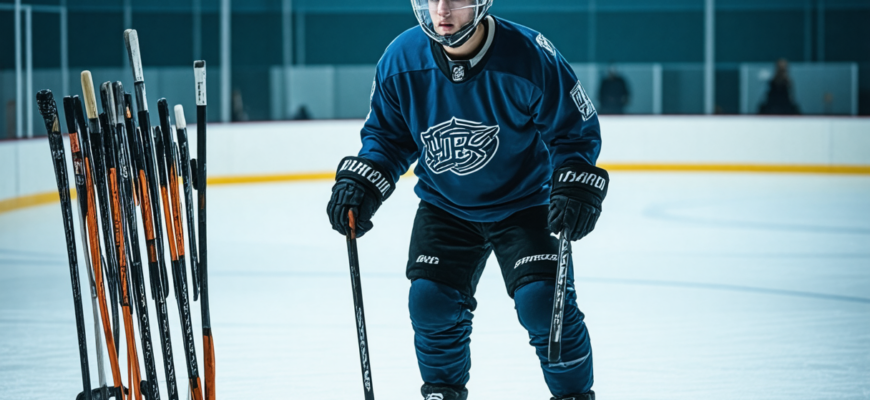
Getting started in ice hockey can be a thrilling experience, but selecting the right equipment is crucial for developing skills, ensuring safety, and enjoying the game. Among the essential pieces of gear, the hockey stick plays a pivotal role. For beginners, understanding the nuances of hockey sticks — from materials to length, flex, and blade design — can be overwhelming. This comprehensive guide aims to demystify the selection process, providing amateurs with all the necessary information to choose the perfect stick to kick-start their hockey journey.
- Understanding the Basics of Hockey Sticks
- Components of a Hockey Stick
- Types of Hockey Sticks
- Choosing the Right Material
- Wooden vs. Composite Sticks
- Measuring and Selecting the Correct Length
- The Importance of Proper Length
- How to Measure for the Correct Length
- Understanding Flex Rating and Its Role in Performance
- What is Flex?
- Choosing the Right Flex for Beginners
- Flex Formula and Approximate Recommendation
- Blade Design and Curve: Impacts on Play
- Types of Blade Curves
- Blade Curve Depth
- Blade Width and Flexibility
- Additional Factors to Consider
- Grip and Surface Texture
- Cost and Budgeting
- Brand and Quality
- Practical Tips for Beginners
- Summary Table: Quick Reference for Beginners
- Making the Right Choice for a Fun and Productive Start
Understanding the Basics of Hockey Sticks
Hockey sticks are engineered to facilitate puck handling, shooting, and passing. They come in various types, materials, lengths, flex ratings, and blade shapes. To make an informed choice, it’s vital to familiarize oneself with the fundamental components and their functions.
Components of a Hockey Stick
- Blade: The part of the stick that contacts the puck, influencing shot accuracy and control.
- Ferrule: The joint connecting the blade to the shaft, can affect durability and performance.
- Blade Curve: The curvature of the blade affecting puck lift and shot accuracy.
- Shaft: The long, straight part of the stick that is held during play, providing leverage and control.
- Grip: The surface material or texture on the shaft for better handling.
- Flex Rating: The measure of how much a stick bends during a shot, influencing shot power and control.
Types of Hockey Sticks
Hockey sticks differ primarily in their construction and intended use. The main types include:
- Wooden Sticks: Traditional, affordable, and straightforward. They are often preferred by beginners for their simplicity and natural feel.
- Composite Sticks: Made from advanced materials like carbon fiber, offering lighter weight, increased durability, and better performance.
- Hybrid Sticks: Combine wooden shafts with composite blades or vice versa, balancing cost and performance.
Choosing the Right Material
Wooden vs. Composite Sticks
For beginners, wooden sticks are generally recommended due to their affordability and ease of handling. However, composite sticks are becoming increasingly popular owing to their lightweight nature and superior performance characteristics. The choice depends on budget, comfort, and playing style.
| Feature | Wooden Sticks | Composite Sticks |
|---|---|---|
| Weight | Heavier | Lighter |
| Durability | Less durable, prone to cracking | More durable, resistant to impact |
| Cost | Lower | Higher |
| Performance | Basic, less responsive | Enhanced shot power and control |
Measuring and Selecting the Correct Length
The Importance of Proper Length
Choosing an appropriately sized hockey stick is critical for effective puck handling and shooting. A stick that’s too long or too short can hinder mobility and control, increasing the risk of injury and decreasing confidence on ice.
How to Measure for the Correct Length
- Stand straight on skates — if not on ice, imagine being on skates.
- Hold the stick vertically with gloves on, the blade flat on the ground.
- The top of the stick should reach somewhere between the chin and nose for most players, or the eyebrow for more aggressive shooters.
For beginners, a general rule is:
- Stick length (cm): Height (cm) × 0.9
Understanding Flex Rating and Its Role in Performance
What is Flex?
The flex rating indicates how much force (measured in pounds) it takes to bend the stick one inch. It typically ranges from 40 to 120. The flex affects shot power, ease of handling, and the player’s ability to load the stick during shooting.
Choosing the Right Flex for Beginners
- No need for a very stiff stick — a medium flex (around 65-75) offers a good balance between control and power.
- Flexible sticks are easier to load, making shooting less strenuous for newcomers.
Flex Formula and Approximate Recommendation
While personal preference plays a role, a simple calculation helps:
Flex = Player’s weight (kg) ÷ 2
For example, a player weighing 70 kg might prefer a stick with a flex of approximately 35-40. However, for beginners, sticking to a flex in the 65-75 range is generally ideal.
Blade Design and Curve: Impacts on Play
Types of Blade Curves
- Standard Curve: Suitable for all-around play, offering versatility.
- Maximum Curve: Designed for players focusing on shooting and puck handling.
Blade Curve Depth
Deeper curves facilitate lifting the puck and shooting; flatter curves provide better control and passing accuracy. Beginners should choose a moderate curve that balances both aspects.
Blade Width and Flexibility
Wider blades cover more surface area, aiding puck control but increasing weight. Flexibility of the blade affects shot speed and puck handling, with stiffer blades providing more power.
Additional Factors to Consider
Grip and Surface Texture
Non-slip grips or textured surfaces help maintain control, especially for beginners still developing their handling skills.
Cost and Budgeting
- Entry-level wooden sticks cost around $30-$50.
- Mid-range composite sticks cost $100-$200.
- High-end performance sticks can exceed $300.
Beginners are advised to start with a budget-friendly option until they refine their skills.
Brand and Quality
While brand is not always indicative of quality, trusted manufacturers like CCM, Bauer, and Warrior typically offer reliable beginner-friendly products.
Practical Tips for Beginners
- Test different sticks at the store if possible, to get a feel for weight and flexibility.
- Focus on comfort; a stick that feels good in your hands will improve your confidence.
- Don’t rush to buy the most expensive or high-tech stick — start simple and upgrade as skills develop.
- Consider consulting with coaches or experienced players for personalized advice.
Summary Table: Quick Reference for Beginners
| Parameter | Recommended Choice for Beginners |
|---|---|
| Material | Wooden or Hybrid |
| Stick Length | Between chin and nose when grip is on the ground |
| Flex Rating | 65-75 |
| Blade Curve | Moderate, versatile |
| Price Range | $30-$100 |
| Brand | Well-known, trusted manufacturers |
Making the Right Choice for a Fun and Productive Start
Selecting the appropriate hockey stick as a beginner involves balancing factors such as material, size, flex, and budget. Starting with an easy-to-handle, slightly flexible stick allows new players to develop fundamental skills without being hindered by overly advanced equipment. As experience and skill progress, upgrading to more specialized sticks becomes more advantageous, providing better performance and confidence on ice.
Remember, comfort and control are key in the early stages of hockey. Durability and affordability are also important — ensuring that the equipment can withstand the learning process while not breaking the bank. By understanding the technical aspects outlined in this guide, beginners can make informed decisions, enjoy the game more fully, and improve their skills efficiently.
Embrace the learning curve, have fun on the ice, and let your passion for hockey grow with each game played with the right stick in hand!
Похожие записи:
 Mastering Hockey Stick Handling: Essential Techniques for Beginners
  Starting with Beginner-Friendly Hockey Drills: A Complete Guide for Amateur Players
  Choosing a Suitable Hockey Bag for Amateur Players: The Ultimate Guide
  Building Confidence in Your Skating and Puck Skills: A Complete Guide for Amateur Hockey Players
  Basic Strategies for Beginner Hockey Players: A Complete Guide for Amateur Enthusiasts
  Ultimate Guide to Selecting the Right Hockey Pants for Beginners
  Mastering the Ice: A Comprehensive Guide to the Basic Rules of Ice Hockey for Beginners
  How to Wear Your Helmet and Pads Safely: A Complete Guide for Amateur Hockey Players
  Mastering Passing and Receiving the Puck: Essential Skills for Amateur Hockey Players
  Ultimate Guide: How to Properly Fit and Adjust Your Shoulder Pads for Hockey Beginners
  Mastering Hockey Shooting Techniques from Different Angles: A Guide for Amateurs
  Conquer Your First Ice Hockey Fears: Essential Tips for Beginners
  Mastering Speed and Control in Skating: The Ultimate Guide for Amateur Hockey Players
  Incorporating Fun Drills to Enhance Hockey Skills: A Guide for Amateur Players
  The Surprising Benefits of Playing Small-Area Hockey for Amateur Players
  Mastering the Art of Anticipation: How Amateur Hockey Players Can Predict Opponents’ Moves