
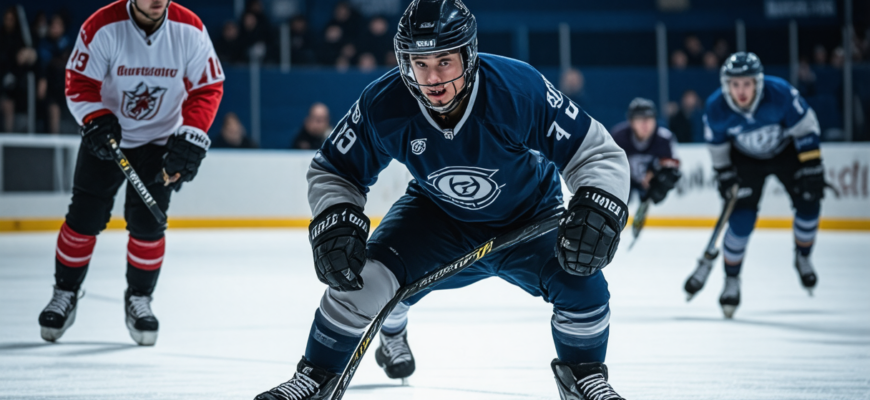
Hockey is a fast-paced, physically demanding sport that requires players to master both offensive and defensive skills. While scoring goals is exciting, the backbone of any successful team is a solid defense. Developing strong protective skills not only helps prevent the opposing team from scoring but also boosts overall confidence on the ice. For amateur players eager to improve their defensive game, implementing simple yet effective drills can make a significant difference. This comprehensive guide will explore various drills designed to enhance your protectiveness, covering fundamental techniques, strategic positioning, and practical exercises tailored for all skill levels.
- Understanding the Basics of Defensive Play in Hockey
- Fundamental Principles of Hockey Defense
- The Importance of Defensive Footwork
- Essential Defensive Drills for Amateur Players
- 1. Stick Positioning and Interception Drill
- Objective:
- Setup:
- Execution:
- Tips for Success:
- 2. Defensive Positioning and Gap Control Exercise
- Objective:
- Setup:
- Execution:
- Tips for Success:
- 3. Shadowing and Reaction Time Drill
- Objective:
- Setup:
- Execution:
- Tips for Success:
- 4. One-on-One Defensive Drills
- Objective:
- Setup:
- Execution:
- Tips for Success:
- Advanced Techniques and Strategies
- Positioning for Puck Retrieval and Clearing
- Utilizing Body Checks Safely
- Drill Progression and Developing Consistency
- Additional Tips for Effective Defensive Training
- Common Mistakes to Avoid in Defensive Play
Understanding the Basics of Defensive Play in Hockey
Fundamental Principles of Hockey Defense
Before diving into specific drills, it’s essential to grasp the core principles that underpin effective defensive play:
- Stick positioning: Proper use of the stick to intercept passes and block shots.
- Body positioning: Staying between the puck and the goal to minimize scoring chances.
- Angling: Forcing opponents toward the boards or into areas of limited options.
- Gap control: Maintaining appropriate distance from the attacker to prevent easy plays.
- Communication: Coordinating with teammates to cover zones effectively.
The Importance of Defensive Footwork
Good footwork allows defenders to stay agile, respond swiftly to offensive maneuvers, and maintain optimal positioning. Exercises that improve agility, balance, and quickness are foundational for effective coverage and protectiveness.
Essential Defensive Drills for Amateur Players
To improve your defensive skills, integrating a variety of drills into regular practice is crucial. Below are some of the most effective and simple exercises that help develop a stronger defensive game, focusing on stickhandling, positioning, footwork, and reaction time.
1. Stick Positioning and Interception Drill
Objective:
Enhance stick awareness, improve interception skills, and learn to read the puck’s movement.
Setup:
- Use a flat surface or ice rink with cones or markers to create a passing lane.
- Two players or a coach with a puck to simulate passing.
Execution:
- Player A (passer) simulates passing the puck across the lane.
- Player B (defender) positions their stick in the passing lane, attempting to intercept or block the pass.
- Alternately, practice quick reactions by changing pass directions or speeds.
Tips for Success:
- Stay low and keep your stick on the ice.
- Focus on reading the pass early to anticipate movement.
- Maintain a balanced stance to react efficiently.
2. Defensive Positioning and Gap Control Exercise
Objective:
Develop proper positioning relative to the attacker and the goal, maintaining effective gap control.
Setup:
- Use cones to mark a zone around the attacking player and goal area.
- A partner acts as the attacker with a puck.
Execution:
- Attacker tries to maneuver while the defender maintains a “gap” — a specific distance (about 2-3 stick lengths).
- The defender adjusts positioning to prevent the attacker from getting close to the goal.
- Switch roles after a set time or a set number of attempts.
Tips for Success:
- Keep knees slightly bent, stay on the balls of your feet.
- Use lateral movements to stay in front of the attacker.
- Avoid over-committing; maintain controlled positioning.
3. Shadowing and Reaction Time Drill
Objective:
Improve lateral movement, reaction speed, and defensive footwork.
Setup:
- Two players or a coach with a puck.
Execution:
- Player A begins skating or moving in a predetermined pattern.
- Player B (defender) mimics Player A’s movement, shadowing their actions without direct contact.
- Introduce sudden changes in direction or speed to simulate game situations.
Tips for Success:
- Stay on your toes to react quickly.
- Maintain a low center of gravity for better balance.
- Focus on quick, small movements to increase agility.
4. One-on-One Defensive Drills
Objective:
Practice individual defending against an attacking player in realistic scenarios.
Setup:
- Set up a small zone or use designated areas on the ice or rink.
- One attacking player and one defender.
Execution:
- The attacker tries to advance towards the goal, employing different maneuvers.
- The defender works to force the attacker outside the shooting angle or into difficult positions.
- Emphasize body positioning, stick to the puck, and controlled footwork.
Tips for Success:
- Stay low with knees bent for stability.
- Use your body to shield the puck.
- Practice patience and avoid diving in early.
Advanced Techniques and Strategies
Positioning for Puck Retrieval and Clearing
Once basic drills are mastered, focus shifts toward strategic positioning to retrieve pucks and clear them effectively. Key concepts include:
- Anticipating passes and opponent movements.
- Maintaining proper angles to box in attackers.
- Using body positioning to prioritize puck possession.
Utilizing Body Checks Safely
While body checking is not always permitted at amateur levels or in youth leagues, understanding safe contact techniques can enhance defensive presence. Focus should be on shoulder-to-shoulder contact, keeping the body in front of the opponent without risking injury. Always adhere to league regulations.
Drill Progression and Developing Consistency
Progressive incorporation of drills ensures continuous improvement. A suggested training plan might look like this:
- Week 1–2: Focus on stick positioning and basic footwork drills.
- Week 3–4: Add gap control and shadowing exercises.
- Week 5–6: Incorporate one-on-one scenarios and situational drills.
- Week 7 and beyond: Practice integrating all skills in simulated game situations.
Additional Tips for Effective Defensive Training
- Consistency is key: Regular practice reinforces muscle memory and instinct.
- Focus on fundamentals: Proper positioning and technique trump flashy moves.
- Study game footage: Analyze professional players’ defensive plays to learn positioning and anticipation.
- Stay mentally focused: Awareness and decision-making are as important as physical skills.
Common Mistakes to Avoid in Defensive Play
| Mistake | Explanation | How to Avoid |
|---|---|---|
| Over-committing to the puck | Leaving your zone open for attacks | Maintain proper spacing and patience |
| Poor body positioning | Losing balance and giving the attacker an advantage | Keep knees bent and stay low |
| Ignoring communication | Failure to coordinate with teammates | Constantly communicate and call out opponents’ positions |
| Not practicing enough | Lack of muscle memory and confidence | Regularly incorporate defensive drills in practice sessions |
Building a strong defensive game in hockey is accessible to amateur players through simple, structured drills designed to improve fundamental skills like positioning, stick awareness, and agility. Consistent practice, study of professional tactics, and a focus on safety and proper technique are vital for developing protectiveness on the ice. By incorporating these exercises into regular training routines, players can significantly enhance their defensive capabilities, contributing to both personal growth and team success. Remember, effective defense is the backbone of winning hockey and the key to elevating your game to the next level.
Похожие записи:
 Effective Offensive Strategies to Break Through Defensive Lines in Hockey
  Effective Simple Drills to Boost Puck Control and Agility for Amateur Hockey Players
  Mastering the Ice: Essential Defensive Positioning Strategies in Hockey for Amateurs
  Effective Passing Drills to Boost Teamwork in Hockey for Amateurs
  The Crucial Role of Practice Drills in Enhancing Hockey Skills for Amateurs
  Essential Hockey Drills to Elevate Your Skills at Home or During Practice
  Mastering Power Play: Essential Strategies for Effective Hockey Performance
  Effective Wing and Center Play Strategies for Offense in Hockey: Simplified Tactics for Amateurs
  Mastering Offensive Strategies: How to Plan Effective Attacks and Maintain Possession in Hockey for Amateurs
  Mastering Team Chemistry: Essential Tips for Effective Collaboration in Amateur Hockey
  Mastering the Art of Puck Recovery: Strategies for Effective Play in Amateur Hockey
  Mastering Precision: Essential Drills to Improve Passing Accuracy in Hockey
  Essential Stickhandling Drills for New Hockey Players: Improve Your Skills on Ice
  Starting with Beginner-Friendly Hockey Drills: A Complete Guide for Amateur Players
  Simple and Effective Ways to Improve Your Balance on Skates for Amateur Hockey Players
  Ultimate Guide to Drills that Boost Eye and Hand Coordination for Amateur Hockey Enthusiasts