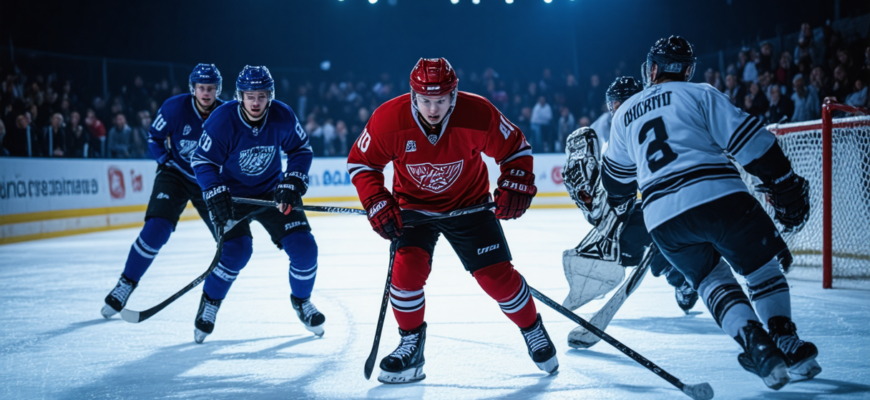
Hockey is a fast-paced, dynamic sport that requires a combination of skill, strategy, and teamwork. For amateur players, understanding how to execute effective offensive attacks while maintaining control of the puck can distinguish a good team from a great one. This comprehensive guide aims to equip amateur hockey players with the essential knowledge needed to develop powerful offensive strategies, optimize puck possession, and ultimately improve overall game performance.
- Understanding the Foundations of Offensive Play in Hockey
- Key Components of Offensive Play
- Planning Effective Offensive Attacks in Hockey
- 1. Establishing Good Breakout and Entry Strategies
- Table 1: Common Offensive Entry Methods
- 2. Developing Offensive Patterns
- 3. Utilizing Breakout and Transition Plays
- Transition Play Steps
- Keeping Possession During Offensive Play
- Effective Techniques for Maintaining Puck Control
- Strategies for Keeping the Puck in the Offensive Zone
- Key Positional Roles and Responsibilities in Offense
- Centers
- Wingers
- Forwards’ Support and Movement
- Tactical Tips for Amateur Hockey Players
- 1. Improve Skating and Shooting Skills
- 2. Communicate Effectively
- 3. Recognize Opponent’s Defensive Gaps
- 4. Practice Power Play and Penalty Kill Scenarios
- Mathematical Model for Offensive Efficiency
- 1. Shooting Percentage (SP)
- 2. Puck Possession Ratio (PPR)
- 3. Expected Goals (xG)
- Sample Calculation: Offensive Efficiency
- Developing a Holistic Offensive Strategy
- Additional Resources for Amateur Hockey Players
Understanding the Foundations of Offensive Play in Hockey
Before delving into specific tactics, it is crucial to grasp the basic principles behind effective offensive play. Hockey, being a game of speed and precision, relies heavily on teamwork, positioning, and decision-making. An organized attack not only creates scoring opportunities but also helps in wearing down the opposing defense.
Key Components of Offensive Play
- Puck Control: Maintaining possession and dictating the pace of play.
- Creating Space: Spreading out opponents and opening lanes for passes and shots.
- Timing and Speed: Executing attacks at the right moment and with suitable speed to catch defenders off-guard.
- Support and Movement: Players supporting the puck carrier through movement and positioning.
Planning Effective Offensive Attacks in Hockey
Planning offensive attacks requires a combination of strategic positioning, quick execution, and adaptability. For amateur players, mastering certain offensive patterns and recognizing opportunities can elevate their gameplay significantly.
1. Establishing Good Breakout and Entry Strategies
Effective offense often begins with successful puck recovery and controlled entries into the attacking zone.
Table 1: Common Offensive Entry Methods
| Method | Description | Pros | Cons |
|---|---|---|---|
| Controlled Entry with Carry | Player skates the puck across the blue line, maintaining control. | Maintains possession, allows set-up for plays. | Requires good skating skills, risk of turnover. |
| Dump and Chase | Puck is dumped into the offensive zone, followed by players chasing it. | Pressure on defenders, creates offensive opportunities. | Potential loss of possession if not timed well. |
| Drop Passes | Player passes puck back to teammate for entry. | Creates confusion among defenders, speeds up attack. | Requires precise timing, less control. |
2. Developing Offensive Patterns
Set plays and schematic approaches help players execute coordinated attacks easily. Some commonly used patterns include:
- The One-Timer Setup—pass from one player to a teammate ready to shoot immediately.
- The Cycling Play—players circulate the puck along the boards to maintain pressure and create shooting lanes.
- Traffic in Front of the Net—players positioning themselves to screen the goalie and pounce on rebounds.
3. Utilizing Breakout and Transition Plays
Transition from defense to offense is critical. A well-organized breakout can catch opponents off-guard and set the tone for dominant offensive possession.
Transition Play Steps
- Defensive Stand: Defensemen regain control of the puck.
- Setting Up: Players spread out to create options and options for passing lanes.
- Entry: Puck is moved swiftly into the neutral zone and then into the attacking zone.
Keeping Possession During Offensive Play
Maintaining puck possession is fundamental to controlling the game and creating scoring chances. Several tactics and techniques can enhance a team’s ability to keep and sustain offensive pressure.
Effective Techniques for Maintaining Puck Control
- Smart Passing: Accurate, intentional passes to avoid turnovers.
- Protecting the Puck: Using body positioning and stick handling to shield the puck from defenders.
- Angle and Space Management: Positioning oneself to create passing options and avoid double coverage.
Strategies for Keeping the Puck in the Offensive Zone
- Cycle the Puck: Players keep the puck moving along the boards, forcing defense to move and opening shooting lanes.
- Puck Retrieval and Support: Supporting players quickly go for loose pucks to reset the attack.
- Forechecking: Aggressively applying pressure on the opposing defense to regain possession faster.
Key Positional Roles and Responsibilities in Offense
Centers
Centers are the playmakers, responsible for creating scoring chances and supporting wingers. They excel at faceoffs, setting up plays, and distributing pucks.
Wingers
Wingers focus on quick attacks, shooting, and supporting the center. They often play along the sides and take advantage of angles for shots on goal.
Forwards’ Support and Movement
All forwards must move intelligently, support puck carriers, and create passing or shooting options. Proper positioning around the net increases scoring probability.
Tactical Tips for Amateur Hockey Players
1. Improve Skating and Shooting Skills
- Consistent skating drills boost speed and agility.
- Practicing shot accuracy enhances chances for goals during attacks.
2. Communicate Effectively
Constant communication helps coordinate plays, indicate open passing lanes, and avoid turnovers.
3. Recognize Opponent’s Defensive Gaps
Identifying weak spots during game play allows for targeted attack strategies, like exploiting mismatches or creating two-on-one situations.
4. Practice Power Play and Penalty Kill Scenarios
Special teams scenarios often decide game momentum. Practicing these situations equips players to execute offensive plays under pressure.
Mathematical Model for Offensive Efficiency
To quantify offensive effectiveness, coaches and players can apply simple formulas:
1. Shooting Percentage (SP)
SP = (Goals Scored / Shots on Goal) × 100%
2. Puck Possession Ratio (PPR)
- PPR = (Time in possession of puck during offensive plays) / (Total offensive play duration)
3. Expected Goals (xG)
Based on shot location, shot type, and player skill, xG estimates the likelihood of scoring from a particular shot:
- xG = Σ(pi ), where pi is probability of goal for shot i.
Sample Calculation: Offensive Efficiency
| Parameter | Value | Explanation |
|---|---|---|
| Goals Scored | 30 | Total goals in a season |
| Shots on Goal | 150 | Total shots taken during offensive plays |
| Shooting Percentage | 20% (30/150 × 100) | |
| Puck Possession Time | 120 minutes | Total time with puck in offensive zone |
| Total Offensive Play Time | 200 minutes | All offensive attempts combined |
| PPR | 60% (120/200 × 100) |
Developing a Holistic Offensive Strategy
Successful offense in amateur hockey rests on meticulous planning, constant communication, and skill development. By mastering offensive entry techniques, employing effective patterns, sustaining puck possession, and understanding positional responsibilities, amateur teams can significantly enhance their scoring potential and overall competitiveness. Incorporating analytical approaches and regularly practicing set plays will deepen strategic understanding and lead to more consistent offensive success.
Additional Resources for Amateur Hockey Players
- Hockey Skill Drills
- Team Tactics and Formation Guides
- Video Tutorials on Offensive Play
- Analyzing Game Footage
Remember, the key to excellence in hockey offense is practice, teamwork, and continuous learning. Adapting strategies based on game experience keeps players dynamic and unpredictable, leading to increased offensive success and overall enjoyment of the sport.
Похожие записи:
 Effective Offensive Strategies to Break Through Defensive Lines in Hockey
  Effective Wing and Center Play Strategies for Offense in Hockey: Simplified Tactics for Amateurs
  Essential Offensive Strategies in Hockey for Amateur Players
  Mastering Power Play: Essential Strategies for Effective Hockey Performance
  Mastering the Art of Puck Recovery: Strategies for Effective Play in Amateur Hockey
  Mastering the Ice: Essential Defensive Positioning Strategies in Hockey for Amateurs
  Mastering Puck Possession: Essential Techniques for Amateur Hockey Players
  Mastering Youth and Amateur Leagues: Essential Rules and Winning Strategies for Aspiring Hockey Players
  Basic Strategies for Beginner Hockey Players: A Complete Guide for Amateur Enthusiasts
  Mastering Team Strategies and Support in Amateur Hockey: Achieving Success Together
  Effective Defensive Drills to Strengthen Your Hockey Protectiveness
  Mastering Consistency: Proven Strategies to Stay Motivated and Improve in Hockey for Amateurs
  Mastering On-Ice Communication: Essential Tips for Effective Player Interaction in Amateur Hockey
  Mastering the Basics: Introduction to Offsides and Icing Rules in Hockey for Amateurs
  Effective Passing Drills to Boost Teamwork in Hockey for Amateurs
  Mastering Concentration: Proven Tips to Maintain Mental Focus During Hockey Games