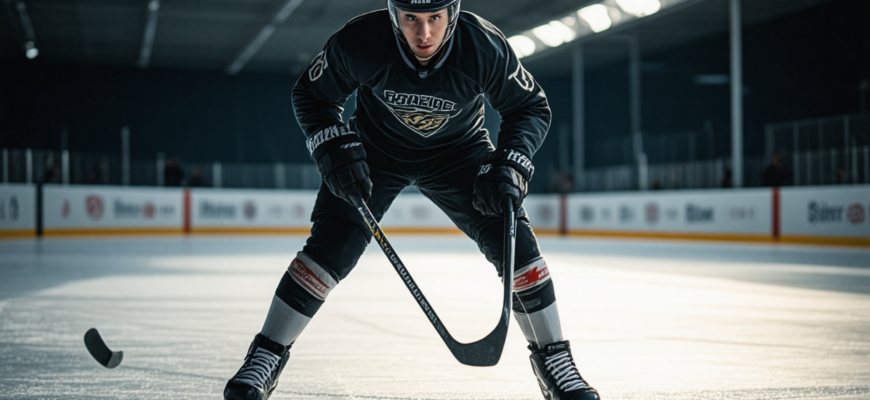
Hockey is a fast-paced, physically demanding sport that requires a combination of strength, agility, coordination, and strategic movement. For amateur players aspiring to improve their skills, understanding the foundational elements such as power, balance, and body movement is essential. Mastering these basics not only enhances overall performance but also reduces the risk of injury, making the game safer and more enjoyable. This comprehensive guide explores the core principles behind effective power generation, maintaining balance on ice, and optimal body movements tailored specifically for hockey.
- Understanding the Importance of Power in Hockey
- How Power is Generated in Hockey
- Power Training Strategies for Hockey Players
- The Role of Balance in Effective Hockey Performance
- Why Balance Matters on Ice
- Developing Better Balance
- Optimizing Body Movement for Enhanced Hockey Skills
- The Kinetic Chain and Movement Efficiency
- Proper Skating Technique
- Shooting and Passing Body Mechanics
- Agility and Reaction Drills
- Mathematical Models and Formulas for Power and Speed
- Power (P)
- Force (F)
- Skating Speed (v)
- Integrating Power, Balance, and Movement into Training Routines
Understanding the Importance of Power in Hockey
Power in hockey translates into powerful shots, swift skating, and effective body checks. It enables players to dominate puck battles and break through opponents’ defenses. Power isn’t just about raw strength; it’s about how efficiently a player can generate force and transfer it into movement or puck control. Proper technique combined with strength training ensures power is channeled effectively, creating explosive performance on the ice.
How Power is Generated in Hockey
Power derives from a combination of muscular strength, technique, and biomechanics. The key components include:
- Leg Strength: The foundation since skating hinges on leg push-offs.
- Core Stability: Facilitates transfer of force from the legs to the upper body.
- Upper Body Strength: Critical for shooting, passing, and checking.
- Proper Technique: Ensures force is used efficiently without wastage.
Power Training Strategies for Hockey Players
- Weightlifting Exercises: Focus on squats, deadlifts, power cleans, and bench presses to develop overall strength.
- Plyometrics: Box jumps, medicine ball throws, and explosive push-ups enhance explosive power.
- Speed and Power Drills: Combining skating sprints with resistance training to mimic game conditions.
- Technique Drills: Practicing shooting and skating with focus on explosive movements.
The Role of Balance in Effective Hockey Performance
Balance is the cornerstone of a dynamic and controlled hockey game. It allows players to stay stable while maneuvering at high speeds, absorbing hits, and executing precise movements. Without adequate balance, even the most skilled players can find themselves off-balance, leading to turnovers and missed opportunities.
Why Balance Matters on Ice
On ice, the combination of slippery surfaces and rapid directional changes makes maintaining balance a constant challenge. Good balance enables players to:
- Maintain control during skating acceleration and deceleration.
- Execute sharp turns and quick stops.
- Balance body weight during shooting and passing.
- Absorb contact from opponents without falling.
Developing Better Balance
Practicing specific exercises can improve stability and coordination:
- Single-Leg Stands: Enhances unilateral balance, crucial for skating strides.
- Balance Board Training: Improves proprioception and core stability.
- Dynamic Movement Drills: Incorporate movements like lateral shuffles and diagonal lunges to simulate game scenarios.
- Core Strengthening: Planks, side planks, and abdominal workouts bolster core stability, directly impacting balance.
Optimizing Body Movement for Enhanced Hockey Skills
Efficiency in body movement directly affects speed, agility, and overall effectiveness on ice. Proper coordination of different body parts reduces energy wastage and enhances finesse during gameplay. This section breaks down the key aspects of optimal body movement technique.
The Kinetic Chain and Movement Efficiency
The kinetic chain refers to the interconnected series of joints and muscles working together to produce movement. In hockey, efficient movement depends on the seamless transfer of energy from the lower limbs through the core and into the upper body, especially during shooting and passing.
Proper Skating Technique
Skating forms the foundation of all hockey movement. Key technical points include:
- Forward Stride: Extending the leg fully during push-off while maintaining a low, balanced torso.
- Edge Control: Mastery of inside and outside edges for sharp turns and stops.
- Arm and Leg Coordination: Synchronizing arm swings with leg movements for momentum.
- Body Positioning: Leaning slightly forward keeps balance and maximizes stride length.
Shooting and Passing Body Mechanics
Effective shooting and passing involve precise body positioning:
- Grip and Stance: A wide, stable stance provides control and power.
- Weight Transfer: Shifting weight from back to front foot increases shot velocity.
- Follow-Through: Completes the motion smoothly for accuracy and power.
Agility and Reaction Drills
Quick reactions and agile movements are vital during game situations. Implementing drills such as zig-zag skating, cone weaving, and rapid direction changes can develop these skills, making movements more natural and automatic during play.
Mathematical Models and Formulas for Power and Speed
Quantitative analysis can help players understand how to improve specific aspects of their game. Some useful formulas include:
Power (P)
| Parameter | Description |
|---|---|
| P = F × v | Power equals force times velocity. Increasing either component enhances power output. |
Force (F)
According to Newton’s second law:
F = m × a
- m: mass of the moving limb or object
- a: acceleration
Skating Speed (v)
Assuming a player applies force to accelerate:
v = (2 × P) / m
Integrating Power, Balance, and Movement into Training Routines
To achieve holistic improvement, training should focus on integrating strength, balance, and movement techniques. A typical weekly routine might include:
- Strength Conditioning: 2-3 sessions focusing on weightlifting and plyometrics.
- Balance Exercises: Daily practice of single-leg drills and core workouts.
- Skating Drills: On-ice practice emphasizing proper technique, edge control, and agility.
- Simulation Game Scenarios: Small-sided games or drills mimicking real match situations to apply skills in context.
Improving hockey skills involves a strategic focus on mastering power, maintaining excellent balance, and executing body movements efficiently. Each element complements the others, creating a player capable of performing at higher levels, even among amateur enthusiasts. Regularly practicing targeted exercises, understanding the biomechanics involved, and applying mathematical models to measure progress are essential steps in the journey toward becoming a better hockey player. With dedication to these fundamentals, players can unlock their full potential on the ice, making the game more dynamic, powerful, and enjoyable for years to come.
Похожие записи:
 Introductory Power Skating Exercises: Essential Skills for Aspiring Hockey Players
  Mastering Power Play: Essential Strategies for Effective Hockey Performance
  Mastering Power Plays and Penalty Kill Tactics for Amateur Hockey Teams
  Mastering Body Checks and Staying Safe on the Ice: An Essential Guide for Amateur Hockey Enthusiasts
  Mastering Balance and Stability: Essential Techniques for Amateur Hockey Players
  Positioning Basics for Amateur Hockey Players: Unlocking Your Potential on the Ice
  Mastering the Basics of Hockey: Essential Rules and Safety Tips for Beginners
  Essential Hockey Drills to Elevate Your Skills at Home or During Practice
  Simple and Effective Ways to Improve Your Balance on Skates for Amateur Hockey Players
  Mastering the Basics: Wrist Shot and Slap Shot Techniques in Hockey for Amateurs
  The Crucial Role of Practice Drills in Enhancing Hockey Skills for Amateurs
  Mastering Basic Body Positioning and Stance in Hockey: A Guide for Beginners
  Mastering Hockey Skills: A Comprehensive Guide to Creating an Effective Personal Practice Routine for Faster Improvement
  Mastering Recovery and Rebound Control: Essential Skills for Amateur Hockey Players
  Mastering Fast Decision-Making Skills in Hockey During Pace Play
  Mastering the Basics: Introduction to Offsides and Icing Rules in Hockey for Amateurs