
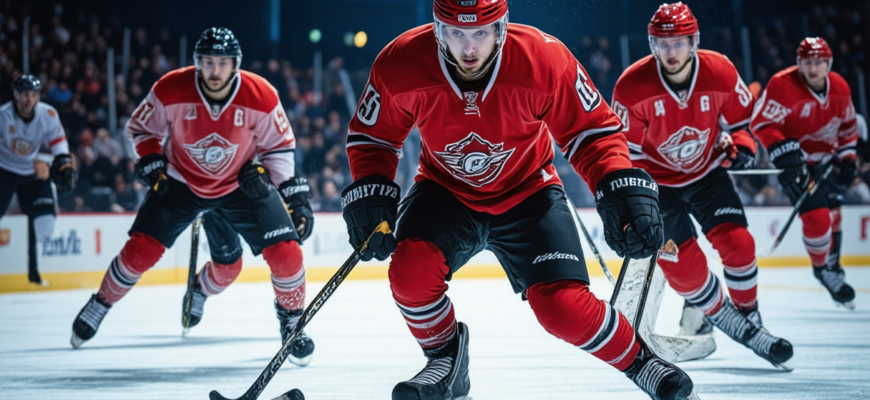
Hockey, often regarded as one of the fastest and most physically demanding team sports, requires players to make split-second decisions under intense pressure. The fluid nature of the game, combined with rapid transitions and unpredictable opponent actions, demands exceptional decision-making skills. Developing the ability to think quickly during pace play is essential not only for individual performance but also for team success. This comprehensive guide explores strategies, techniques, and training methods to enhance rapid decision-making skills in hockey, specifically tailored for amateur players seeking to elevate their game.
- The Importance of Quick Decision-Making in Hockey
- Fundamentals of Rapid Decision-Making
- Strategies to Enhance Decision-Making Skills During Pace Play
- 1. Improving Situational Awareness
- 2. Enhancing Pattern Recognition and Anticipation
- 3. Developing Decision-Making Through Repetition and Simulation
- Table 1: Sample Training Exercises for Fast Decision-Making
- Techniques for Making Smarter Decisions Faster
- 1. Limit the Options
- 2. Trust Intuition and Training
- 3. Use Decision Trees and Mnemonics
- Impact of Physical Conditioning on Decision Speed
- Key conditioning components include:
- Psychological Factors Influencing Decision-Making in Hockey
- Monitoring and Improving Decision-Making Performance
- Integrating Decision-Making Skills into Overall Hockey Training
- Sample Weekly Training Schedule
- References
The Importance of Quick Decision-Making in Hockey
In hockey, the clock rarely seems to stop. Players are constantly in motion, reacting to the puck, opponents, and teammates. Think about a typical game scenario: a sudden turnover, a breakaway, or a quick counterattack—all require immediate responses. The ability to process information swiftly and choose the optimal action can be the difference between scoring a goal and conceding one. Fast decision-making directly impacts:
- Offensive opportunities
- Defensive stability
- Effective puck control
- Transition speed from defense to offense and vice versa
Fundamentals of Rapid Decision-Making
Before diving into specific techniques, it’s crucial to understand the core principles that underpin quick decision-making in hockey:
- Situational awareness: Recognizing the current state of play, including player positions, puck location, and game momentum.
- Pattern recognition: Identifying common scenarios based on past experiences and training.
- Predictive thinking: Anticipating opponents’ moves and teammates’ actions.
- Confidence: Trusting one’s training and instincts to act decisively without hesitation.
Strategies to Enhance Decision-Making Skills During Pace Play
1. Improving Situational Awareness
Situational awareness is the foundation of quick decision-making. Players must develop the ability to perceive and interpret the ongoing game environment rapidly. Techniques include:
- Visual scanning drills: Practice scanning the ice continuously, rather than fixating on the puck alone.
- Peripheral vision training: Enhance awareness of surrounding players and puck movement from the sides.
- Video analysis: Review game footage to recognize patterns and common game scenarios.
2. Enhancing Pattern Recognition and Anticipation
Experienced players can quickly identify patterns such as typical offensive setups or defensive formations. To develop this skill:
- Simulation exercises: Practice scenarios that mimic real-game situations.
- Studying plays: Learn common offensive and defensive patterns used in hockey.1
- Controlled drills: Engage in exercises where the coach or training partner makes quick decisions, requiring response from the player.
3. Developing Decision-Making Through Repetition and Simulation
Repetition solidifies neural pathways, making quick decisions more instinctive over time. Methods include:
- Small-sided games: Play in reduced space or numbers to increase decision-making demands.
- Reaction drills: Use tools like reaction lights or partner signals to prompt immediate actions.
- Timed decision tasks: Set time limits for making specific decisions during drills.
Table 1: Sample Training Exercises for Fast Decision-Making
| Exercise | Description | Focus Area |
|---|---|---|
| Pattern Recognition Drill | Players react to coach-led setups simulating game scenarios. | Anticipation & recognition |
| Reaction Light Drill | Respond to colored lights by performing specific movements or passes. | Reaction speed |
| Small-Sided Games | Play 3v3 or 4v4 matches with high tempo and limited space. | Decision speed & situational awareness |
| Video Scenario Analysis | Review game footage to identify decision points and alternative options. | Pattern recognition & anticipation |
Techniques for Making Smarter Decisions Faster
1. Limit the Options
In fast-paced situations, players should narrow their choices to a few optimal options. This reduces hesitation and cognitive overload. For instance, when approaching an attacker, decide whether to pass, shoot, or maintain possession based on pre-learned principles rather than analyzing every possibility on the spot.
2. Trust Intuition and Training
Intuitive responses come from consistent practice and experience. Training under game-like conditions helps players develop instinctive reactions, enabling them to act without overanalyzing. Confidence in training translates to better decision-making during actual games.
3. Use Decision Trees and Mnemonics
Decision trees—flowcharts guiding actions based on specific cues—are useful for quick judgments. For example:
- If under pressure, look for an open teammate.
- If no pass options are available, consider shooting or clearing.
Mnemonics can help memorize key principles, ensuring rapid recall during play.
Impact of Physical Conditioning on Decision Speed
Physical fitness directly influences cognitive functions such as reaction time and decision-making efficiency. Fatigue impairs mental clarity, leading to slower responses. Proper conditioning ensures players remain alert and decisive, even during intense stretches of a game.
Key conditioning components include:
- Endurance training to sustain energy levels
- Agility drills for quick directional changes
- Speed work to enhance overall reaction time
Psychological Factors Influencing Decision-Making in Hockey
Confidence, focus, and composure are critical psychological elements that affect decision-making under pressure. Strategies to improve mental resilience include:
- Mental rehearsal and visualization
- Breathing exercises to maintain calmness
- Developing a pre-play routine to focus attention
Monitoring and Improving Decision-Making Performance
Using metrics and feedback helps identify areas of improvement. Coaches and players can track:
- Reaction times during drills
- Number of correct decisions in game scenarios
- The speed of execution in various situations
Tools such as wearable sensors, video analysis, and self-assessment logs are valuable for continuous progress tracking.
Integrating Decision-Making Skills into Overall Hockey Training
For optimal results, decision-making exercises should be integrated into regular skill development routines, including skating, puck handling, and shooting. Combining physical and mental training accelerates skill acquisition and operational readiness during matches.
Sample Weekly Training Schedule
- Monday: Skating drills + reaction drills
- Tuesday: Small-sided games + video analysis
- Wednesday: Pattern recognition exercises
- Thursday: Shooting and passing under timed conditions
- Friday: Mental conditioning and visualization
- Saturday: Full game simulation focusing on decision-making
- Sunday: Rest and recovery
Developing quick decision-making skills during pace play in hockey is a multifaceted process that encompasses physical conditioning, mental training, tactical understanding, and consistent practice. By honing situational awareness, pattern recognition, and reaction speed, amateur players can significantly elevate their game, respond more effectively under pressure, and contribute to their team’s success. Incorporating structured drills, cognitive techniques, and psychological resilience training into regular practice routines will foster instinctive reactions and confident decision-making—key ingredients to thriving in the exhilarating world of hockey.
References
- Международная хоккейная академия. Общие принципы стратегий и тактик.
- Фурье, А. Т. “Психология спортивных решений”. Спорт и психология, 2018.
Похожие записи:
 Mastering Fast Reflexes: Unlock Your Potential as a Hockey Goaltender
  Mastering the Art of Puck Recovery: Strategies for Effective Play in Amateur Hockey
  Mastering Power Play: Essential Strategies for Effective Hockey Performance
  Mastering Recovery and Rebound Control: Essential Skills for Amateur Hockey Players
  Effective Wing and Center Play Strategies for Offense in Hockey: Simplified Tactics for Amateurs
  Mastering Hockey Skills: A Comprehensive Guide to Creating an Effective Personal Practice Routine for Faster Improvement
  Mastering Puck Handling: How to Improve Your Hockey Skills at Home
  The Crucial Role of Practice Drills in Enhancing Hockey Skills for Amateurs
  Mastering the Art of Reading the Game in Hockey: A Guide for Amateurs
  Essential Hockey Drills to Elevate Your Skills at Home or During Practice
  Mastering the Fundamentals of Puck Retrieval and Chase in Hockey: Essential Skills for Amateur Players
  The Basics of Power, Balance, and Body Movement for Better Hockey Skills
  Mastering the Art of Following a Hockey Game’s Flow: Essential Tips for Amateur Players to Improve Awareness
  Mastering Passing and Receiving the Puck: Essential Skills for Amateur Hockey Players
  Incorporating Fun Drills to Enhance Hockey Skills: A Guide for Amateur Players
  Introductory Power Skating Exercises: Essential Skills for Aspiring Hockey Players